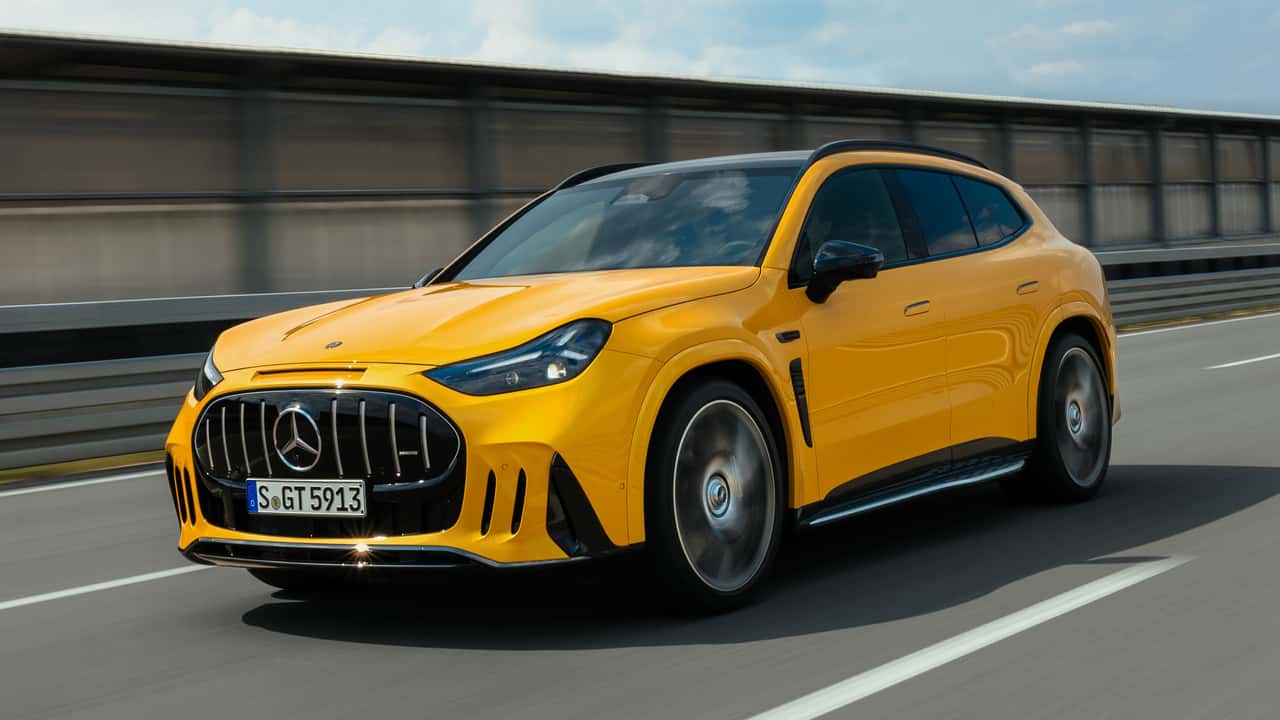
Mercedes-AMG unveiled the GT SUV over the weekend and has made the ranking of the world’s most powerful SUVs shift. The range-topping GT 63 has just stolen the crown from Porsche’s top SUV, the Cayenne Turbo Electric, by a small margin: just 14 horsepower sets the two apart.
Here is the all-new Mercedes-AMG GT SUV, ready to give the Porsche Cayenne Turbo Electric a run for its money. It has now taken the lead as the world’s most powerful SUV, with its 1,153 horsepower (1,169 metric horsepower), 14 horsepower ahead of the Porsche SUV.
The Lucid Gravity GT-S rounds out the podium with its 1,070 horsepower (1,085 metric horsepower), while the Tesla Model X Plaid is trying to keep up with it with a factory rating of 1,020 horsepower (1,034 metric horsepower). The massive GMC Hummer EV comes in fifth with 1,000 horsepower (1,014 metric horsepower).
The battle of the numbers
These are figures that automakers did not even dare to dream of before the electric revolution kicked off. Then, the battle of horsepower won over, as automakers started Nurburgring wars, duels of zero to hero (0 to 60 mph or 0 to 97 kph) or quarter-mile competitions.

Photo: Mercedes-AMG
With its all-new GT 63 SUV, Mercedes-AMG had one single target: Porsche’s pride and joy, the Cayenne Turbo Electric. It is the only one that, according to the numbers it can keep up with the first SUV entirely developed in Affalterbach and built in Sindelfingen. Both models bypass the traditional combustion engine power to deliver four-figure horsepower and hypercar-level acceleration.
The AMG GT 63 SUV is set in motion by a tri-motor setup with axial flux motors, two mounted out back within a single space-saving casing on the rear axle, and one on the front axle, acting like a booster unit. In the meantime, the Porsche comes with two electric motors, one up front and another out back. Both SUVs feature all-wheel drive.
Even though the Mercedes-AMG looks every inch a winner on paper, both models rocket from 0 to 60 mph in 2.4 seconds. The Mercedes maxes out at 168 mph (270 kph), while the digital speedometer of the Porsche stops at 162 mph (260 kph).
The powertrains are obviously heavy lifters, because the SUVs may be quick and agile, but they are not exactly ballerinas on the road. The Mercedes weighs 5,941 pounds (2,695 kilograms), while the Porsche is 110 pounds lighter, tipping the scales at 5,831 pounds (2,645 kilograms).

Photo: Porsche
Both vehicles integrate high-voltage battery packs into the floor pan, positioned structurally between the front and rear axles. This “skateboard” layout lowers the center of gravity and balances weight across both axles, while ensuring the large packs do not intrude on cabin passenger or cargo space.
Bigger battery, more range for the Mercedes-AMG GT SUV
Mercedes planted a massive 128-kWh battery pack, which stores enough energy for a drive of up to 435 miles (700 kilometers), before the GT 63 SUV needs to be plugged in again. That is the official WLTP rating. The EPA testing might slash up to 100 miles from that figure.
In the meantime, the Porsche Cayenne Turbo Electric is fitted with a slightly smaller 113 kW battery pack, which provides a WLTP range of up to 387 miles (623 kilometers) or roughly 330 miles (531 kilometers) when evaluated by the EPA.
While both offer highly practical real-world range, the Mercedes-AMG GT 63 gains an extra 48 miles (77 kilometers) of range on the generous European WLTP cycle thanks to its larger battery and an aggressive front-axle disconnect system that saves energy when cruising.
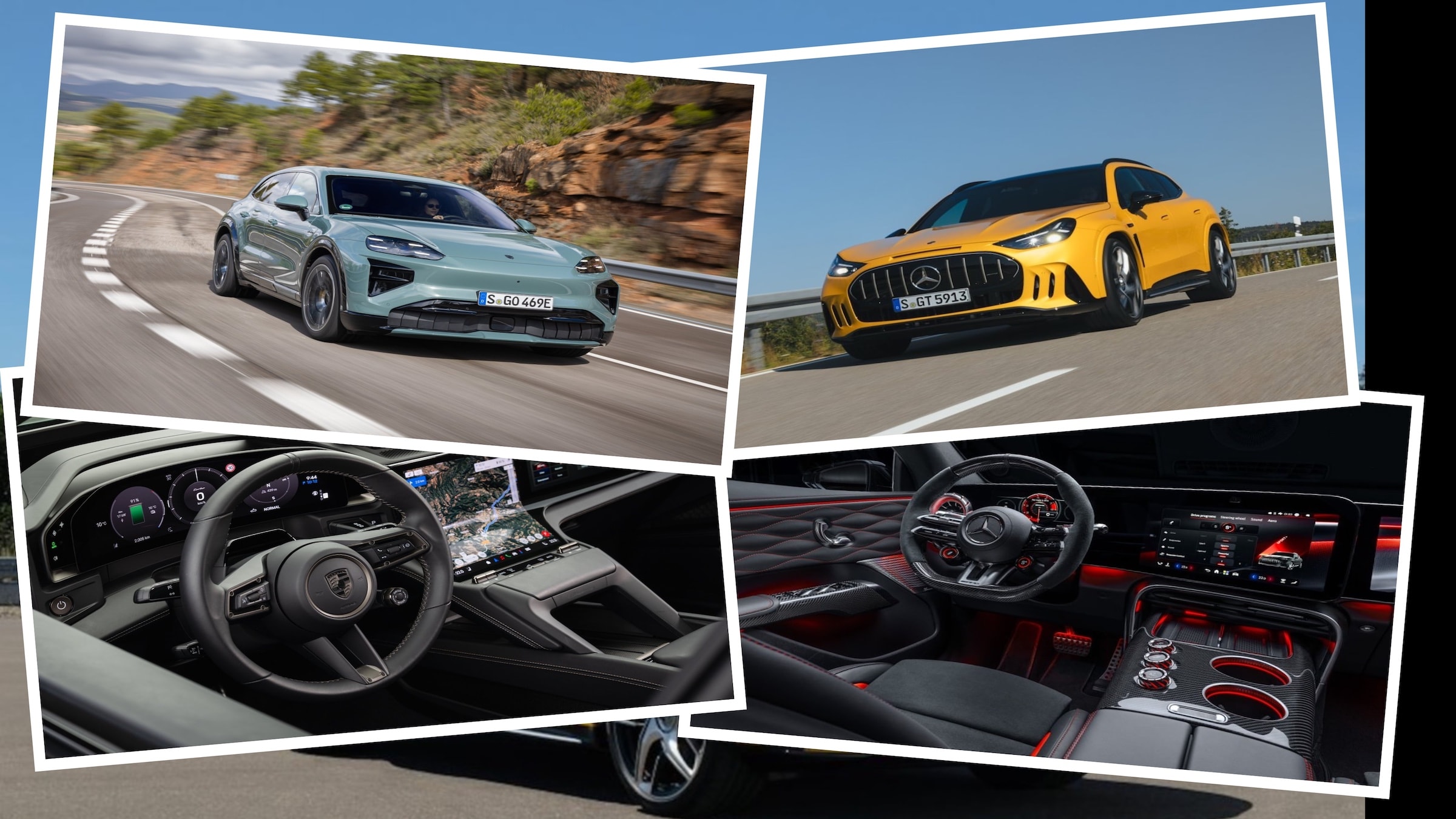
Expectedly, both come with high-tech cabins, but the Porsche gets more screen surface with the 14.25-inch curved OLED instrument cluster, the 12.25-inch curved OLED touchscreen, and an optional 14.9-inch display with streaming and gaming.

Photo: Porsche
In the meantime, the all-new Mercedes-AMG GT 63 SUV puts all the relevant driving data in front of the driver via the 10.2-inch digital instrument cluster and most of the functions of the vehicle on the 14.0-inch center display. The AMG GT SUV also gets a passenger screen as an extra, measuring 14.0 inches.
Mercedes-AMG credited its first SUV with an ultra-low grand-tourer-like feel, topped out with a low driving position, similar to that offered by a sports coupe, while the Cayenne Turbo Electric got the typical Porsche commanding SUV view over the hood and road ahead.
And since we are comparing inches, let’s stick with that. The Porsche Cayenne Turbo Electric tops out at 22 inches directly from the dealership, while Mercedes shoes its electric SUV with wheels up to 23 inches, outstyling its main rival.
It all comes down to what you get for the money
The Mercedes focuses on a long, ultra-wide, slammed look that mirrors its low-slung, grand tourer seating position, while the Porsche retains more traditional, upright SUV proportions. The AMG GT is 200.2 inches (5,084 millimeters), while the Cayenne stops at 196.3 inches (4,985 millimeters). Expectedly, the Mercedes EV sports a slightly longer wheelbase compared to that of the Porsche’s EV: 119.7 inches (3,040 millimeters) versus 119.0 inches (3,023 millimeters).

Photo: Mercedes-AMG
The Mercedes-AMG GT 63 SUV is equipped with the AMG Active Ride Control+, which throws out conventional mechanical anti-roll bars in favor of triple-stage adjustable air springs combined with specialized active hydraulic elements to prevent the typical squatting or nose-diving on full throttle.
Porsche fitted its Active Ride onto its SUV. The system generates massive independent vertical forces at each wheel. This means that, rather than just absorbing road imperfections, the setup makes the SUV lean into corners like a motorcycle to offset lateral forces, elevating the ride height by 2.16 inches (55 millimeters) when the doors unlock to make entry and exit easier.
The Porsche Cayenne Turbo Electric starts at $163,000 in the United States, while the price jumps to $172,700 for the sleeker, sloped-roofline Coupe. Mercedes has yet to disclose the pricing of the AMG GT 63 SUV and its siblings, the GT 55 and GT 53. However, the range-topping variant is expected to hit the $200,000 mark before fees and options.