Mercedes is reviewing its entire China operation, but past attempts to cater to local buyers show interest is far from guaranteed. By Stewart Burnett
Mercedes-Benz says it is reviewing every part of its China business, from products and sales through to production, software, sourcing and technology, after third-quarter deliveries there slumped by another 31%. A new strategy is due in 2027, and Chief Executive Ola Källenius insisted during an earnings call that the automaker will not retreat from the market, but the overhaul follows a string of China-specific efforts which have failed to halt the decline.
The slump drove adjusted earnings in Mercedes’ core cars division down by more than half to just €560m (US$622m) in the third quarter, coming a day after Mercedes cut its full-year outlook. Källenius said conditions in China were “deteriorating beyond what we had thought would happen this year,” particularly at the top end of the market where Mercedes has earned its richest margins. The slump accelerated in the second half and is likely to persist through the rest of 2026.
Källenius rejected any suggestion of downgrading the country to a niche market. “There is not a play where you put China aside,” he emphasised. The Chinese market remains a lucrative opportunity for Mercedes, and Källenius cited its size, fast-moving technology ecosystem and the growing global reach of Chinese suppliers.
Other executives are voicing a more pessimistic outlook on the Chinese market: outgoing Volvo Cars Chief Executive Håkan Samuelsson said earlier in October that the market for Western-developed cars in China is not coming back. Fellow German automakers BMW and Volkswagen have also recently cut their outlooks over struggles in China.
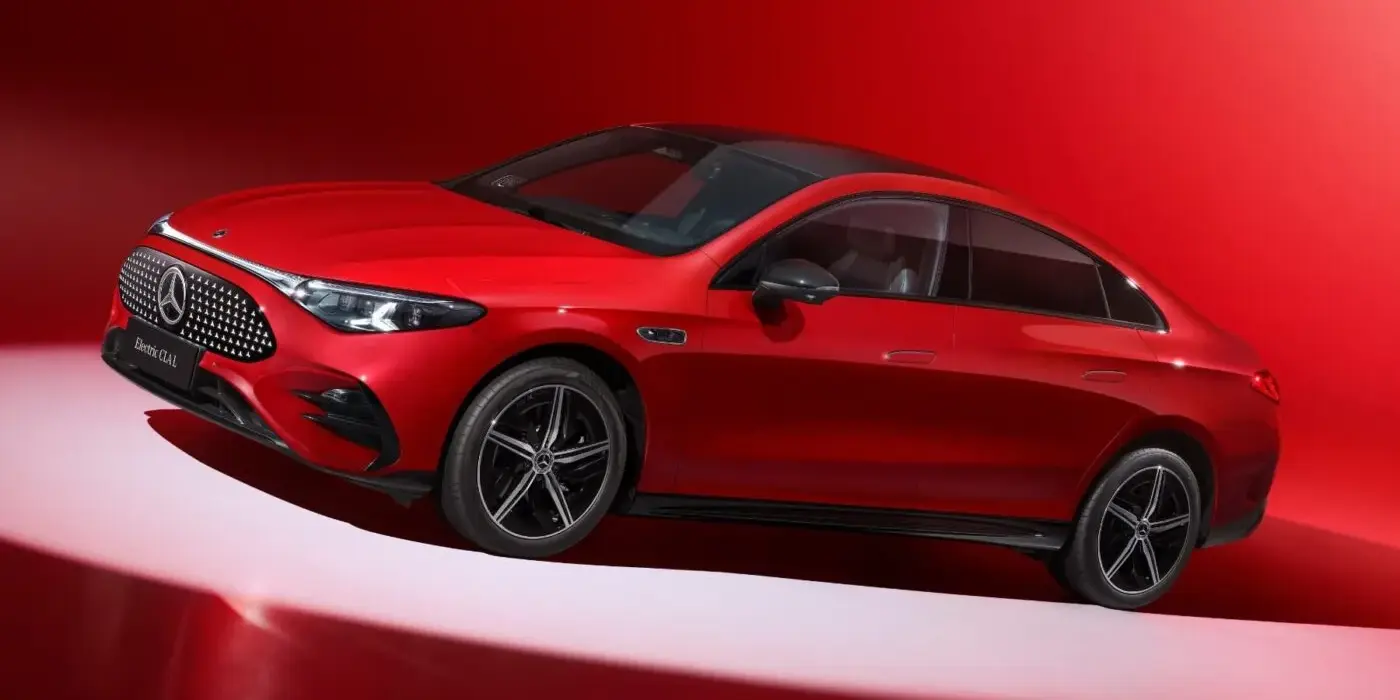
Mercedes’ own record in China suggests that local tailoring alone will not be enough. Its sales peaked at 774,000 in 2020, fell 19% to around 575,000 last year and are down a further 29% in the first nine months of 2026, as buyers in the CN¥300,000-500,000 (US$44,700-74,500) bracket have defected to domestic brands. Its first-generation EQS and EQE electric saloons struggled with polarising design, and the China-exclusive CLA L, a long-wheelbase electric vehicle with a 866 km range, sold just 627 units in the H1 before production was paused.
Still, these most recent failures came in spite of years of localisation. The CLA L showed that stretched wheelbases and strong specifications no longer persuade Chinese buyers, who choose based increasingly on software, ecosystem and price. Mercedes has already cut its medium-term China target to 500,000-600,000 vehicles a year.
Mercedes has shifted a large portion of its software and research authority to China: it works with Momenta on driver assistance and Tencent and ByteDance on its cockpit software. The automaker has also deepened sourcing ties with Geely, which is one of its largest shareholders—a factor which has caused some tension with US lawmakers in recent months.
The coming electric E-Class is meant to change the economics. Källenius described it as developed from effectively “a white sheet of paper”, with sourcing almost entirely in China to cut variable costs and pricing set for local conditions. This comes alongside global targets to cut material costs by about 8% from their 2024 levels, although the deepest reductions are expected to come from China. Still, he ruled out the “fire sale market-share-at-all-cost” approach that has defined the Chinese market—especially its local brands—effectively leaving Mercedes trying to compete in a price war without fully joining it.
There is not a play where you put China aside
Rivals are taking more radical steps. Volkswagen is reportedly weighing whether to take its Xpeng-derived architecture beyond China to Europe, and BMW is building its Neue Klasse with dedicated Chinese software teams. Meanwhile, Mercedes still runs its own MB.OS with local partners layered on top. Its strongest position remains at the very top of the market, where the Maybach S-Class and G-Class still sell at more than CN¥1m, and Chief Financial Officer Harald Wilhelm has declined to predict where China will stand by 2027.
Ultimately, Mercedes is accepting a smaller China business while still betting its brand can command a premium, but the CLA L showed that below the very top of the market, Chinese interest is far from guaranteed. The electric E-Class will be the first real test of whether the automaker has learned that lesson: unless its price reflects Chinese rivals rather than Mercedes’ own history, local sourcing could simply produce a more cheaply built car that buyers will once again overlook.