Tesla Roadster “epic demo” showed a supposedly sports car that could lift in the air, kickflip, and land softly. However, very few technical details were offered, and the little that people could see with their own eyes raised more questions than Tesla could answer. The most important question is: will we see a new Roadster variant in 2035 during another “epic demo,” or will Musk be too old for that by then?
I’m not gonna lie to you: what Tesla pulled during the Roadster demo was nothing short of sorcery. To say that I’m impressed would be an understatement. However, I believe this was purely an entertainment show, not a vehicle launch. As a PR stunt, it served its purpose marvelously. However, to expect that Tesla will deliver such cars in 2028, as Musk promised on stage, would be beyond naivete.
And this is why I’m compelled to take everything that was said and demonstrated and make sense of it from a car and tech guy’s perspective. Because while I believe the demo was real, it was also fake. Moreover, the car that flipped in the air at the McGregor base in Texas will never head to a Tesla delivery center. But first let’s line up the info that Tesla presented as facts.
Tesla Roadster 3.0: The official data
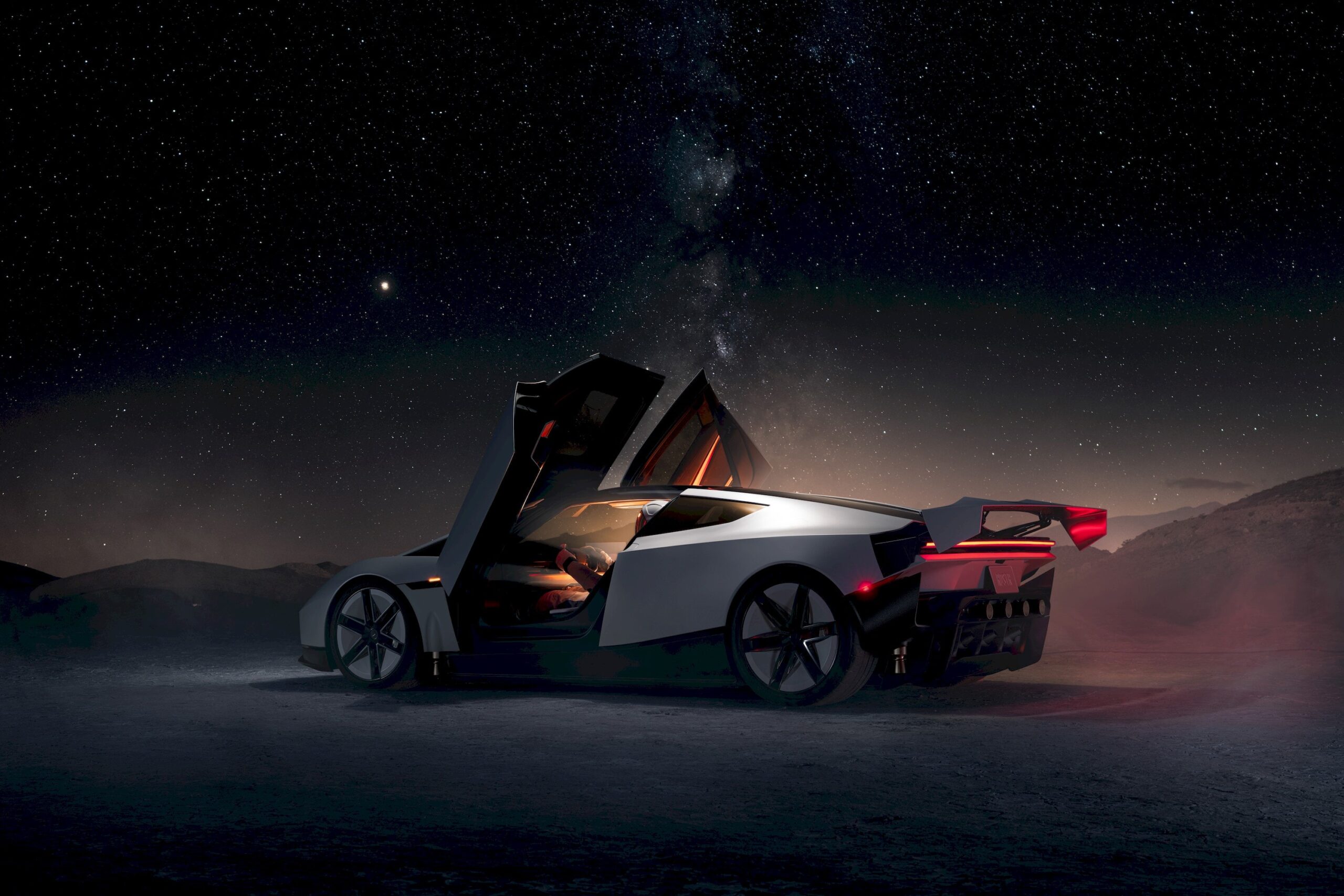
The obvious thing is that the Roadster presented on October 15 had nothing in common with the one unveiled in 2017, except that both were prototypes. The 2017 Roadster is dead and buried, and the 2026 model is a completely new car, with a fresh design and its own set of features. This means that a new timer has started now until this prototype reaches production-ready status. Nine years of waiting, gone, wasted, and the Roadster is again a fresh promise.

Photo: Tesla
What has changed during those years? First, Tesla realized that some of the Roadster’s original specifications (or, rather, the promise of them) were unrealistic. The Roadster 3.0 can only go “>300 miles” on a charge instead of 620 miles. It makes sense, as Tesla’s battery efforts faltered, and there’s no miracle battery that can double the energy density to make that range possible.
However, what the car lost in range it gained in performance. The new Roadster promises to accelerate from 0 to 60 mph in 1.6 seconds in the base Performance trim without any rocket helpers. The Thrust trim, which features acceleration thrusters, promises to do the same in 0.9 seconds. Meanwhile, the Rocket variant cuts that to 0.59 seconds. It’s unclear how it does that, but probably more powerful thrusters are involved.
More interesting than the performance figures is the so-called “multi-mode suction system.” As Tesla announced, this is able to pull up to 2G or 4,700 kg of downforce, which means it can support more than twice the weight of the Roadster. This suggests the Roadster weighs over 2,300 kg (5,000 lb), something that is not apparent in the live demo.
Now, some nerdy stuff
While official information is scarce, Tesla was more generous with what it showed during the event. The most important was the battery pack, which uses Tesla’s 4680 cells. That’s not a very good pedigree, if we consider the poor performance that the 4680 cells have demonstrated in Tesla EVs. However, the Roadster uses bespoke 4680 cells, and the battery pack features some upgrades.

Photo: Tesla
The most important is the cooling system, which uses interwoven cooling bands that are liquid-cooled. This should help keep the cells cool during those harsh 0-60 acceleration stunts. I suspect Tesla is again banking on future improvements, considering the communicated 2028 timeline. The Roadster should be capable of charging from 10% to 80% in less than 10 minutes, thanks to an 800-volt architecture.
Tesla said the Roadster sports a new drive unit that can deliver 1 MW of power. That translates into 1,341 horsepower, or, as Tesla said, one-third more power than the Model S Plaid with half the mass. This confirms that the Roadster is an RWD car. To be fair, cold gas thrusters make traction (and thus an AWD configuration) less important.
What’s more interesting is that the Roadster also appears to have a similar camera setup as the Tesla Cybercab. This suggests that the sports car can drive autonomously. That is intriguing, considering that Musk touted the Roadster as “the last driver’s car that Tesla will ever make.” It turns out that the Tesla Roadster is also future-proof.
Still, I have questions
As forthcoming as Tesla was in offering details about the new Roadster, with dozens of posts on social media during and following the event, I still have questions. One is related to the white line I noticed during the presentation. The Roadster appears to follow it in all stunts during the demo event. This suggests that its systems require it to keep the Roadster steady. It’s unclear what happens without it, but considering the high-stakes stunt, you don’t wanna know.

Photo: Tesla
An even bigger question mark is related to the underbody of the new Roadster. Instead of a smooth surface, as most electric vehicles have, the Roadster sports a strange metallic structure. Since the smooth surface is due to the battery pack, this suggests that the prototype did not have one between the wheels. Instead, Tesla placed a smaller battery elsewhere, and the underbody was left with the frame visible in some of the stunt videos.
That certainly explains why the Roadster moves so unnaturally during the stunts. It jumps and rolls as if it has no weight at all, making people who saw the videos on the internet think they were AI-generated. I know they’re not, but I still think that the Roadster prototype is lighter than what Tesla and Elon Musk let everyone know during the presentation.
However, the biggest question is whether Tesla will actually build this Roadster variant. After all, the original prototype unveiled in 2017 was killed, and there’s no indication that this would survive Musk’s whims. The 2028 timeline certainly looks ambitious for a car that only now has been assigned a production line at Giga Texas. A lot of things could change by then, including Tesla’s plans.