Car names are a peculiar thing. Huge amounts of research goes into deciding what should work and what might not. Who would have thought that Qashqai, Duster, Model 3, Sportage or T-Roc could be top-sellers? And yet each has been, or is.
Volkswagen’s new generation family-sized SUV is second only to the Golf in its Europe-wide sales success. Exactly 147,763 examples were delivered during the year to the end of September (source: Dataforce) compared to 151,334 units of VW’s best seller. The larger Tiguan did well too, its deliveries numbering 137,839.
Germany is naturally the Volkswagen brand’s best market in the region but the UK is a big one for the brand. Last month was the best September since 2017 for the entire market and VW managed an impressive 25,972 passenger vehicle sales, lifting its year to date tally up to 137,802. That kept it well ahead of Kia (95,249) and BMW (91,691).
Four-cylinder MHEVs with an HEV coming soon
There has been a lot of attention given to the new ID. Polo plus the equally novel ID. Tiguan yet it’s the T-Roc – along with the evergreen Golf – which British buyers have been especially keen on purchasing throughout 2026. Yes, the Jaecoo 7, MG HS, Kia Sportage, Nissan Qashqai, Volvo XC40 and others each continue to do brisk business, yet it could even be said that the latest T-Roc is still warming up.
What I mean by that is that more variants are on the way, which should mean even more popularity. And compared to many in this size class, the VW does not come as an EV, the brand having its ID. series family of models for customers seeking to go electric.
The T-Roc R will arrive in 2027, this 4,373 mm long SUV having been launched in late 2025 with a 1.5-litre mild hybrid four-cylinder engine the main propulsion system. Interestingly, there is no diesel, something which is a little unusual for the Volkswagen brand. It’s understandable though, with the sales potential for a TDI being pretty low nowadays, especially in the UK.
MQB Evo = ICE-native platform
The company chose to retain its tried and tested front- and all-wheel drive MQB architecture, nowadays coming with an Evo suffix to denote the latest adaptation of this IC-specific platform. T-Roc production is at the Group’s Autoeuropa plant near Lisbon, specifically in the city of Palmela.
Volkswagen’s new 1.5-litre hybrid powertrain, also soon to arrive in the Golf, will be added within weeks, having been announced back in April. This comes with 100 kW (136 PS) or 125 kW (170 PS), torque being 306 Nm for both.
The car I tested, was instead a 48-volt 1.5-litre eTSI (mild hybrid). This too can be ordered with different outputs, these being 85 kW (116 PS) with 220 Nm or 110 kW (150 PS) and 250 Nm. In both cases, drive is via the front axle only through a seven-speed dual-clutch transmission. The 14 kW motor, part of the MHEV system, allows a brief power boost when needed, saving fuel.
Thirty more litres of boot space
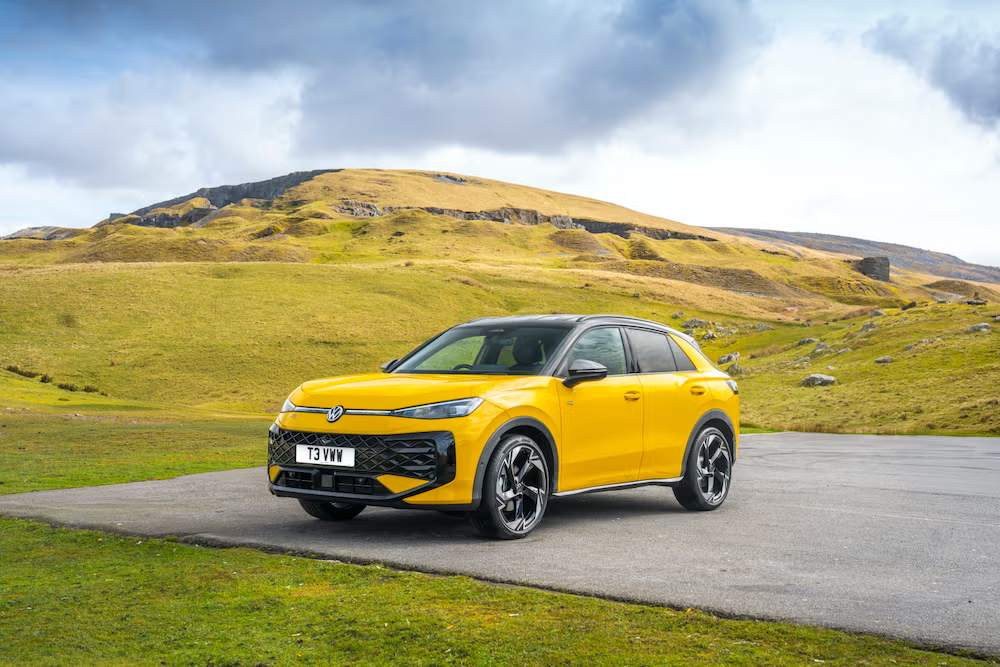
Slightly longer than the 2017-2025 shape model, T-Roc Mk.2 has a long wheelbase and short overhangs, though the front end is highly distinctive thanks to a deep and wide grille. The extra length also benefits boot space, this being up by 30 litres to 475. Oh, and those who might be wondering if the forthcoming hybrids mean a big battery squished in below the luggage bay, no, it’s instead positioned under the back seat.
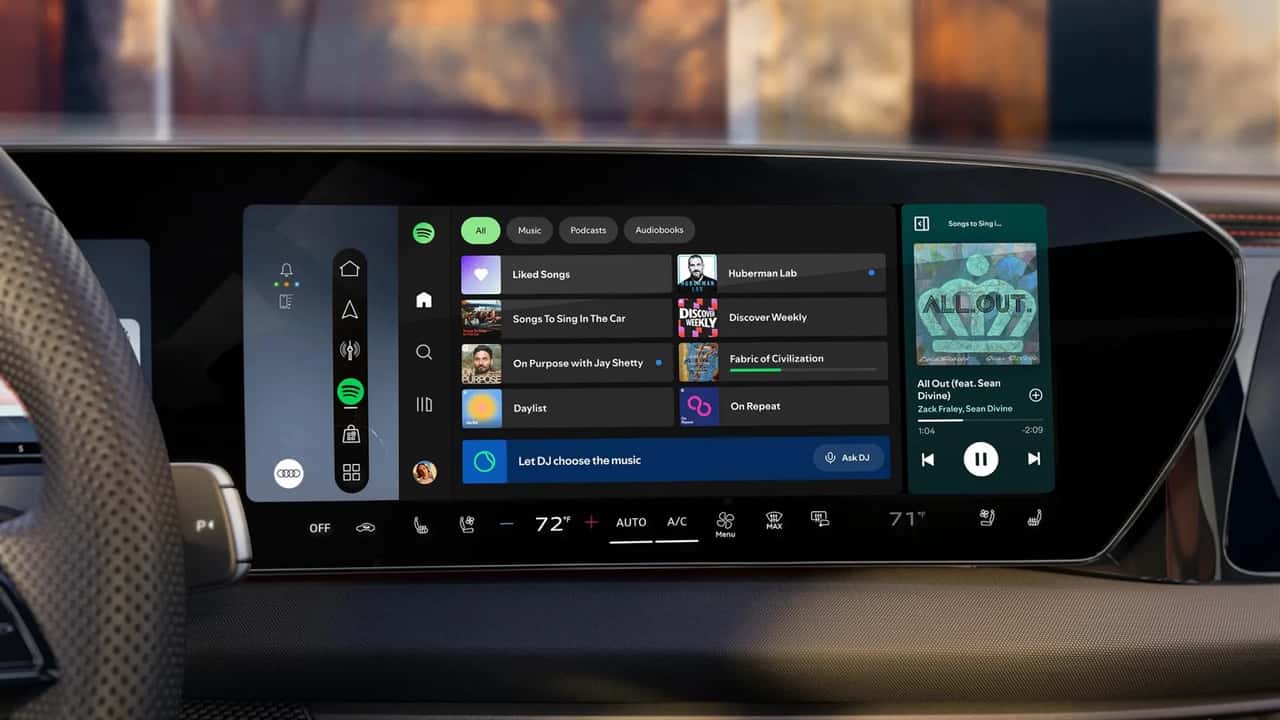
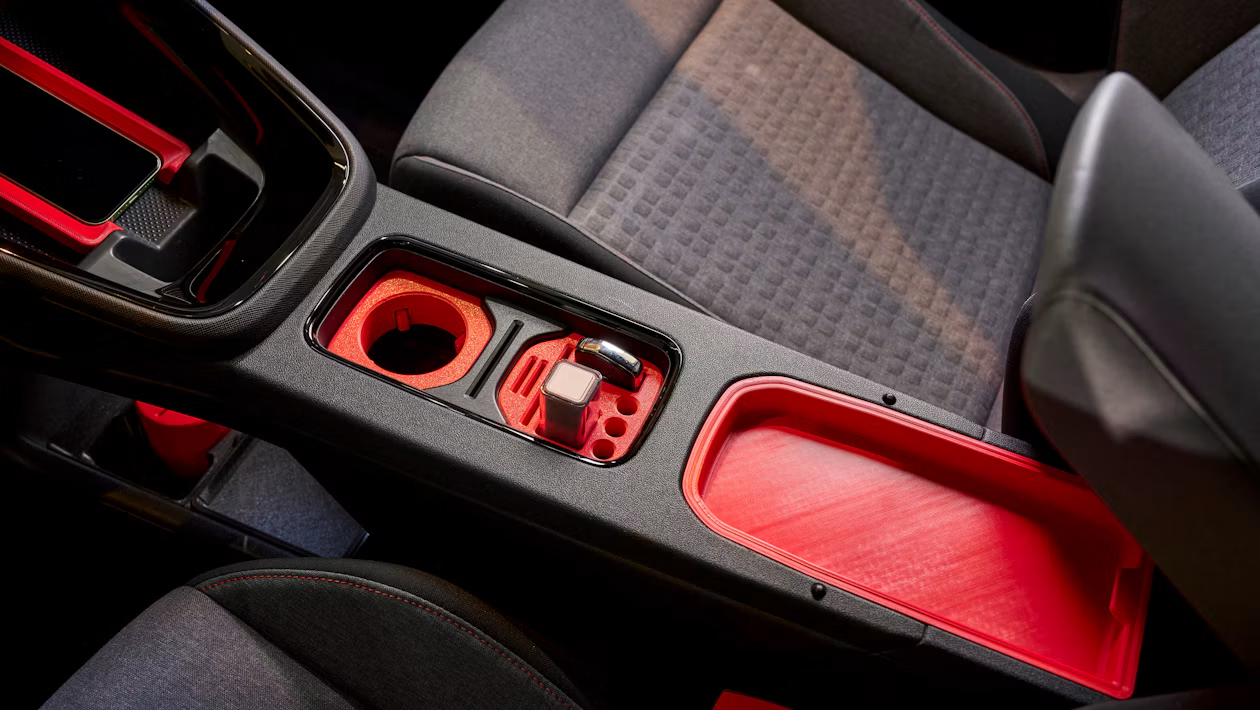
Where Volkswagen has really succeeded in creating a much better car than so many rivals is the front compartment. How so? Specifically, the years of below-par overly digital VWs seem to be ending at last, the T-Roc a new and shining example of that. There is even lots of lovely fabric covering the dashboard and door panels instead of unyielding plastics, a multi-functions real dial between the seats, and touch screens which, while large (there are two sizes) don’t dominate.
Grab a handle either on the outside or inside and the T-Roc’s weighty doors feel terrifically solid, just like most VW components once did. The mirrors also whir pleasingly into place as the car is unlocked and even the key is nicer than what we have had to accept in recent years. Yes, a little more premium-style. And in fact, more so than what you get with an Audi.
Now grown to almost 4.4 metres long
At 4,373 mm from front to back, this is of course the Golf’s SUV equivalent, which is one major reason why the T-Roc is selling so well – both are right-sized for families and having the flexible interiors which these customers demand. OK, you still don’t get all the standard equipment or low pricing of a Jaecoo, Omoda, MG, Chery, BYD or Geely but the VW does feel like it’s worth the money. Plus, standard equipment is by and large actually fairly generous.
Driving dynamics are another step up over the old model, plus it has to be said, the ADAS features are also way less annoying than in most of the Chinese brands’ competitor models. And for many buyers, this could easily swing the argument in favour of the T-Roc.
Summary
After a week with a 1.5 eTSI, I was fairly impressed by just how much of an improvement the new model is compared to the original, and how quiet and non-irritating it is to drive. Not everybody will be happy that Volkswagen’s love it or loathe it volume slider features but other than this, there isn’t anything about the T-Roc which will really turn some people off. Overall, this right-sized SUV is likely to remain a best seller.
The Volkswagen T-Roc comes in Life, Match, Style and R-Line trims, with pricing starting at GBP31,990. The 116 PS and 150 PS 1.5-litre eTSI engines are available in Life, Match and Style model grades while for R-Line, the higher power engine is standard. A hybrid, followed by an R, come next.