When it comes to writing a story, few things are more difficult to nail than the ending. It’s not easy to wrap up a story in a way that leaves audiences feeling satisfied. It’s hard enough with a stand-alone novel, but it’s even more challenging with a multi-volume saga, especially the kind that the fantasy genre tends to lend itself to. Still, a lot of successful fantasy sagas have done well for themselves. One ending stands above the rest, and it comes from Brandon Sanderson‘s Cosmere universe.
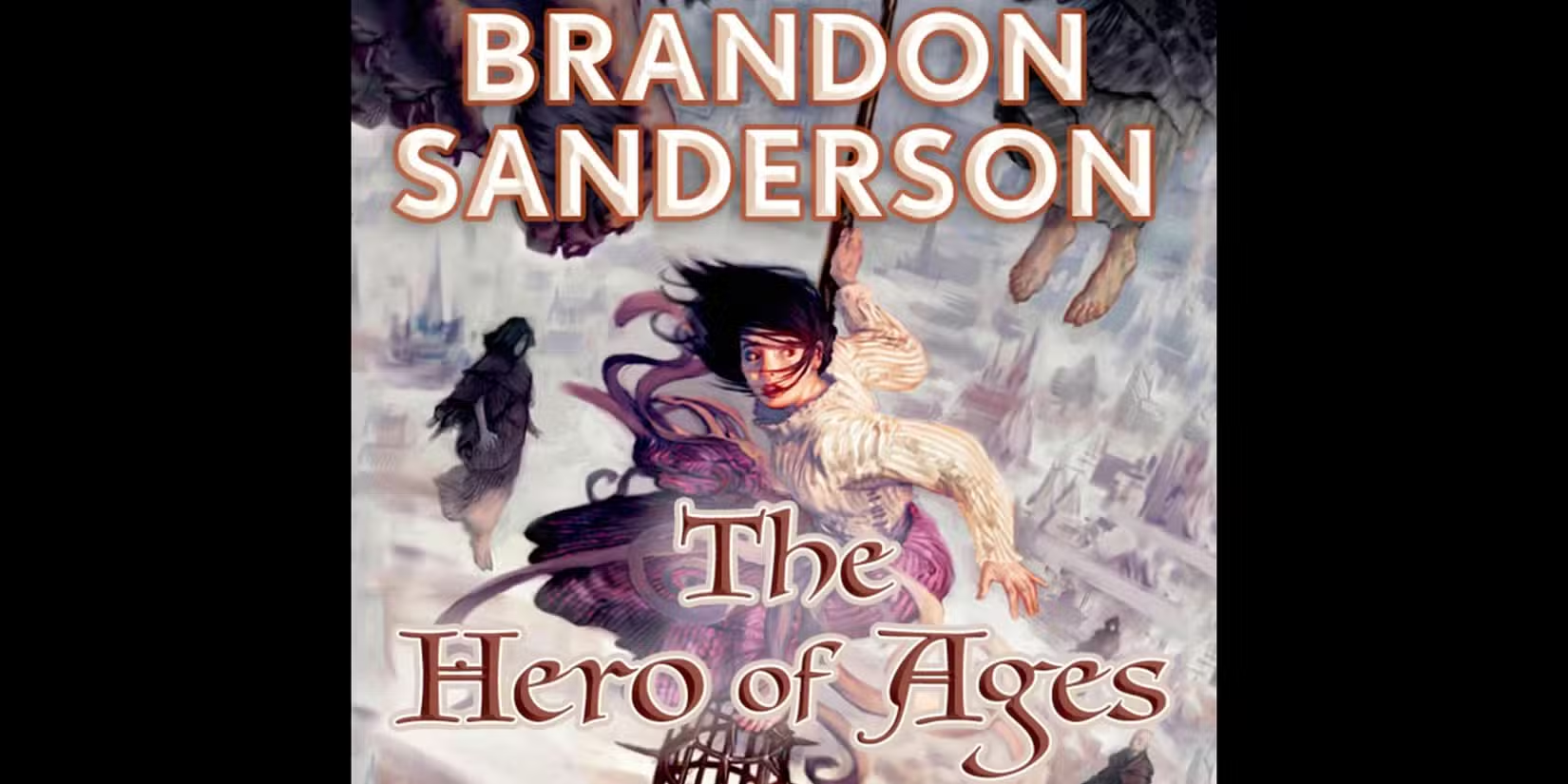
For the uninitiated, Brandon Sanderson’s Cosmere is an ongoing shared literary universe created in 2005 with his debut novel, Elantris. The universe consists of over 30 fantasy novels, short stories, novellas, picture books, and graphic novels. One of the longest-running series of the entire Cosmere is Mistborn, which was first introduced in 2006. This series consists of seven novels split into two distinct eras, one novella, and two short stories. Mistborn is one of the best-known works by the acclaimed author, and a large reason why is its distinct and epic ending, the novel The Hero of Ages, which includes what is arguably the single best third act in fantasy history.
What Is Mistborn About?
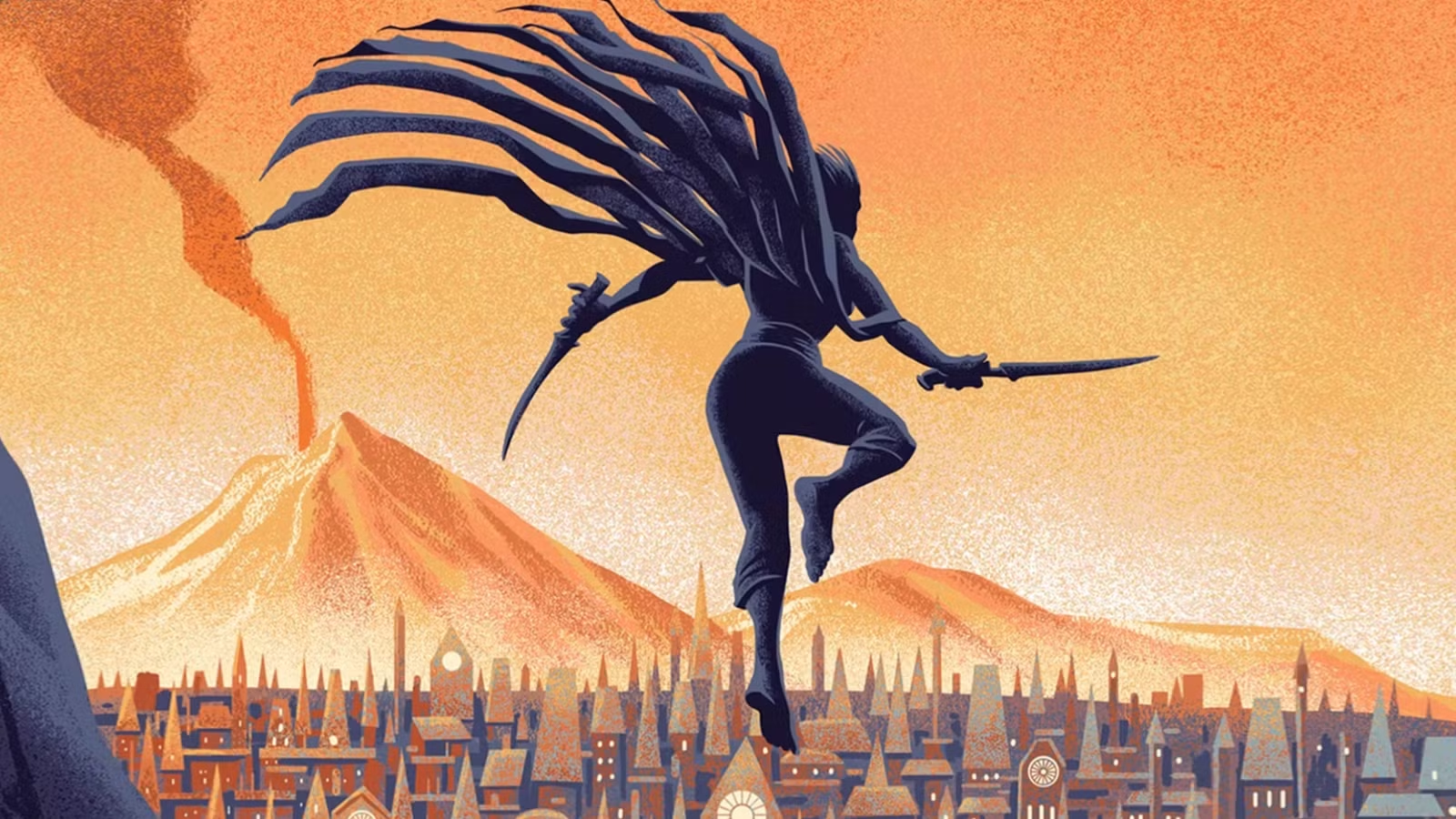
Mistborn is set on the planet Scadrial, which has no moon, a blazing red sun, and is constantly blanketed by ash spewing from a series of volcanoes. Most of Scadrial has been completely conquered by a realm known as the Final Empire. This oppressive regime is highly industrialized, featuring many major urban centres, albeit with Medieval technology. Citizens are divided into two categories: the ruthless nobles and the enslaved skaa, forced to survive on meagre wages and poor living conditions while enduring hard labor.
There are three main magic systems here: Allomancy, Feruchemy, and Hemalurgy. Allomancy involves users swallowing beads of various metals and gaining powers from them, depending on the type of metal ingested. Feruchemy involves users storing aspects of themselves, like their health or strength, in metal accessories for later use; again, the specific type of metal matters. Hemalurgy is sort of a dark art, but it’s not possible to speak about without giving too much away about the first book.
The first era of Mistborn is about an Ocean’s Eleven-esque crew of skaa criminals living in the sprawling capital of Luthadel. Their leader, Kelsier, is known as the Survivor of Hathsin because he did time in the labor camp called the Pits of Hathsin, where skaa mine for crystals until they drop. Kelsier is the only living person known to have escaped. Along with a young upstart named Vin, Kelsier plans a daring uprising, killing the Lord Ruler and causing a skaa rebellion to overthrow the ruling class. They have to be careful, as at night, mist that purportedly kills people blankets the entire landscape.
‘The Hero of Ages’ Has an Apocalyptic Finale
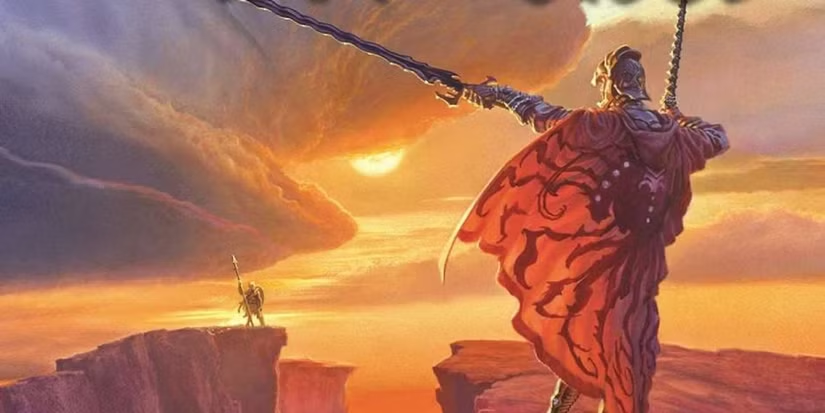
By the end of the final entry in the first Mistborn trilogy, The Hero of Ages, the Lord Ruler is no longer the focus. What Kelsier’s crew has discovered is that Scadrial is a world constantly teetering on the edge of the apocalypse. The ash in the air from the volcanoes is necessary to shield the planet, which will otherwise burn up due to its proximity to the red sun. The end of the world is well in motion at this point: the ground starts to quake, the volcanoes erupt, and rivers of lava are flowing across the blasted landscape, burning cities to the ground.
Vin has worked her way into the noble class and married the new ruler, Elend Venture, with the two orchestrating a much-needed overhaul of the world’s politics. However, they are not without political rivals. In the midst of it all, they must find a way to stop the Shard Ruin, which is hell-bent on destroying Scadrial, true to its name. Yet, there may be but one hope: it is prophesied that an unknown figure simply called The Hero of Ages will rise and bring harmony to Scadrial, saving the world from its inevitable destruction.
At the saga’s end, there is a massive war brewing, with armies clashing in the middle of armageddon — you’d think they’d pick a better time to go to war. As the battle ensues, Kelsier’s close friend, a Terrisman named Sazed, discovers deep-rooted secrets about Ruin and his connection to the Lord Ruler, alongside the truth about the nature of the mist and a way to bring an end to the end itself; it isn’t pretty, though. The main problem is that Preservation, the other Shard present on Scadrial, is no longer active, as its Vessel died a long time ago. Yet, this Shard is the key to… well, preservation. Once the truth is found out, the two Shards (who are basically gods) literally clash in the sky, making the battle even more apocalyptic.
When all is said and done, the book delivers an extremely bittersweet ending. Some pretty major characters die, whether during the battle or by sacrifice. Unfortunately, nothing can truly stop the end of the world, but perhaps it can be remade. Utilizing the divine powers, Scadrial’s orbital path itself is changed. The planet is thrust farther out into the expanses of space, the sun growing smaller and smaller. Eventually, Scadrial is placed into the solar system’s habitable zone, making the planet distinctly more Earth-like. That’s just the short version of the ending; anyway, there’s a whole heck of a lot more to it.
Why Is the Ending So Effective?
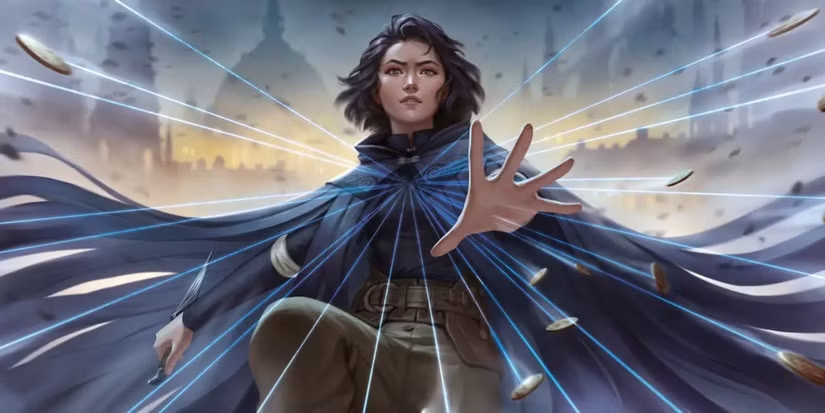
The ending of The Hero of Ages is one of the earliest examples of what fans have lovingly called the “Sanderscape” or the “Sanderlanche.” Basically, it happens when Sanderson drops a ton of important plot twists at a rapid-fire rate, one right after the other. These never feel like cheap cop-outs, either, as the mystery surrounding things is usually revealed early on. For example, in this story, characters piece together the meaning of a prophecy written on metal tablets in bunkers across the Final Empire, while at the same time, the truth about the Lord Ruler, his history, and his intentions is revealed. The tide of the battle turns just as a major protagonist is brutally executed, and Vin learns how she has secretly been controlled this entire time.
These aren’t deus ex machina, either. The execution is flawless, representing how clever Sanderson actually is when writing his stories. It shows an outside-the-box way of thinking and delivers bombshells that readers might not have pieced together on their own, but which make perfect sense when all is said and done. Truth be told, describing how the Sanderscape works is kind of hard to articulate. There’s just something unique about it, something that only Sanderson can pull off and has become a trademark of his work.
The ending is so effective not just because of how the plot unfolds all at once, but because of what it represents. It’s the classic fantasy trope of desperately holding on with a white-knuckle grip against impossible odds, because any flower of hope, no matter how small or shrivelled it may be, is worth fighting for. No cost is too great, either, as many of the main characters willingly give up their lives just to ensure the safety of others and the world itself.
The Hero of Ages is a testament to the power of friendship, love, and youth in the worst of times, and how these things will always triumph over destruction and decay. Not only that, but this is one of the most cosmically important events in the Cosmere, sending ripples throughout the rest of the galaxy. As far as modern fantasy goes, and even among Sanderson’s celebrated oeuvre, this ending feels the most complete and fulfilling, while being equally as melancholy. No one can write as Sanderson can, and this complex yet cathartic conclusion is a testament to that.