A great mystery movie turns the audience into an active participant and forces them to spend the entire runtime deciding who to trust and what information might prove to be important later on. That involvement is where the excitement comes from. Mystery movies live and die by this formula, and the best part is that finding the answers doesn’t make a movie less interesting.
In fact, it often makes the audience want to watch the whole thing again, just to see the clues they might have missed the first time around. Hollywood has produced plenty of memorable mystery movies built around one great surprise. However, the best ones know that the entire journey toward that reveal has to be just as exciting. The six movies on this list do exactly that.
6
‘Rear Window’ (1954)
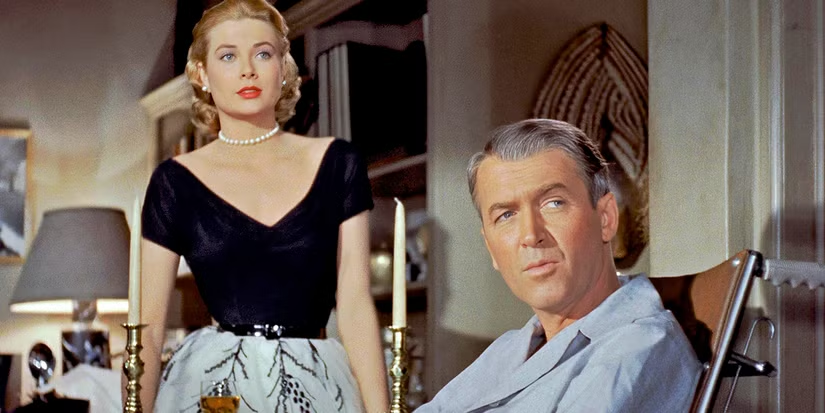
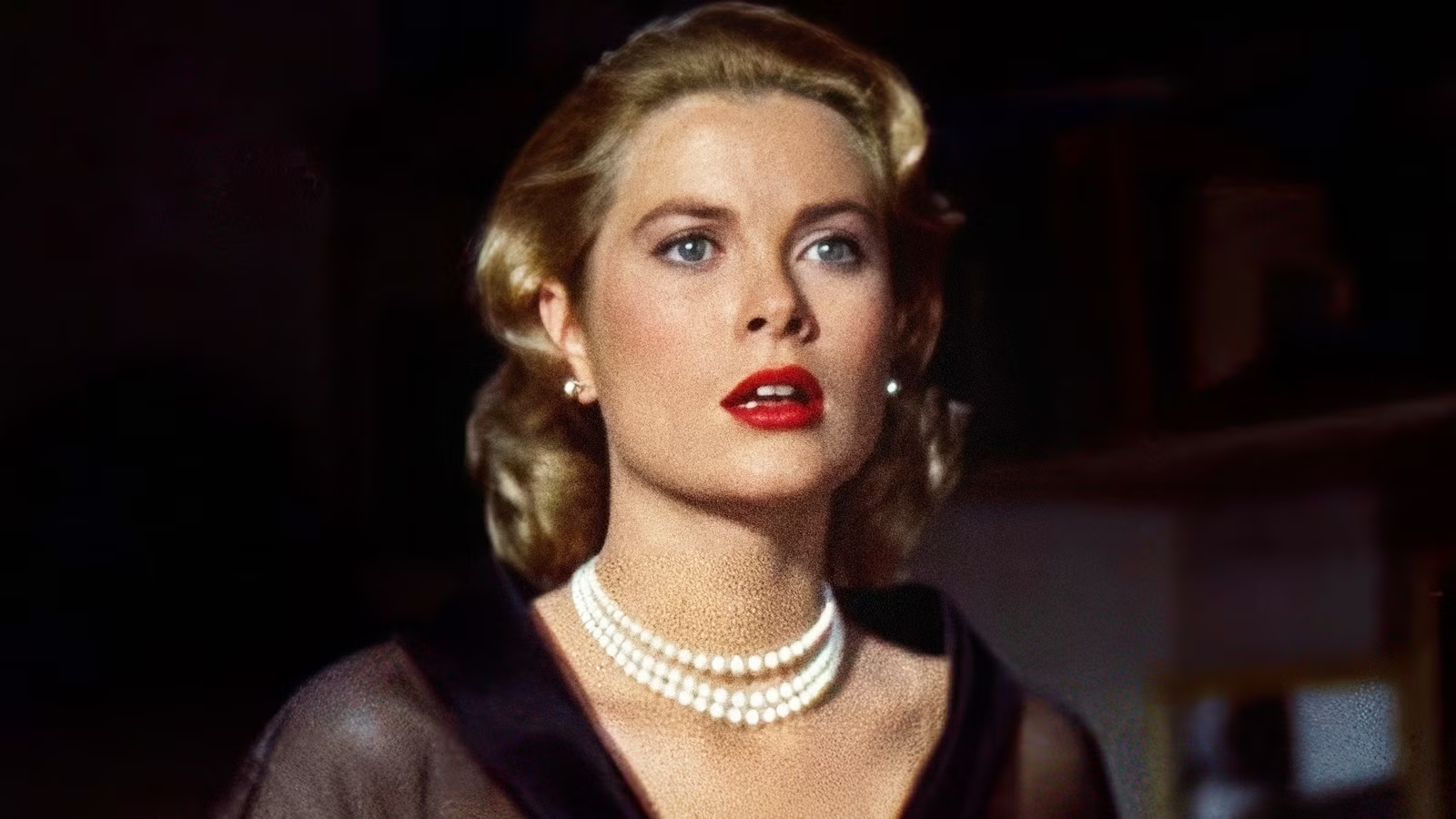
Rear Window is an Alfred Hitchcock masterpiece and a masterclass in creating tension. The film follows photographer L.B. “Jeff” Jefferies (James Stewart), who is stuck at home with a broken leg and passes the time watching the neighbors across his Greenwich Village courtyard. At first, their lives are just entertainment for him. He gives them nicknames, follows their routines, and fills in the gaps himself. That changes when his neighbor Lars Thorwald’s (Raymond Burr) wife suddenly disappears after the couple has an argument, and Jeff notices Thorwald making several suspicious late-night trips with a suitcase. Now, Jeff never actually sees a murder, and neither does the audience. However, from there, the entire story is built from whatever fragments the viewer gets to see through Jeff’s perspective, as the protagonist becomes increasingly convinced that Thornwald killed his wife.
Jeff’s girlfriend, Lisa (Grace Kelly), initially thinks he has spent far too long spying on strangers. Once she starts believing him, though, the mystery becomes much more dangerous because Lisa can go places Jeff physically cannot. The limitation of the story is what makes it so exciting. Hitchcock traps the audience in Jeff’s apartment and refuses to give us information he could not realistically see or hear himself. The viewers become just as nosy, suspicious, and impatient as he is. By the time Lisa enters Thorwald’s apartment while Jeff watches helplessly from across the way, the movie has turned simple observation into unbearable suspense. Rear Window makes the simple act of looking feel dangerous, and yet still addictive.
5
‘Vertigo’ (1958)
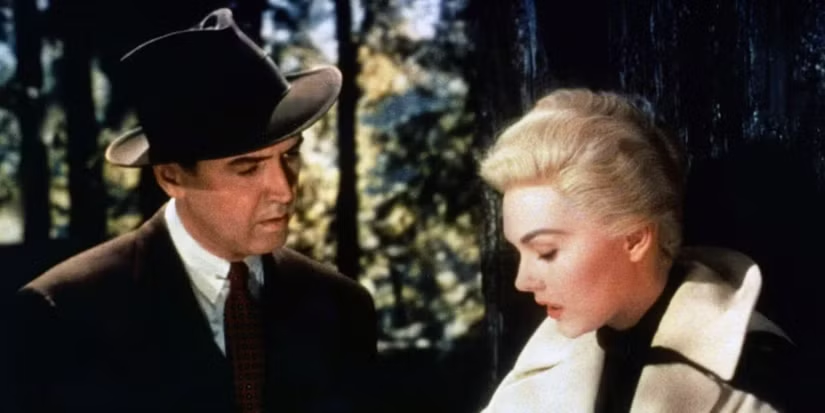
Vertigo is another Hitchcock film that keeps the audience hooked until the very last minute. The story follows former police detective John “Scottie” Ferguson (James Stewart), who has retired after developing a severe fear of heights. Then, an old friend convinces him to follow his wife, Madeleine (Kim Novak), who has been behaving strangely, visiting the grave of a dead woman and disappearing for hours without explanation. Her husband believes Madeleine may somehow be possessed by the spirit of an ancestor who died decades earlier, and Scottie initially treats the idea with obvious skepticism. The longer he follows her around San Francisco, though, the harder her behavior becomes to explain.
Things get even more complicated when Scottie ends up falling in love with the woman he is supposed to be investigating. This is where the nature of the mystery completely changes. Hitchcock deliberately gives the audience information Scottie does not have, so the suspense eventually comes from watching him move closer to the truth and knowing what will happen once he finally figures things out. Vertigo becomes the kind of mystery that is difficult to shake once it is over, with a payoff that makes one immediately want to go back and watch the whole thing all over again.
4
‘Psycho’ (1960)

Psycho spends its opening act making the audience worry about the wrong crime, and that trick remains unmatched to this day. The story begins with Marion Crane (Janet Leigh) stealing $40,000 from her employer and fleeing Phoenix with a growing sense of paranoia that she might get caught any second. Her escape eventually leads her to the isolated Bates Motel, where she meets the awkward but strangely likable Norman Bates (Anthony Perkins). Norman lives beside the motel with his controlling mother, and one uncomfortable conversation with him is enough to suggest that something about this place is deeply wrong. Then Hitchcock completely changes the movie with the iconic shower scene where Marion is brutally stabbed to death, and the person who was supposed to be the protagonist disappears from the story altogether.
From that moment, the real story becomes all about the dark things happening at Bates Motel — more specifically, the relationship Norman actually has with his mother. Marion’s disappearance eventually brings her sister Lila (Vera Miles), boyfriend Sam (John Gavin), and private investigator Arbogast (Martin Balsam) to the motel, and every answer seems to make Norman’s situation even stranger. Psycho is exciting because Hitchcock keeps changing what the audience should be afraid of. By the time someone finally enters the Bates house and discovers the truth, the movie has already reinvented itself several times, before delivering an iconic reveal that completely changes everything that came before it. The film is a classic for all the right reasons, one that deserves to be watched over and over again for decades to come.
3
‘Chinatown’ (1974)
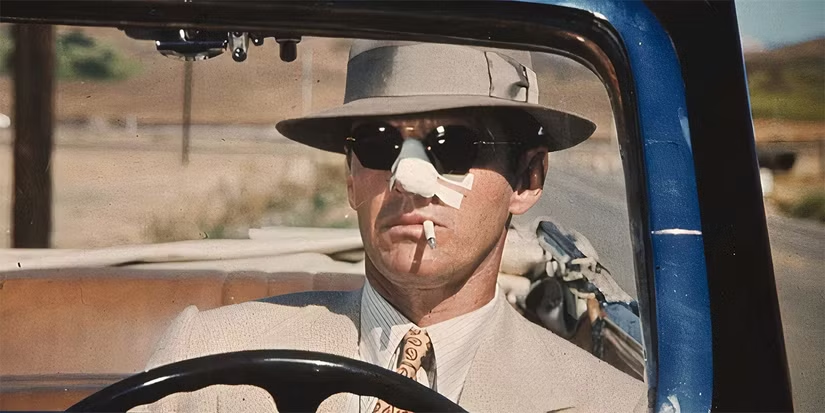
Chinatown begins with a case so ordinary that private detective Jake Gittes (Jack Nicholson) almost seems bored by it. A woman hires him to follow her husband, Hollis Mulwray (Darrell Zwerling), because she suspects he is having an affair. Jake gets the photographs he needs, and the job seems to be done. Then the real Evelyn Mulwray (Faye Dunaway) walks into his office and tells him she never hired him. Suddenly, Jake realizes that somebody has deliberately used him, and finding out why becomes far more important than the affair itself. The deeper he digs, though, the stranger the case becomes. Things take a turn when Hollis is found dead, and Jake begins uncovering evidence that huge amounts of water in the city are being secretly diverted while powerful people buy up land that should be worthless.
The opening domestic scandal gradually becomes a much larger conspiracy, but Chinatown never lets the mystery become purely political. Every new piece of the case brings Jake closer to Evelyn and her father, Noah Cross (John Huston), until the investigation becomes disturbingly personal. This constant escalation in Chinatown is the best part of the film. The audience learns the truth almost exactly as Jake does, so every answer feels drastic. The movie keeps tightening the mystery until one revelation completely changes how the audience sees Evelyn, Cross, and everything Jake thought he was investigating.
2
‘Memento’ (2000)
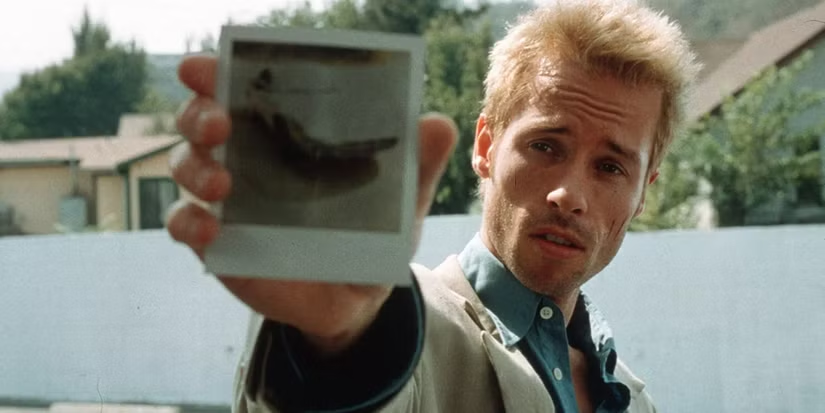
Memento turns forgetting into the entire mystery. The story begins with Leonard Shelby (Guy Pearce) hunting the man he believes murdered his wife. However, a head injury has left him unable to form new long-term memories. He can hold onto information for only a short time before it disappears, so he relies on Polaroid photographs, handwritten notes, and tattoos across his body to remind himself who people are and what he is supposed to be doing. The problem is that Leonard has no reliable way of knowing whether the information he leaves for himself is actually true.
Christopher Nolan makes that uncertainty even worse by telling much of the story backwards. Each scene begins after the one that follows it chronologically, which means the audience enters every situation without knowing what Leonard just forgot. A person who appears trustworthy in one moment can look completely different once the previous piece of the story is revealed, and eventually, the audience starts wondering whether Leonard is manipulating himself too. Memento’s experimental structure takes a while to understand, but it turns the story into one of the most exciting mystery movies ever made.
1
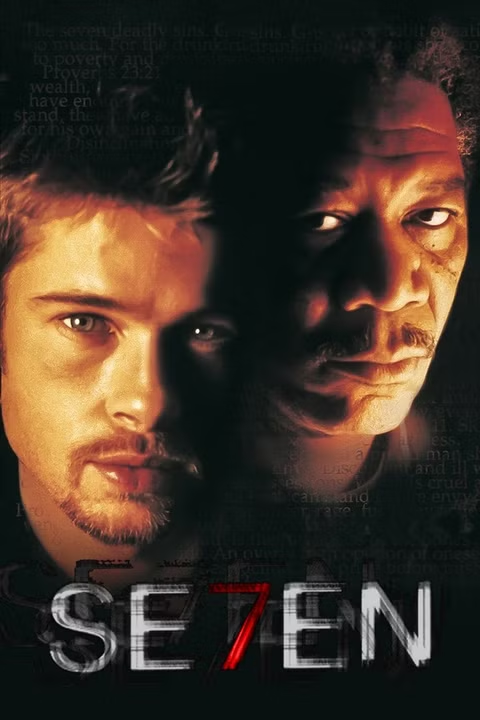
‘Seven’ (1995)

Seven is essential viewing for mystery thriller enthusiasts because so much of what came after it still feels indebted to this movie. The story follows veteran detective William Somerset (Morgan Freeman) and his younger, more impulsive partner David Mills (Brad Pitt) as they investigate a series of murders inspired by the seven deadly sins. Each crime is staged with disturbing precision, and every new victim reveals a little more about the killer’s twisted worldview. It doesn’t take long for the detectives to realize that the criminal isn’t avoiding attention. In fact, he wants them to understand exactly what he is doing, which turns a simple manhunt into something much darker.
David Fincher adds to this sense of anxiety through the film’s constant rainy setting and crime scenes that are deliberately visceral and difficult to look at. The contrast between Somerset’s exhaustion and Mills’s desperation to solve the case is one of the most important parts of the story, turning Seven from just a well-made procedural to one of the defining mystery films of its era. What makes Seven so exciting despite its darkness is the constant feeling that the detectives are racing to catch someone who is always one step ahead of them. The investigation keeps getting darker without relying on cheap twists, and the final act has gone down in film history for letting the killer complete his plan in a way that leaves the investigators completely helpless.