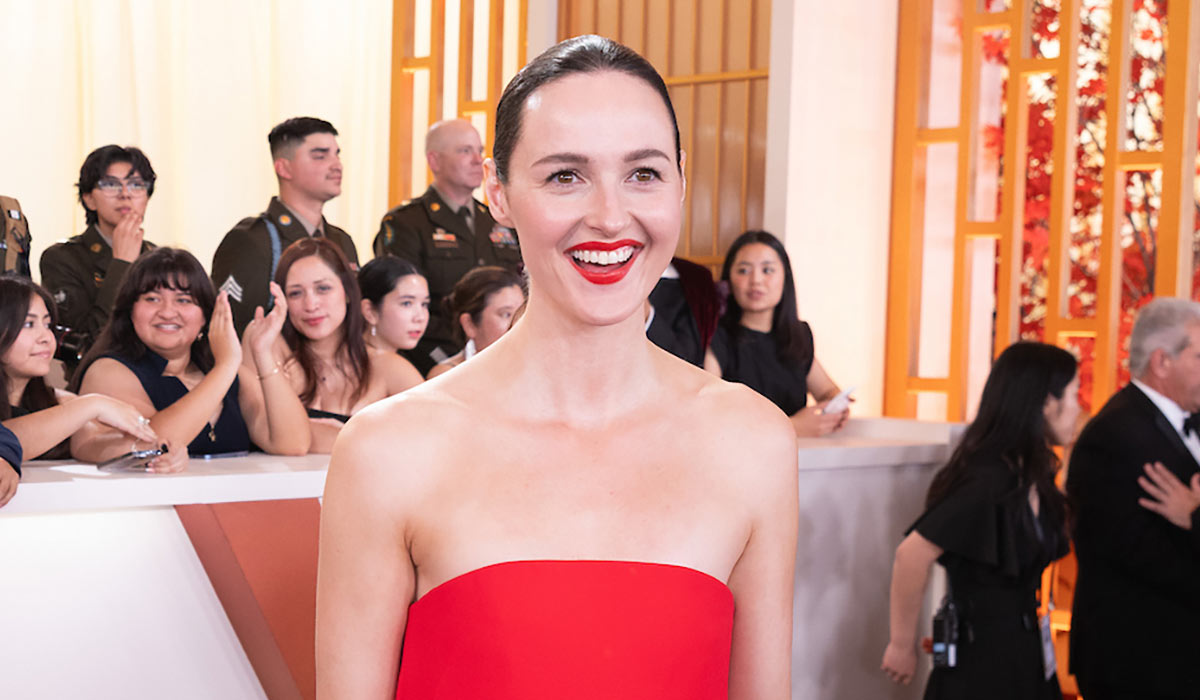
It’s been quite a year for Renate Reinsve. Or perhaps we should say it was quite a May. Her first collaboration with director Cristian Mungiu, “Fjord,” won the Palme d’Or at the 2026 Cannes Film Festival. Less than a week later, Kane Parsons’ prestige horror thriller “Backrooms” opened to $81 million in the U.S. alone, on its way to eventually earning $400 million worldwide. Oh, wait, we forgot January when Reinsvie earned her first Oscar nomination for “Sentimental Value.” Again, what a year.
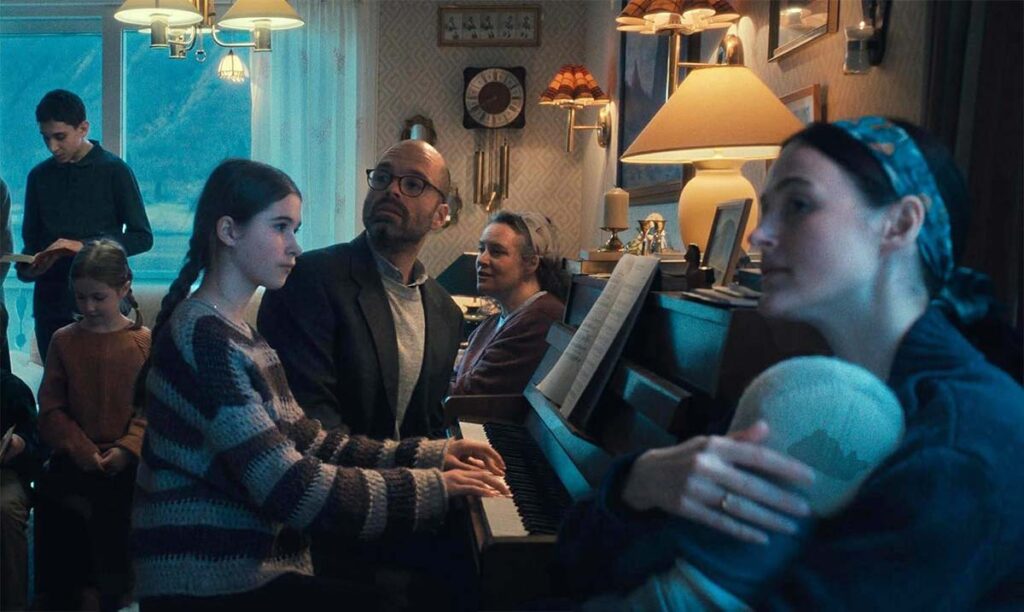
Earlier this month, Reinsve jumped on a Zoom to chat about “Fjord,” an expected International Feature and potential Best Picture nominee now in theaters. Inspired by a true story, the drama centers on Lizbeth (Reinsve) and her husband Mihai (Sebastian Stan), two members of a conservative Christian denomination who have immigrated from Romania to rural Norway for a better life. When a school teacher notices a bruise on one of their children’s arms, it sets into motion a showdown with child services that makes national and European headlines.
During our conversation, Reinsve reflected on the massive success of “Backrooms,” the “chaos” of international co-productions, how Mungiu is like no other director she’s worked with before, how the Norwegian Child Welfare Services counselors appreciate the conversations the movie has started, the excitement of another Cannes awards ceremony, and much, much more.
This interview has been edited for length and clarity.
_____
The Playlist: Before we get to “Fjord,” I have to ask you about that other major movie you were in this year. In your wildest dreams, did you ever think “Backrooms” would do what it did at the box office? That it would be such a worldwide smash?
Renate Reinve: Yes, I planned it all. [Laughs.] No, I knew that Kane had this big fan base that I thought was already a lot of people, but I kind of thought it would be this strange little indie horror movie that would be seen by his big fans, and then it exploded. It was fantastic that people can relate to that strange world. I love that.
Are you getting recognized from that now on the street?
Young people. Yeah. It’s different ages now for different movies.
It’s the “Fjord/Sentimental Value” group and then this?
Yeah, yeah, yeah. [Laughs.]
But let’s talk about “Fjord.” How did working with Cristan come about? Did he reach out to you? Had you met him at a festival years ago?
No, he reached out because he had decided on doing this story as a movie, and he was talking to Sebastian for a long time about making something together. And I think he was a little bit skeptical of pairing me and Sebastian together again. But I read the script, we had a read-through, and then I really got very attached to and felt so much compassion for Lisbet as a character. And also, after the conversation that Cristan and I had, we knew we would work well together. So, that was the process of him getting me. But it was kind of the Norwegian production office that reached out first.
What about those early conversations told you we would be simpatico working on set? Because I know when I spoke to Sebastian, he seemed like it was something for him to adjust to.
When I met him, I thought in my head, I’ve never met someone like that. He would stand next to the table after the read in this position for a very long time, and he talked about his ideology of making movies, and I was so fascinated, and I really loved what he was saying. He was talking a lot about how he wanted to remove as much manipulation as he could because he understands that movies are a manipulative medium. So, he wanted to take that out with no music. He didn’t want to lead the audience on with anything of emotion from the actors who was leading the audience to having an opinion or empathy with any of the characters. It could be emotion, but it had to be very, very true in the moment and just occur in the moment. I heard he did 50 takes and all in one shot, and later learned that being in a co-production between countries means that it’s so much chaos. You only get the script one week before the finished script. So, learning those big scenes, the one-shot, was challenging in so many ways. But I was just so fascinated by the way he wanted to shoot this movie. And also the script – he doesn’t leave one point untouched. Everything is so deliberate in how he writes the dialogue and the rhythm in the dialogue. And he really is so thorough. And then I learned also on set, his poetry really is within the frame. He doesn’t know exactly what we’re doing when we start, but he kind of builds the mise en scene as we go, and that’s also why he does so many takes. So, you can really see the scene develop in how he places the characters, and what the subliminal meaning of where he places the characters and how they move within the frame means so much to the movie and what you feel watching the movie. And then just this notion of not judging the characters at all. None of their actions are judged by us. It’s very open to the audience’s interpretation. And I love when movies do that. It’s so rare.
Just wanted to go back quickly about how he does so many takes because Sebastian mentioned it could be up to maybe 15, 20 minutes for…
… a take.
And you liked that?
I learned to like it. [Laughs.] No, the first day was really a shock for my system because I gave it all in the first three takes. I gave it all in a very reduced way, as he wants it, because the character- she’s so quiet, she’s so still, and so grounded in what she’s in – but still you try to give it all. But then it was another take and another take and another take. And then we had 17 takes before he rubbed his hand, and that means he’s happy. And that was also the biggest scene for me because it’s the time where Lizbeth is told her kids are going to be taken away, and it’s a 12-minute scene.
That was the first scene you did?
Yeah. And then I got that scene a week before reading it through. It was really, really challenging. So, I feel I really got into the rhythm and the understanding in my body of what we were doing a couple of weeks in because it was just a shock to the system. But I really love working with different directors and their style, and I feel I have to throw away everything I know and relearn how to act in all these different directors’ styles because they’re so different.
I know you all went to Romania and met members of – I don’t think it was the exact same sect, but a religious group similar to the one in the film. What did you learn from meeting them that helped inform the character?
I think it was how many rituals they do. It’s rituals within the family, and they sing together. They have prayers together in a certain way and trying to find normality in those rituals that are kind of small, but very everyday for them. Just to find comfort in those small things that they did, and just seeing and trying to talk to people about how specific your relationship to God is, and trying to make that as specific as I could, not growing up with religion in my own life.
Do you remember reading the case the movie was based on in the news?
No, I’ve definitely heard about different cases where it turns out to be a nightmare, and it’s the worst outcome because the people involved judge wrong. And child services in Norway is a really good institution, and it works really well, and it’s helped so many people. And of course you don’t hear that many stories. In this process, I have also heard really, really great stories where kids actually get help, but there will be mistakes, and there have been mistakes, especially with people coming from different culture that has opposite values or doing certain actions that are illegal in Norway. But I’ve talked to people from child services in Norway who really appreciate this movie because, internally, it always needs to be challenged and discussed within the people in child services.
Obviously, you’re a veteran of the Cannes Film Festival Award Ceremony. When I spoke to Sebastian, he talked about how stressed he was going through it because he didn’t know what was going to happen. As someone who’s experienced it before, were you getting more excited as the ceremony went on, realizing what might happen?
It was funny because I kind of half-remember the order of when they read what award, and we really had no idea because this year the jury was so quiet. There weren’t really any rumors at all. We went in not knowing anything but absolutely not expecting the Palme d’Or, but they kept reading and reading, and I was like, “Wait a minute.” And then I remember holding the cinematographer’s hand, being like, “Wait a second.” We were all so still, almost crying but couldn’t cry until they’d actually said it. So no, it was an incredible surprise.
“Fjord” is now playing in limited release
Follow Gregory Ellwood on Bluesky
Follow Gregory Ellwood on Threads
Follow Gregory Ellwood on Instagram
Follow Gregory Ellwood on TikTok
Sign Up For The Breakdown Newsletter