This is a section from the 0xResearch newsletter. To read full versions, subscribe
As we enter the brand-new year, mindshare throughout crypto has actually rotated meaningfully. Forecast markets, stablecoins and RWAs have become the clear victors, while AI, modularity and memecoins have actually fallen out of favor. One method that stood apart today touches two of the 3 leading narratives and has quietly been installing remarkable metrics: the Canton Network.
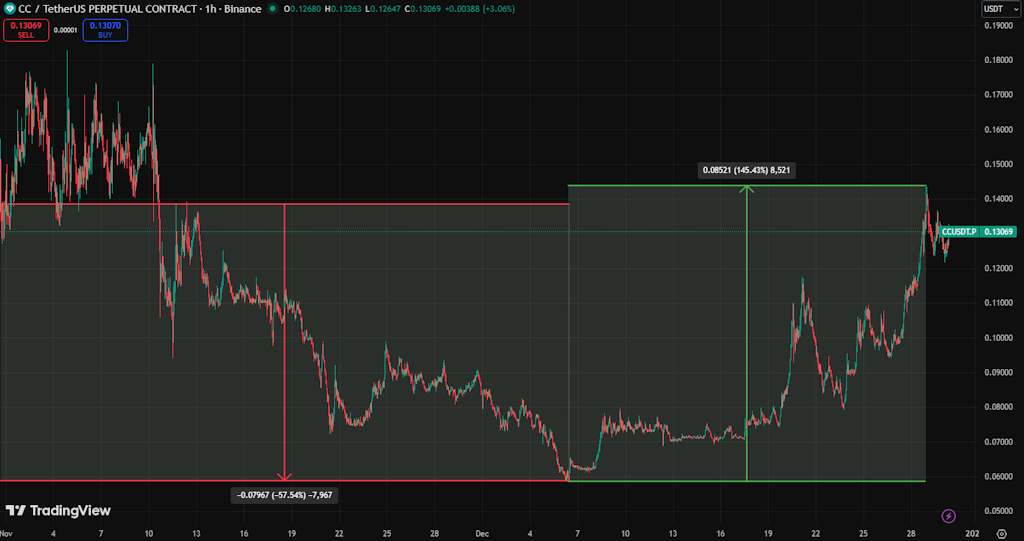
Canton is a blockchain constructed especially for banks, created to allow secure, interoperable and privacy preserving transactions. Its token came to be transferable on Nov. 10 and, after a preliminary drawdown of more than 50 %, it has fully recuperated. It’s now up 47 6 % over the past month.
The range of RWA activity on the network is already significant. Since Q 4 2025 , Canton has actually processed $ 6 trillion in real-world possessions and currently manages regarding $ 350 billion per day in United States treasury activity. Much of this grip originates from institutional companions like Broadridge Financial Solutions , a global fintech leader in trading and settlement framework. Broadridge’s Dispersed Journal Repo system works on Canton and refines greater than $ 8 trillion monthly in repo deals, making use of blockchain rails to enhance efficiency in one of the largest markets in global money.
Energy has actually continued to develop with much deeper assimilations. A collaboration with Nasdaq attaches Canton to Nasdaq Calypso, allowing computerized margin and security monitoring and allowing institutions to relocate and recycle resources extra effectively across traditional and electronic assets. A lot more lately, DTCC, the central cleaning and settlement foundation people monetary markets, $10 trillion of securities transactions every day, the capacity to relocate settlement from T + 2 to near real-time could meaningfully enhance efficiency and free up resources within existing market framework.
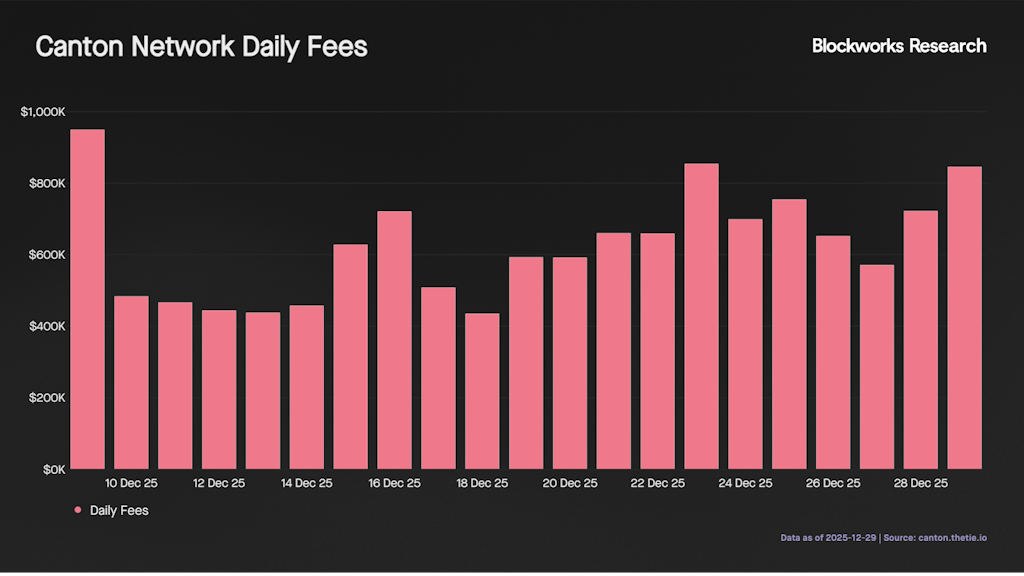
The network usage is very closely tied to the token. Canton’s Worldwide Synchronizer collaborates cross-institution deals, with foreseeable fees paid in CC that are shed as network activity boosts. Over the past 20 days, the network has burned a median of 6 71 million tokens daily, equating to about$627, 000 per day, with optimals in between$750, 000 and$850, 000 For context, Solana averaged roughly $670, 700 in REV daily over the last seven days, yet trades at a FDV concerning 16 x higher than Canton.
[
****************] 
Use metrics finish the picture. Because November, Canton has actually balanced around 28, 500 daily energetic customers and 678, 300 everyday deals, placing it in line with networks like Monad on DAUs and Lot on deal count.
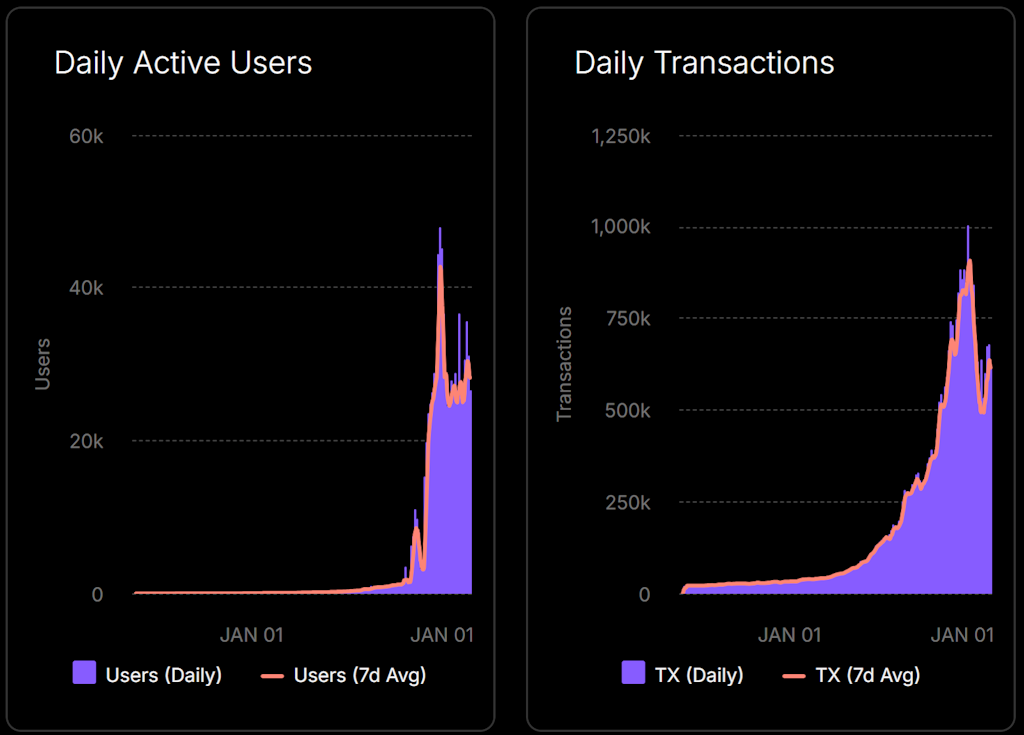
There is still far more to unbox around style, validators and lasting token layout, however the early signals are tough to ignore.
With exposure to stories such as tokenization, stablecoins and privacy, Canton is shaping up as one of the more intriguing methods to watch as we head into 2026
Lighter’s TGE
Lighter airdropped and launched LIT on Dec.
30, closing out a timeline that investors
had actually been stress-testing by means of a Polymarket agreement that properly functioned as a TGE proxy. Odds quickly slid to ~ 60%intraday before the launch went through.
LIT’s max supply is 1
billion with 250 million flowing at TGE, a 25%day-one float. The airdrop was moneyed by Seasons 1 and 2 factors, with 12 5 million factors exchanged LIT, suggesting approximately ~ 20 LIT per factor on the headline mathematics. Allocation divides are 50%ecosystem(25%now, 25%later), 26%group, and 24%financiers. Team and capitalists sit behind an one-year cliff followed by three-year direct vesting. Versus that background, premarket points rates has repriced greatly post-TGE, with points buyers down around 50 %from peak levels that implied approximately $100 per point on top.
The even more interesting dispute is not the airdrop, yet token holder protection. Lighter is leaning directly right into the token equity inequality critique, suggesting that incomes from the core DEX and
future items can be tracked onchain in real time and allocated between growth and buybacks depending upon problems. It goes further by asserting the value produced by all services and products will completely accrue to LIT holders, with the token issued directly from its United States C-Corp, which will certainly operate the procedure”at cost.”Directionally, that is a more powerful stance than the typical separate laboratories record earnings design, but it is not a tough warranty:” At expense”is elastic(e.g. Uniswap Foundation staff member salaries).
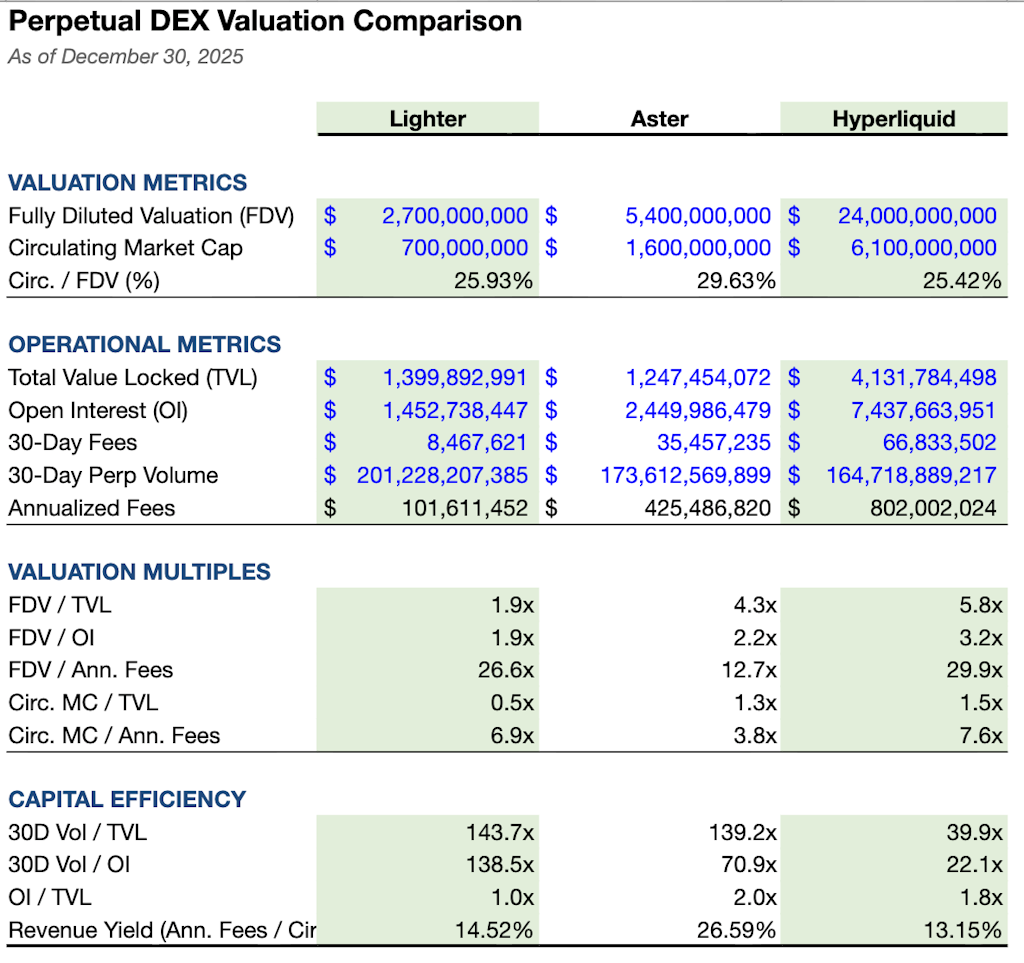
On comps, the marketplace is valuing Lighter similarly to Hyperliquid. At$2 7 billion FDV and$ 700 million flowing, Lighter in weight’s float is ~ 25 9%, nearly identical to Hyperliquid’s ~ 25 4%($24 billion FDV and$6 1 billion flowing). Much more significantly, Less heavy is trading on a costs multiple that is already in Hyperliquid’s array: 26 6 x FDV/annualized fees(and 6 9 x circulating/annualized costs)vs. Hyperliquid at 29 9 x(and 7 6 x). That’s despite a large space in outright scale, Lighter printed$8 5 million in 30 D costs vs. Hyperliquid’s$66 8 million, and Lighter in weight’s open rate of interest is$1 45 billion vs. $7 44 billion for Hyperliquid.
Obtain the information in your inbox. Check out Blockworks newsletters: