This is a section from The Malfunction newsletter. To review complete versions, subscribe
“There’s an idea that the world’s GDP is in some way limited at $ 100 trillion. AI is going to create that $ 100 trillion to become $ 500 trillion.”
— Jensen Huang
In 1901, US Steel came to be the very first $ 1 billion firm– “a nearly unthinkable sum,” a reverse DCF to determine how much annual income the most significant firms will certainly need to bring in to justify current evaluations.
To invest in Tesla now, he determines, you need to believe the business will gain yearly revenue of at least $2 2 trillion by the year 2030– a presumption that’s”pressing the restrictions of opportunity,” he says.
Nvidia shareholders are not rather as enthusiastic: They just require the business to do about $ 590 billion in yearly profits by 2030 “While that is a reach,” Damodaran recommends, “it is both possible and possible.”
Still, $ 590 billion is a gargantuan number.
For viewpoint, United States Steel in 1901 was worth only about $ 46 billion in inflation-adjusted terms.
Currently, OpenAI is reported this week to be elevating cash at an$800 billion evaluation, with
strategies to IPO at$1 5 trillion
Anthropic, a public advantage company that doesn’t aim to optimize revenues, may IPO at$300 billion.
Incredible.
It was only 12 years ago that the term”unicorn”was created to describe the brand-new sensation of startups valued at$1 billion.
Currently we have”centicorns”– privately held startups worth 100 x more than a unicorn.
Maybe most unbelievable, nonetheless, is the AI startup– Believing Devices– that increased$2 billion from capitalists in a seed round previously this year.
Seed rounds the dimension of US Steel
(admittedly unadjusted for rising cost of living)is a step of exactly how substantially economic markets have increased over the previous century.
Will these business jointly make the
trillions of bucks of profits required to justify these evaluations?
Thought of in dollars per 2nd, it’s difficult to picture.
However we possibly need to assume larger than that, as the head of ChatGPT< a href="https://time.com/ 7339685/ person-of-the-year-2025-ai-architects/"node="[object Object] target="_ space"rel="noopener noreferrer nofollow"> lately encouraged us to do:” I believe there is near-infinite need for knowledge.”
If so, I guess there ought to be near-infinite need for supplies, too. [
************]
Allow’s check the charts.
Land of the unicorn:
[
****************************] 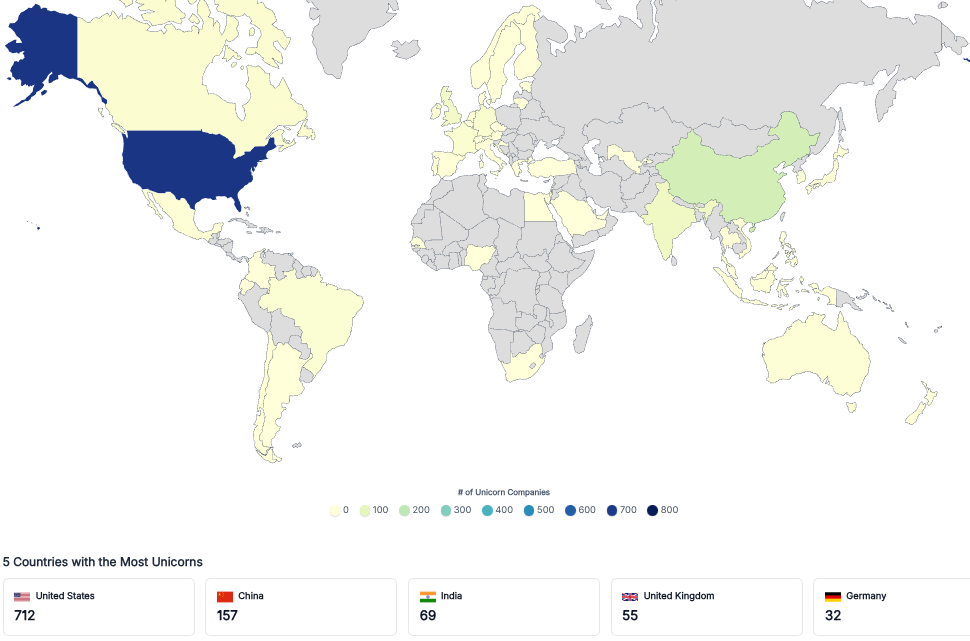
The US has [
*************************************************************************************] unicorns, worth a cumulative$2 9 trillion, vs. just 157 for second-place China. 80 of those were reports that Oracle financial debt currently trades at junk-bond levels. [
************]
Jobs are the new prices:
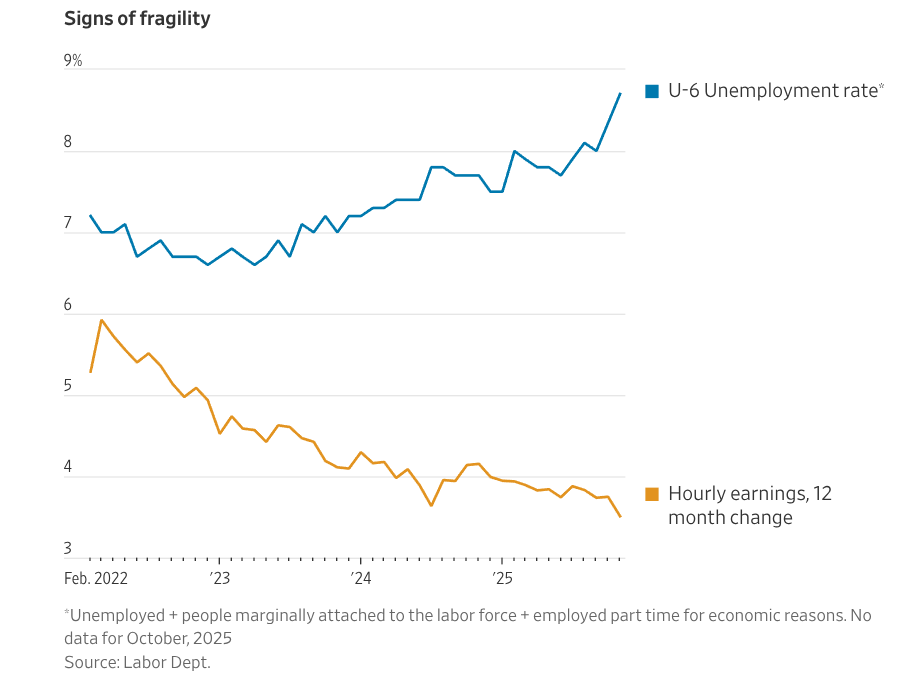
Greg IP reports that tolls have actually struck little companies the hardest, triggering them to drop jobs.
The excellent and bad news on tariffs:
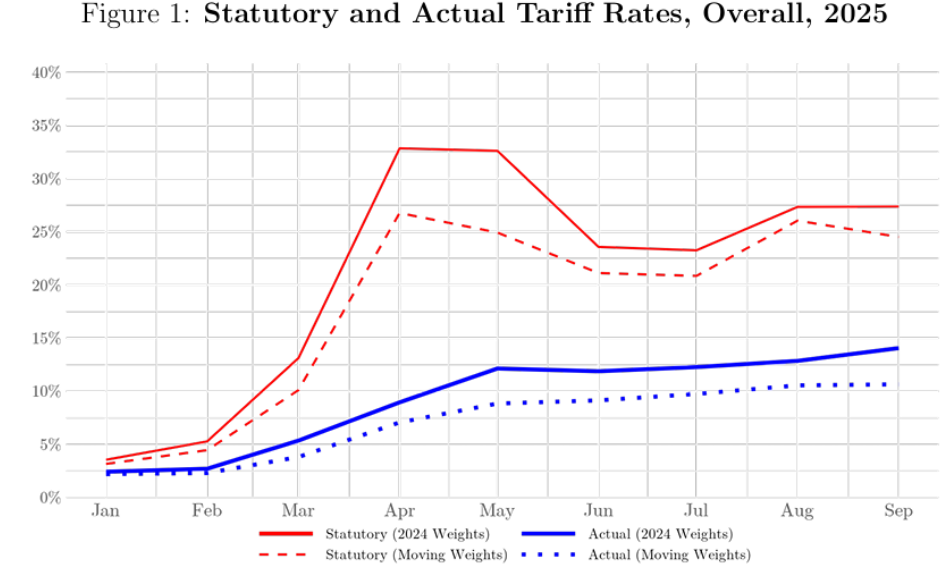
A brand-new research study reports excellent news: Reliable US tariff rates have until now been about half the heading number due to time lags, exceptions and enforcement spaces. The problem, nevertheless, is that”nearly [
****************************************************************************]
%”of tolls are being gone through to consumers via greater rates.
Simply beginning?
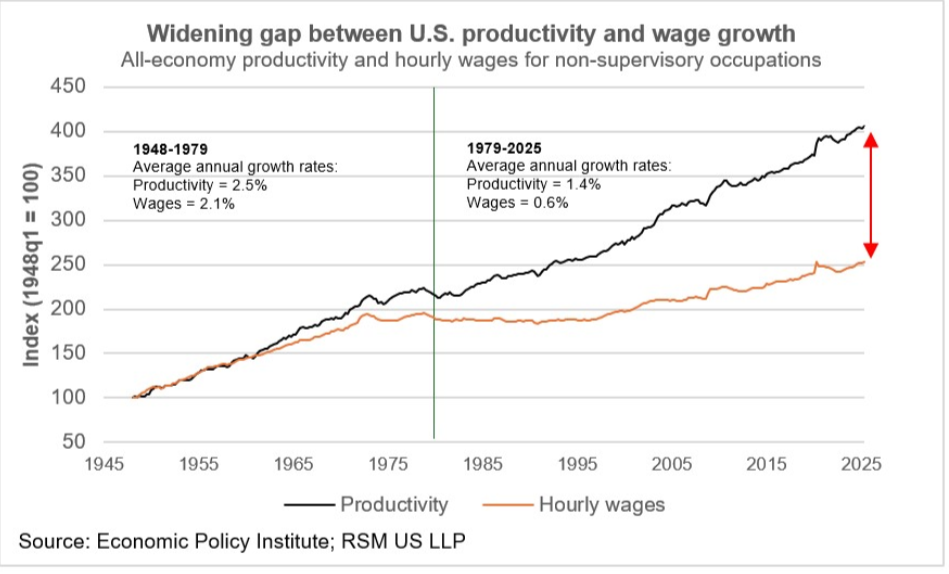
Joe Brusuelas records that”The void between United States performance and the hourly wage paid to non-supervisory staff members continues to broaden. If anything, the gap is accelerating as the American economic climate continues to be transformed by the international supply chain and technical breakthroughs.”
Keep reading:
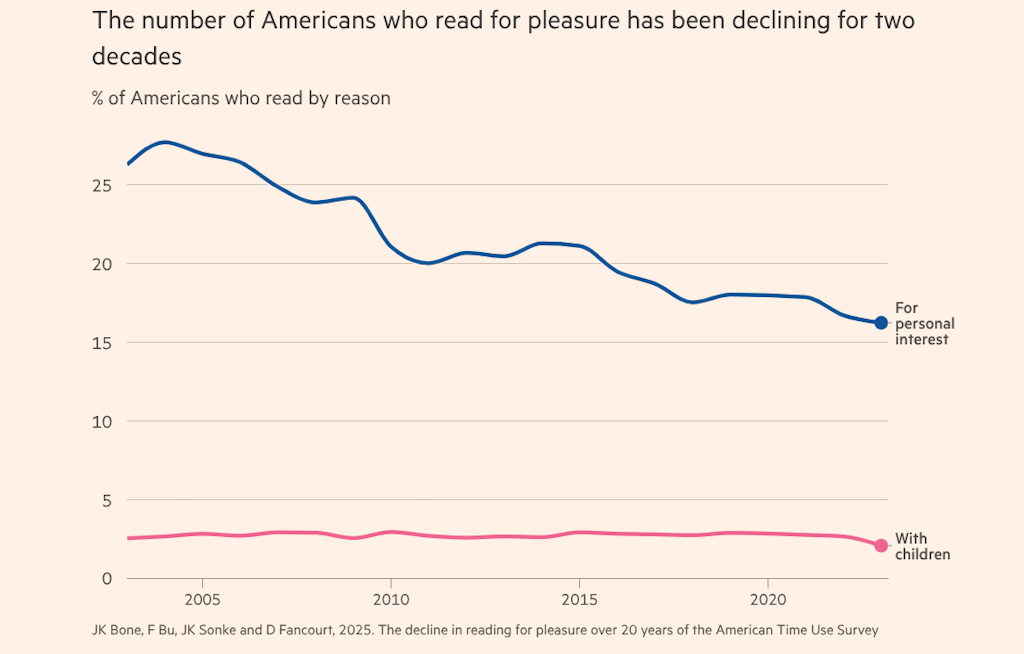
The FT reported previously this year on the decrease of reading : The percent of Americans checking out for individual passion is down 10 percentage factors because 2005
, although the percentage reading to children stays stable. Do newsletters count as individual interest? If so, please think about reviewing this one to a kid.
Less youngsters to check out to:

Torsten Slok keeps in mind that the percent people families with youngsters has actually been dropping.
The YouTube generation:
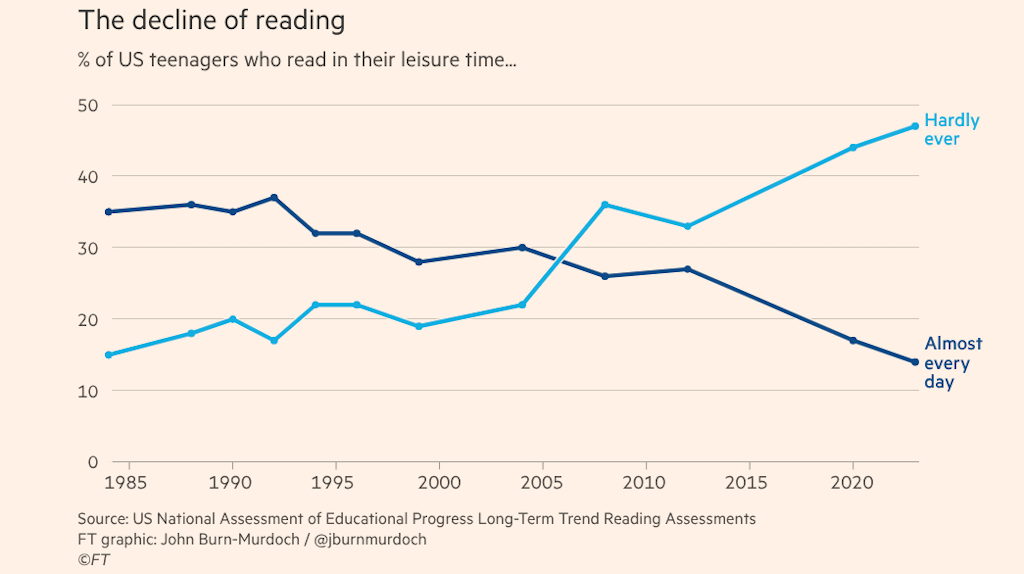
Almost 50 % people teens claim they”rarely”review in their spare time, up from 20 % in 1990 Appears fretting, yet you really can discover a lot on YouTube.
Land of the increasing return:
[
***************************] 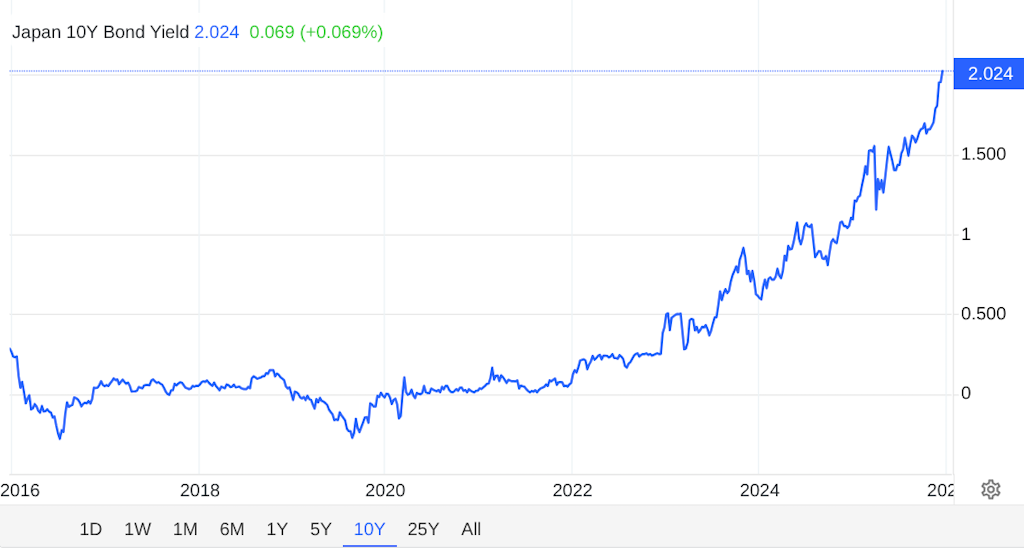
The return on 10-year Japanese federal government bonds is about 2 % for the first time considering that 1999 Greater yields typically imply Japanese savers will certainly offer US financial investments to reinvest in the house, yet < a href="https://x.com/dailychartbook/status/ 2002038717267980517 s = 20 node ="[object Object] target ="_ blank"rel ="noopener noreferrer nofollow"> the opposite seems to be occurring , likely as a result of the charm people AI stocks.
Rates by weight:
[
****************************] 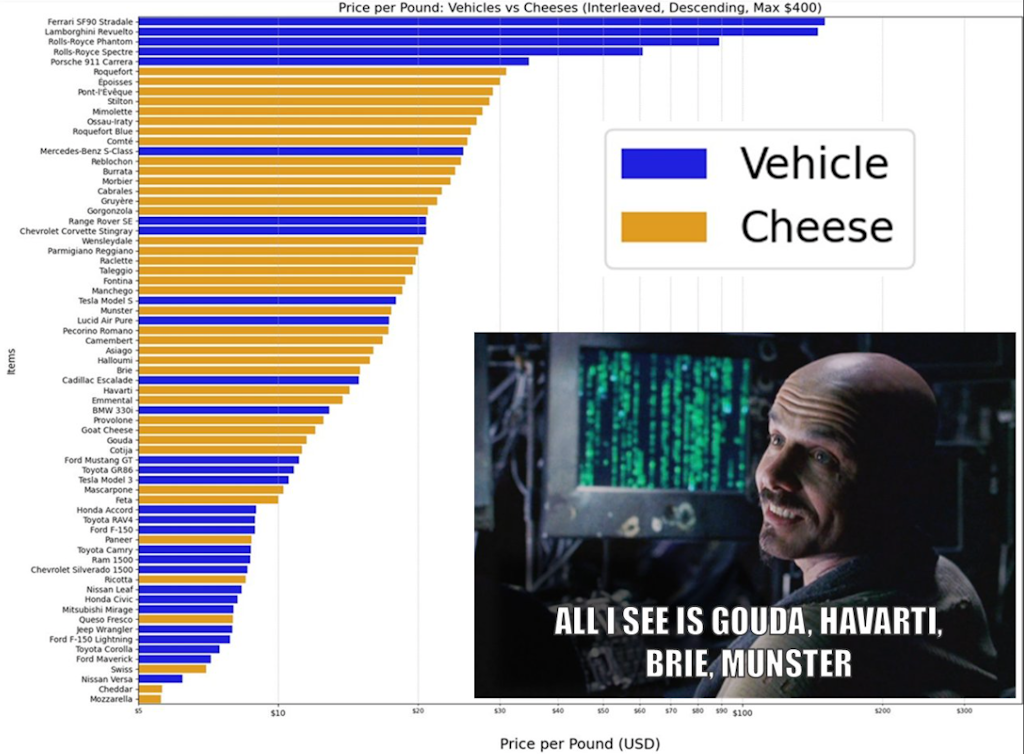
Determining everything in rate per pound, < a href="https://x.com/andrewmccalip/status/ 2000239273954705740 ? s = 20 node =" [object Object] target =" _ blank" rel="noopener noreferrer nofollow" > Andrew McCalip locates that a Tesla Design 3 expenses much less than Camembert. “We pull sand, oil, and ore from the planet and translate them into equipments more affordable than aged milk.”
Maybe that is the type of thinking we require to make sense of trillion-dollar evaluations.
Have a terrific weekend, trillionaire visitors.
Obtain the news in your inbox. Discover Blockworks newsletters: