SAG-AFTRA, the American Federation of Music and the Writers Guild of America East and West are calling on a federal judge to reject a fair use exemption for training AI models.
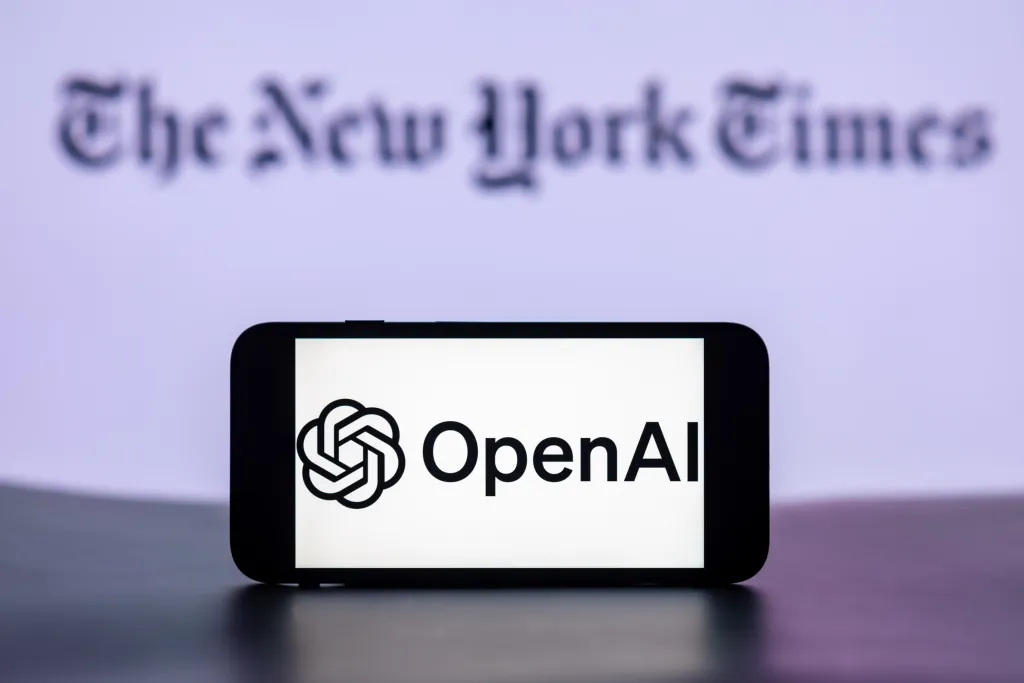
The unions jointly filed an amicus brief Thursday in the ongoing copyright infringement battle between OpenAI and a slew of news outlets and writers, urging the court to consider that the trillion-dollar company is “appropriating the work of middle- and working-class people to develop their technology” with the free, unrestrained use of third-party content to train its language learning models.
“The harms of unlicensed training fall not just on companies like the News Plaintiffs, but on the countless professionals behind the work,” the brief reads.
The 34-page document lays out in detail how a categorical fair use exemption would allow for a “potentially enormous transfer of value” from creators to corporations. The unions argue for the necessary human element of all forms of writing, honing in particularly on news (which is one of the major cruxes of this case), before expanding to explain a more widespread detriment.
Though this is uncharted territory for the courts, “ultimately, this AI training dispute is ‘no more than an ordinary copyright case’ and should be treated as such,” the brief says.
In short, the four unions are collectively making the case that fair use cannot be decided with blanket exemptions and must remain a case-by-case judgement call, so as to protect human workers from exploitation. Read the document below.
The NYC-based copyright action locks OpenAI in a consolidated copyright infringement fight with the New York Times, Florida and Arkansas papers, The Intercept, other outlets, and a host of individually high-powered writers including Ta-Nehisi Coates, George R.R. Martin, John Grisham, Bosch creator Michael Connelly, Jonathan Franzen and Jodi Picoult, plus Sarah Silverman and the Authors Guild. David Baldacci, Mary Bly, Sylvia Day, Elin Hilderbrand, Christina Baker Kline, Maya Shanbhag Lang, Victor LaValle, Douglas Preston, Roxana Robinson, George Saunders, Scott Turow, and Rachel Vail are also in the mix.
The unions’ positions on AI are well documented. The topic was a cornerstone of the 2023 strikes, and it once again resurfaced in 2026 negotiations when the unions sought language to define the emerging AI licensing market. The writers and actors guilds managed to get a notice-and-bargaining right for third party licenses of covered work to train commercial generative AI systems.
“These negotiated provisions presuppose that training on covered work is a use that can be licensed and that the people whose work is used have a stake in the terms,” Thursday’s amicus brief reads. “A ruling here that training is categorically fair use would render moot the terms the unions and the industry agreed to at the bargaining table. It would harm not just the copyright owners, but the people who create the work.”