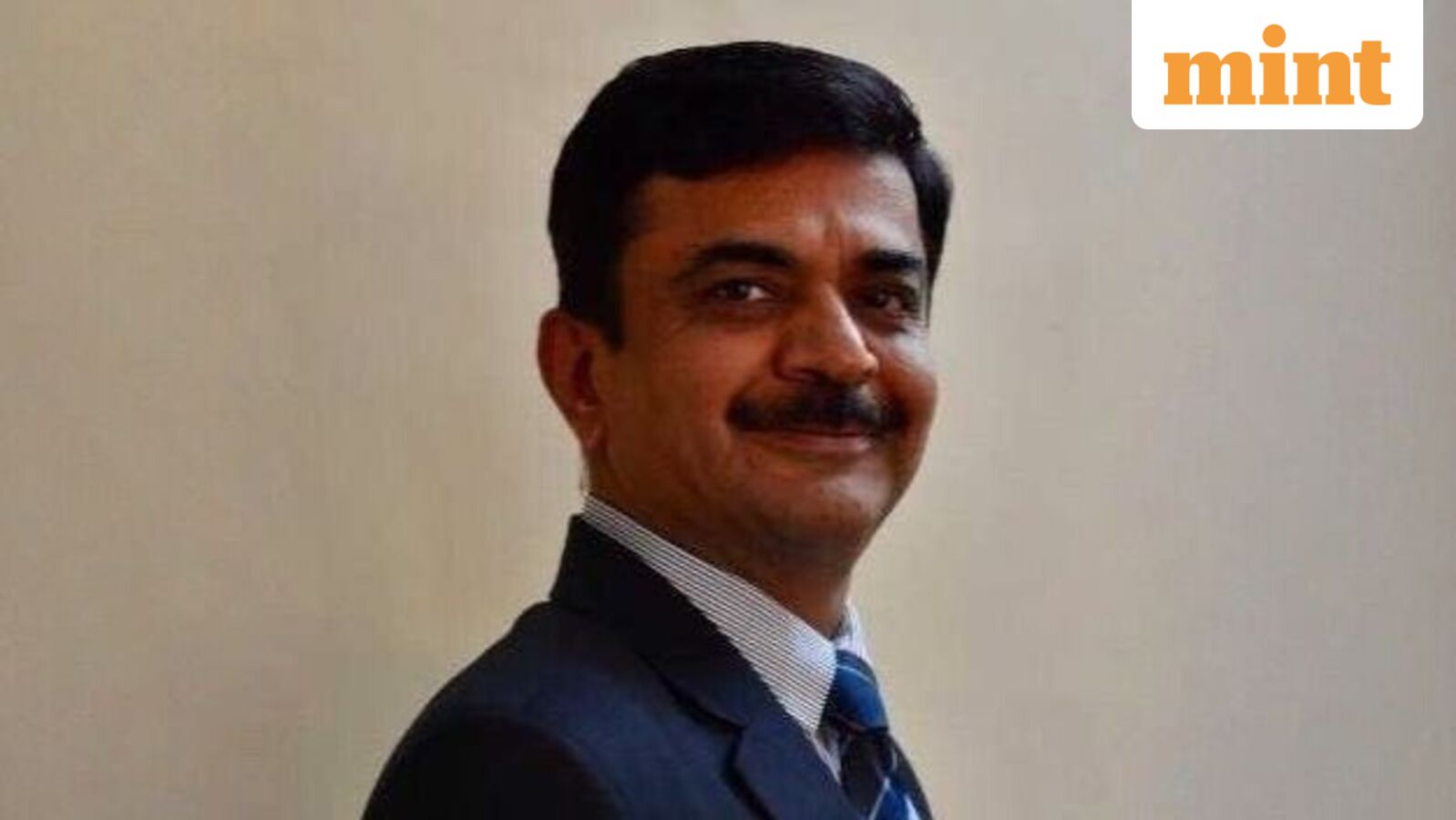
NEW DELHI: The appointments committee of the cabinet on Friday named 1993-batch Indian Administrative Service (IAS) officer Sandeep Poundrik as secretary of the ministry of heavy industries, according to an official order.
Poundrik, an IAS officer of the Bihar cadre, has been given additional charge of the heavy industries ministry while continuing as secretary of the steel ministry.
Union minister HD Kumaraswamy holds both the steel and heavy industries portfolios, and Poundrik’s new responsibility means he will now head both ministries at the secretary level.
Poundrik’s appointment comes at a time when crucial tasks for the heavy industries ministry would be to ensure smooth continuation of key electric mobility schemes such as the ₹25,938-crore production-linked incentive scheme for automobiles and auto parts (PLI Auto) and the ₹11,900-crore PM E-Drive scheme, while also ensuring that crucial advanced chemistry cell projects under the ₹18,100-crore PLI scheme for advanced chemistry cells (PLI ACC) scheme takes off successfully.
The ministry also oversees operations at state-run Bharat Heavy Electricals Ltd (Bhel), an integral engineering and infrastructure sector public enterprise, which makes power generation equipment, transportation and railway equipment, defence and aerospace sector manufacturing, and clean energy products.
The ministry is also responsible for running the ₹1,207 crore Scheme for Enhancement of Competitiveness in the Indian Capital Goods Sector – Phase II, under which the government runs industry accelerators and skilling programmes to reduce gaps in research and development in the capital goods sector.
In November 2025, the heavy industries ministry also launched a ₹7,280-crore incentive package to set up five rare earth magnet making plants in the country, in the wake of a global rare earth magnet shortage caused by Chinese export controls in retaliation to steep US tariffs.
Rare earth magnets are made from monazite deposits, of which India is the world’s third largest source. These magnets are made after processing monazite — China controls around 60% of the world’s rare earth mining and 90% of the world’s rare earth processing capacity — and these magnets are used in crucial manufacturing sectors such as defence, electronics, renewable energy, and automobiles including cleaner electric vehicles.
The PLI Auto and PLI ACC schemes, along with the PM E-Drive and the rare earth magnet making scheme, are crucial for advancing India’s progress towards meeting the country’s target of becoming a net-zero carbon emitter by 2070.
The government has supported the rollout of 1.1 million electric vehicles — 811,357 electric two-wheelers, 2,168 e-rickshaws (L3 category), 288,508 electric three-wheelers (L5 category), and 155 electric trucks — under the PM E-Drive scheme. The government has also sanctioned 14,000 e-buses under the scheme, through tenders issued by Convergence Energy Services Ltd (CESL).
Under the PLI Auto scheme, the government has disbursed ₹2,386.86 crore by the end of FY26, with the scheme set to disburse incentives for manufacturing zero-emission vehicles till FY29. Currently, eight vehicle makers and 10 component makers are eligible to claim incentives under this scheme.
The PLI ACC scheme, which targets setting up of 50 GWh cell making capacity in the country, has seen delays in capacity creation, with just 1 GWh of the 40 GWh awarded installed as of March 2026. The government subsequently revised Ola Electric’s timeline, allowing it to access incentives for its 20 GWh capacity through 2031. Reliance Industries, another beneficiary, has been allocated 15 GWh of capacity.
The ministry did not extend the same benefits to Bengaluru-based Rajesh Exports, which was awarded 5 GWh of capacity in 2022, citing allegations of financial misrepresentation involving around ₹15 trillion levelled against the company by market regulator Securities and Exchange Board of India in June this year.
Another 10 GWh capacity under the scheme, earmarked for grid-scale energy storage services, is yet to be awarded. A tender for the same was floated in July.