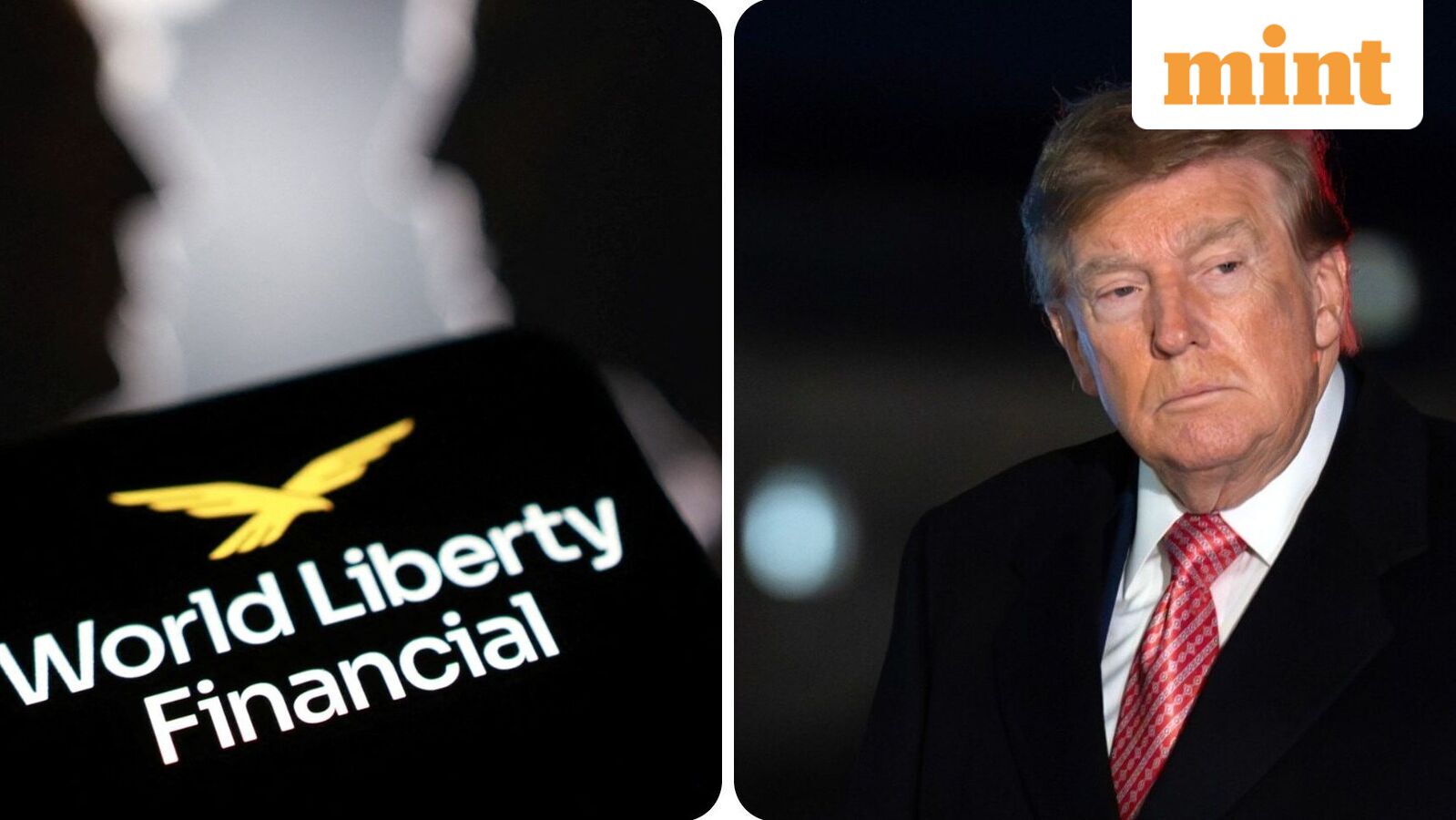
Donald Trump and World Liberty Financial, the cryptocurrency venture he co-founded with his sons, were sued by a shareholder of a rival crypto firm, who claimed that the president illegally profited from foreign-government payments through two transactions linked to the United Arab Emirates (UAE).
J. Benjamin Greenberg, a shareholder in Circle Internet Group Inc., claims illegal competition from World Liberty has harmed him and other Circle investors financially.
The suit claims Trump violated the Foreign Emoluments Clause, a provision of the US Constitution that bars presidents from taking payments from foreign governments without the approval of Congress, in two World Liberty transactions with the United Arab Emirates.
“This action is about the President of the United States corruptly profiting from more than $2 billion in payments from a foreign government in direct violation of the Constitution,” Greenberg said in a complaint filed Thursday in federal court in Washington. “No president in American history has profited from his office so brazenly.”
What are the two UAE-linked crypto deals?
The lawsuit challenges two transactions involving World Liberty Financial.
The first was a $500 million deal in which an entity backed by Sheikh Tahnoon bin Zayed Al Nahyan, the UAE’s national security adviser, bought a 49% stake in World Liberty, as per Quartz.
It also challenges a $2 billion buy of World Liberty’s USD1 stablecoin by an Abu Dhabi investment fund that Tahnoon chairs.
Greenberg alleges that the transactions amounted to prohibited foreign-government payments that benefited Trump. The president’s 2025 annual financial disclosure reported more than $1.4 billion in earnings related to his crypto ventures.
The complaint names Trump, World Liberty, US Middle East Special Envoy Steve Witkoff and four affiliated limited liability companies as defendants.
Greenberg is seeking a court order preventing Trump from further violating the constitutional clause, the return of allegedly unlawful profits, unspecified damages and disclosure of any additional crypto earnings received from foreign sources.
What did the White House and World Liberty say?
The White House rejected the allegations, describing the lawsuit as politically motivated.
“This is yet another frivolous lawsuit that echoes the same, tired narrative that Democrats have pushed against President Trump, his family, and his administration for a decade,” White House spokesperson Anna Kelly said in a statement to CNBC. She added that “there are no conflicts of interest” involving the president.
World Liberty spokesperson David Wachsman also dismissed the allegations as “without merit”.
“World Liberty Financial is compliant with all US laws and regulations,” Wachsman said. “No one at World Liberty Financial works for the US government.”
Matt Pelikan, an attorney at Evergreen Legal representing Greenberg, said the lawsuit was intended to stop what he described as corruption.
“We’re suing to stop the corruption and to force President Trump to return the profits to American taxpayers,” Pelikan told CNBC.
Circle clarified that it was not behind the legal action, despite Greenberg filing the case on the company’s behalf.
“This lawsuit was filed by an individual shareholder, not by Circle,” a company spokesperson said. “Circle did not initiate, direct, authorise, or participate in the filing.”
Why the lawsuit matters
The case raises questions about potential conflicts of interest arising from Trump’s crypto business while he serves as president. It also points to competition concerns in the stablecoin market, where World Liberty’s USD1 competes with Circle’s USDC.
Greenberg argues that World Liberty’s activities have financially harmed Circle shareholders. The allegations have not been proven in court.
The lawsuit also follows several earlier legal challenges during Trump’s first presidential term alleging violations of the Emoluments Clause. None recovered money from Trump or forced him to stop the business practices being challenged.
Separately, an entity backed by Tahnoon holds a 49% stake in WLTC Holdings, the holding company for World Liberty’s planned national trust bank. The bank received preliminary conditional approval from the Office of the Comptroller of the Currency in August.
The Justice Department had no immediate response to a request for comment, while a spokesperson for Witkoff also had no immediate response.