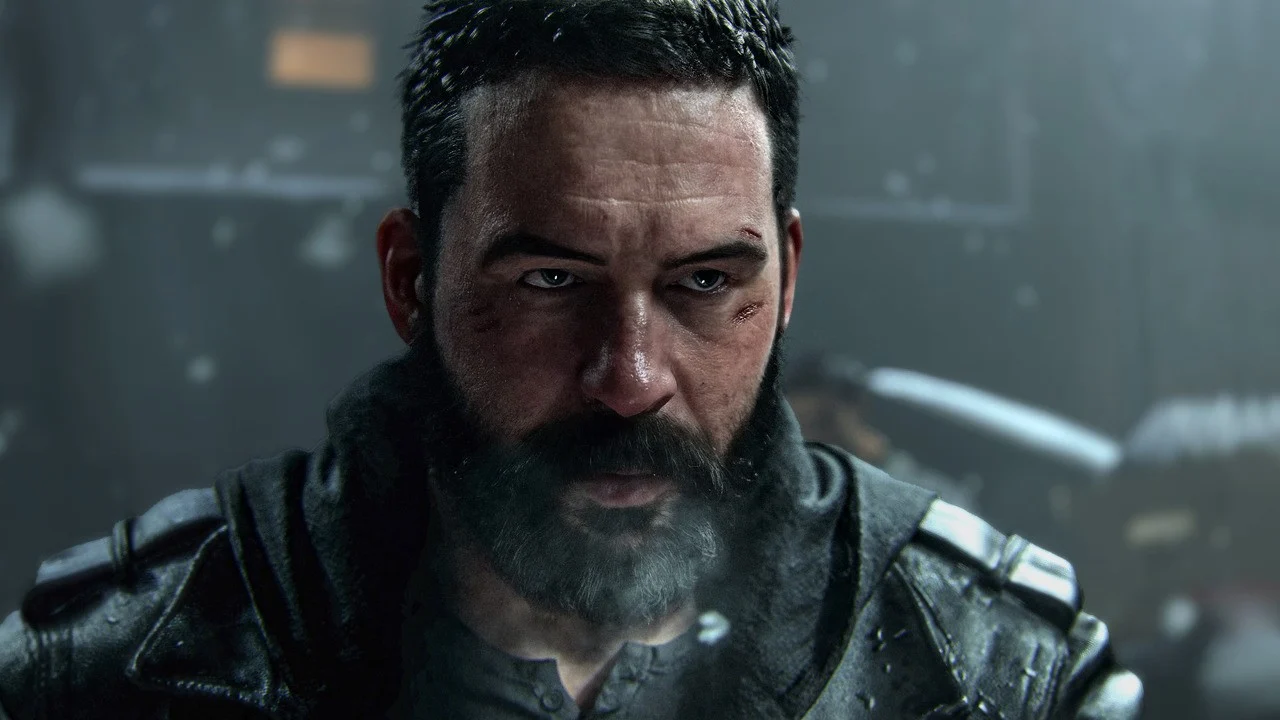
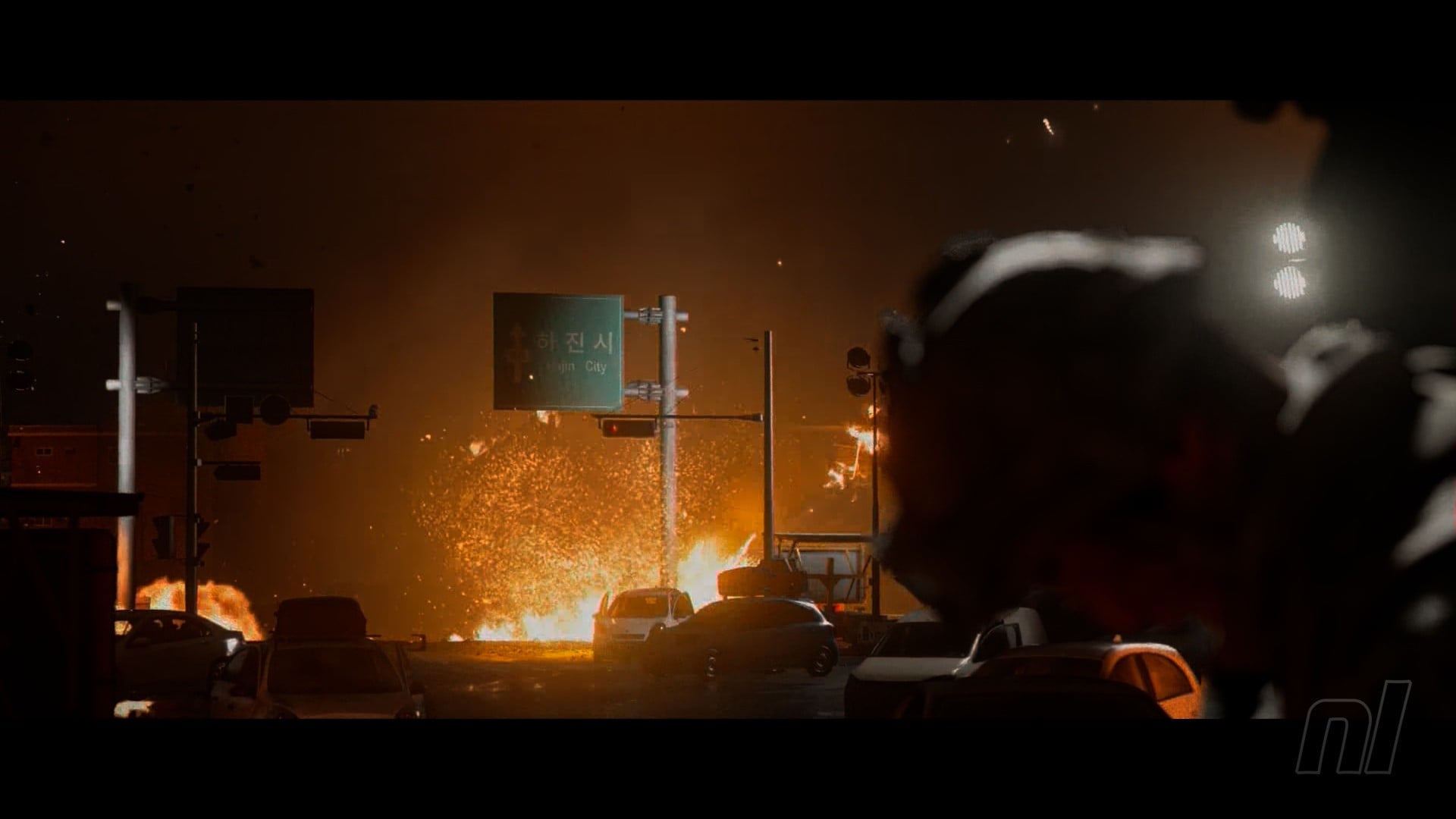
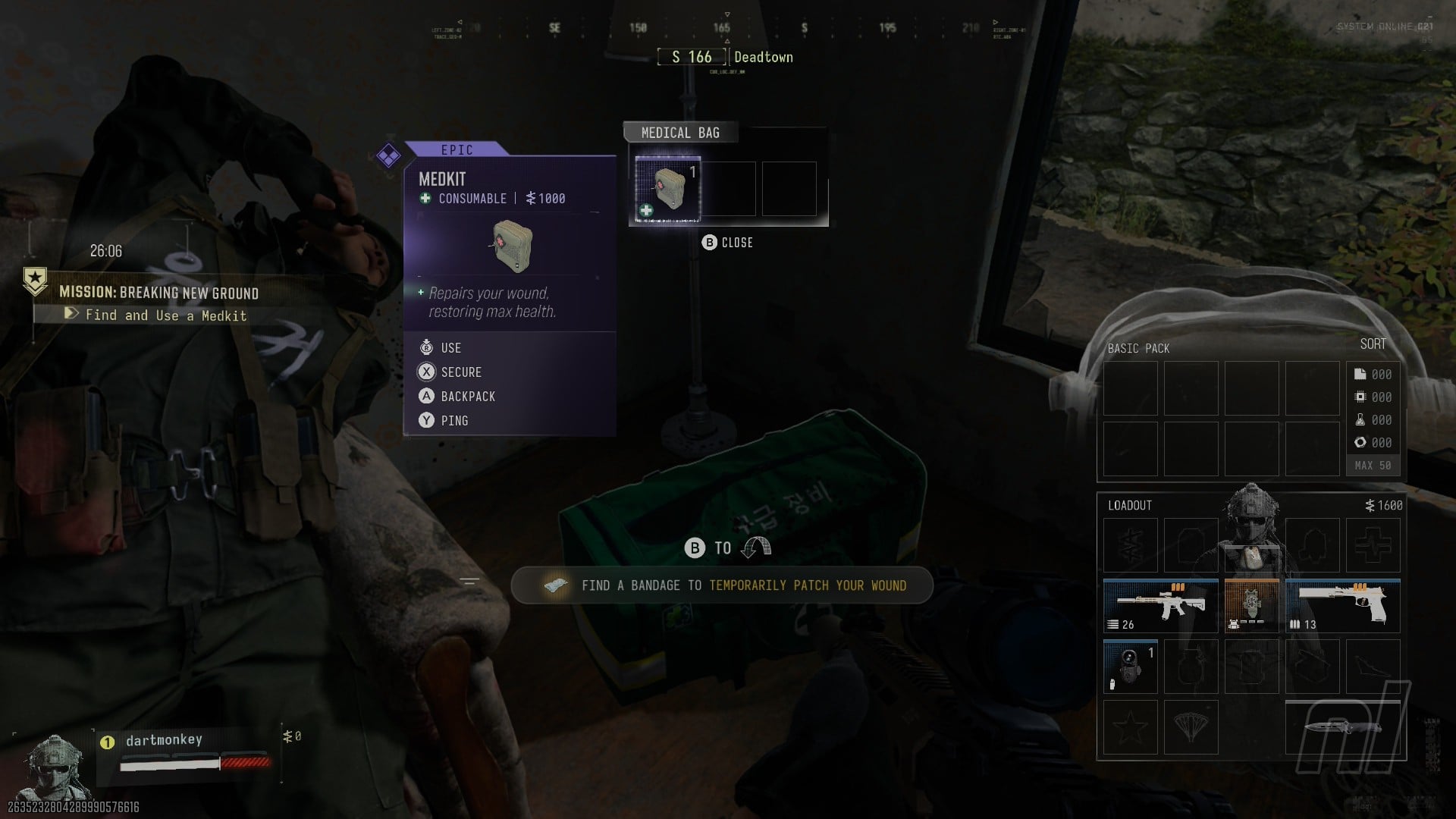
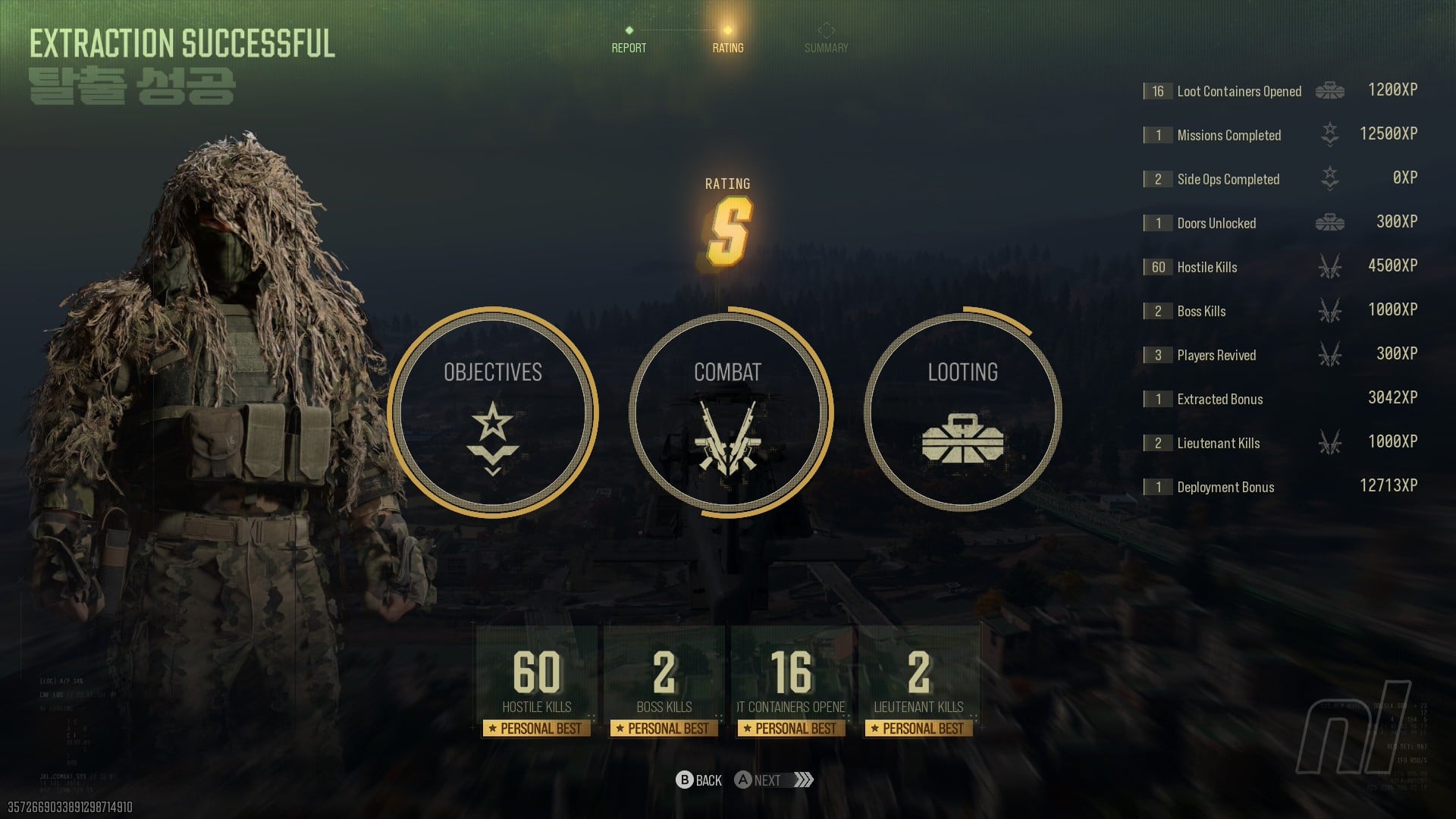
Taking on NPCs and human Operators across the vast Hajin map, you’ve got story missions, side ops, objectives, and unlocks to keep you busy, with Free Roam available if you just want to drop in with some pals for some shootin’ and lootin’.
It’s overwhelming at first, with a large checklist to tick off at your leisure, XP to earn, gear to craft, bounties to hunt. You could spend hours back at home base just tinkering with optics and laser sights.
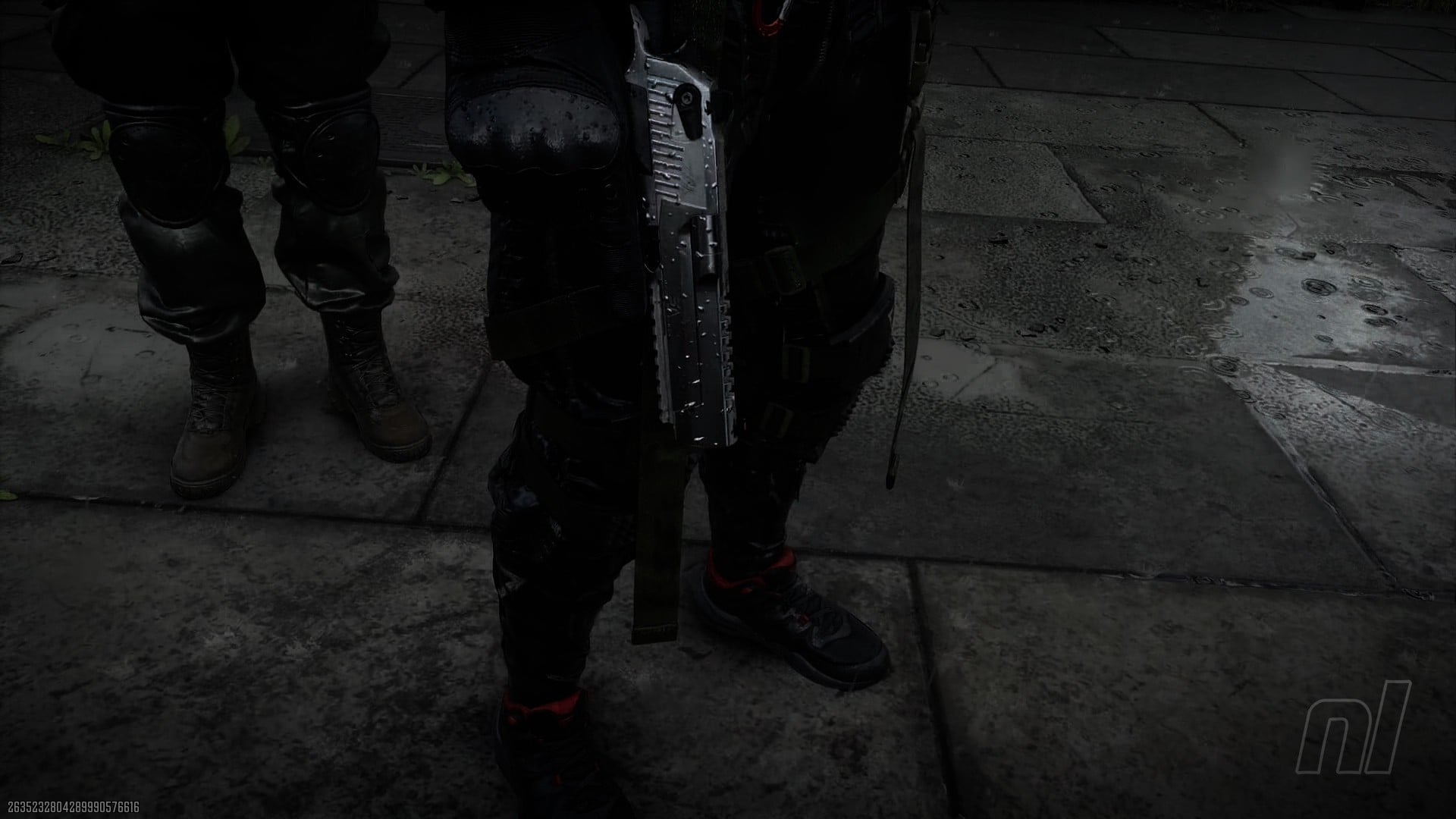
Going it alone is an option, but having someone to revive you is handy, and DMZ really shines when you squad up with two pals. I can see it becoming a place to hang with friends, getting into as much or as little trouble as suits your mood. Performance-wise, it targets 40fps docked and 30fps handheld, and both feel solid. Elite players will baulk at anything less than 60, but I never felt it was the tech’s fault when I bought the farm.
Conceptually, it’s the polar opposite of the stringent, on-rails Campaign, and hints at the franchise’s future. Whether Infinity Ward can ever integrate the two approaches — or would even want to — is another question, but that’s a can to kick down the road once more while they see what sticks here.
Finally, there’s Multiplayer, the catch-all term comprising everything else in the package. It, too, is a lot.
Kill Block comes in 10v10 or 3v3 flavours, dropping you into a military facility divided into three ‘slabs’ – modular map chunks which are switched out every round, the idea being that you’ll rarely encounter the exact same configuration. It also means IW can inject terrain and references to previous CoD maps without flooding the game with old content Day One.
The objective turns to flag-capture once the timer gets low. Rounds are short and sharp (bite the dust and you’re spectating until the next), but the block gimmick didn’t bowl me over. Lots of samey concrete and chipboard in the matches I played. Fun but hardly a game-changer.
I was more into Frontline, primarily because I could employ my preferred close-quarters shotgun playstyle. Playing on ship-bound Nautical, two teams spawn at their bases either end of the map, running at each other to dominate the middle zone. Nothing revolutionary, but good old-fashioned fragging.
Collateral ups the ante and injects some roguelite. You ‘buy’ your preferred equipment and perks at the start of each round, with wins resulting in more cash to spend on upgrades, so everyone builds their loadout on the fly as you work to attack or defend bomb sites. Again, this let me crack out a shotty, and with some solid wins for the team, I came away happy.
Ground War: Combat Outpost is a 32v32 mode that brings larger maps and vehicles into the mix. Here, you work to capture, reinforce, and retain Outposts, choosing where to respawn when you die while taking part in much larger-scale combat.
With so many players in one zone, it’s got the feeling of ‘DMZ condensed’, and it’s engaging, if a little repetitive as you pinball between outposts. “We’ve taken Alpha.” Great! “They’ve taken Charlie.” So off you trot to take Charlie, but then, “We lost Alpha!” Rinse, repeat.
With good team comms or different maps, maybe there’s a better time to be had, but with this many players you end up feeling like a small cog in a mindless machine, cycling between losing and winning the same three outposts for 20 minutes. I preferred the more intimate modes.

That’s just scratching the surface of MP, with loads of new maps and modes planned post-launch. Infected is scheduled for Halloween, but you’ve also got Kill Confirmed, Possession, Domination, Inflation, et al., all with daily challenges and XP to earn. Numbers will go up. Not everything will hit with you, but the wealth and breadth here means you’ll find something that hits the spot.
Performance-wise, it’s the same story: caveats, but no complaints. Multiplayer appears to target 60fps in most modes, and I didn’t note any dips in the thick of it. Environmental fidelity takes a hit, so obviously it doesn’t look as pretty as other platforms. Here’s the key thing, though: Not once did I think about frame rate while playing the thing. Ultimately, Digital Legends made the right calls and compromises to deliver on Switch 2.
The bottom line, then. Campaign is a return to form and a strong reminder to lapsed fans of just how fun the CoD ride can be. DMZ has massive potential as its own thing, with a gripping loop that blends nail-biting story with open-zone multiplayer. And with the right friend group, the Multiplayer suite could keep you busy for years.
On Switch 2, you’re getting the entire package, presented well, with crossplay and cross-progression. With IW’s roadmap laid out, it’s hard to argue you’re not getting your $70’s worth of triple-A here. You can almost feel the weight of the gigabytes filling up your system storage.
And after this deep-dive back into the series, it’s started inhabiting my dreams. I’m not sure if that’s a recommendation, but I’ve had a brilliant time with it.
Conclusion
Whether you should invest in the first CoD on a Nintendo platform for over a decade comes down to the old Switch port chestnuts: Do you own another platform, and how much do you value portability? Call of Duty veterans who have followed closely its highs and lows over the last decade could probably knock a point off the score below; you likely won’t be as wowed by MW4’s sheer spectacle, but you should definitely play it somewhere.
For anyone with a Switch 2 who’s been waiting a long time to answer the Call, though, this is an excellent demonstration of why this crusty series still matters to so many. It’s a bold, bombastic shooter, and it’s now running very well on Nintendo hardware, day-and-date with other platforms. Oorah, indeed.