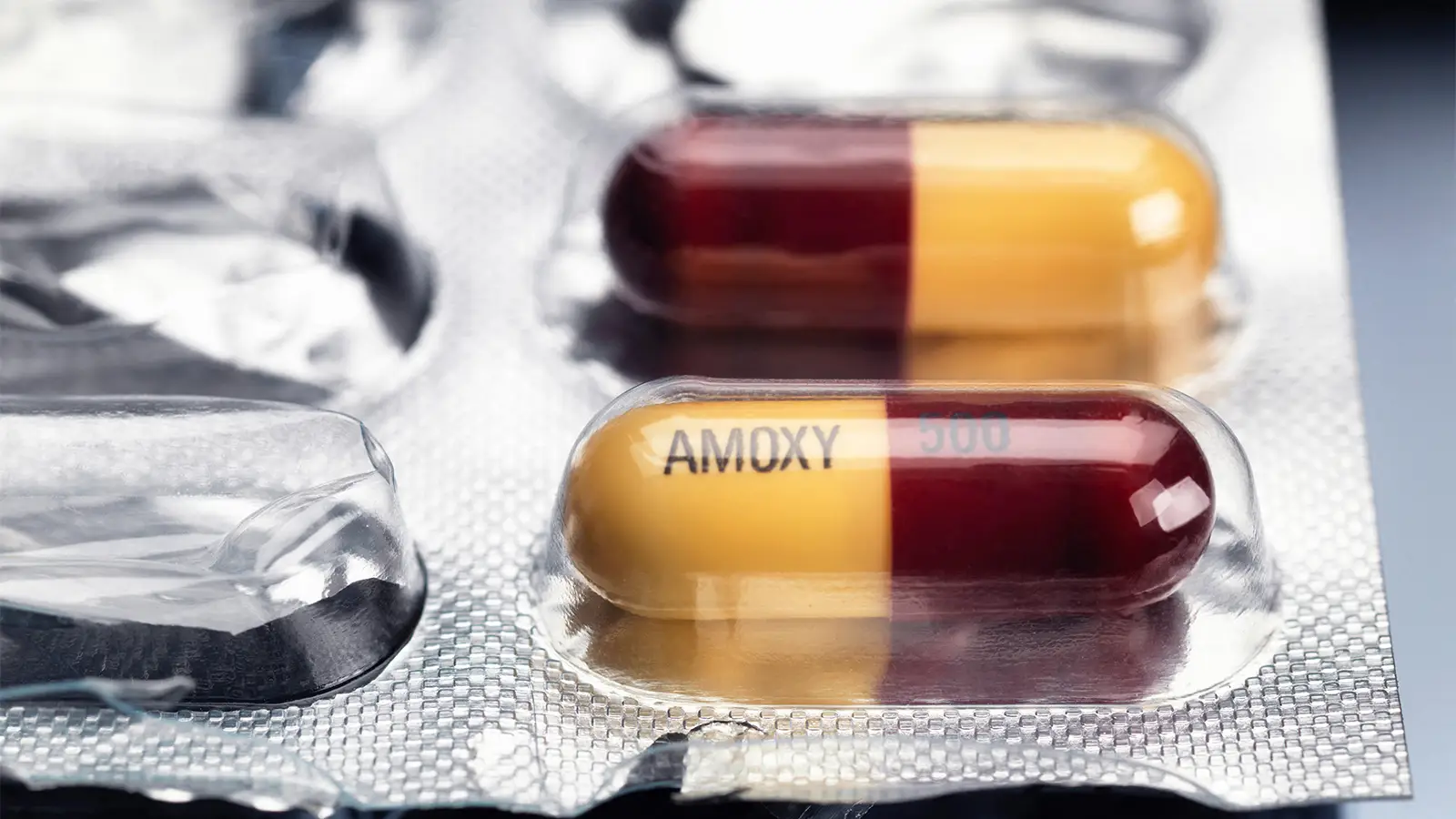
A young woman with a known allergy to penicillin had a severe allergic reaction immediately after intercourse with her husband, who was taking amoxicillin.
The case underscores the fact that sexual contact can lead to mucosal exposure to beta-lactams in bodily fluids, and trigger anaphylaxis in those with allergies, Cassim Akhoon, MBChB, of King’s College Hospital in London, and colleagues wrote in BMJ Case Reports.
The lesson is that unprotected sexual intercourse can be a route of transmission and cause significant allergic reactions in a partner, Akhoon told MedPage Today. “At the moment, including allergy specialists I’ve spoken to in the U.K., this is not something people are mindful of, nor counselling people on when they’re being given a diagnosis of a drug allergy.”
After this case, he counsels patients with allergies of the risk for transfer if their partner is taking penicillin, “and it’s better to use protection or abstain during those times.”
It’s unclear whether other drugs or even foods might be transmitted in the same way, but reactions have been reported to another antibiotic, and in one case, walnuts. “We don’t know enough to be able to give precise answers about which ones can, but it’s enough evidence to say that some can, and it is something we need to start getting data on,” he said.
Reports of anaphylaxis related to beta-lactam transfer during sexual contact are rare, the authors wrote. The case reported here is “an episode of anaphylaxis, tightly linked to a partner taking amoxicillin, supported by subsequent positive skin prick testing to amoxicillin, and a clinical course that argues strongly against seminal plasma hypersensitivity.”
In this case, paramedics were called when a young woman in her 20s had sudden onset of generalized pruritic or itching, widespread urticaria or hives, and angioedema, swelling affecting her throat and tongue. Onset occurred 5 minutes after ejaculation by her partner during vaginal intercourse.
She had a prior history of penicillin allergy after having a systemic reaction to treatment with amoxicillin/clavulanic acid 5 years earlier. That reaction started only 10 minutes after her first dose, with generalized urticaria, lip angioedema, and hypotension that caused a loss of consciousness, requiring treatment in the emergency department.
Another time, she developed urticaria while crushing amoxicillin to give to her dog. Although she had not had formal allergy testing, she was prescribed a 300-μg epinephrine autoinjector due to the high risk of exposure to beta-lactams through her occupation as a student nurse.
So, in the current case, she was able to self-administer epinephrine prior to arrival of the paramedics. Once they arrived, she was found to be hypotensive, with a blood pressure of 88/56 mm Hg, and tachycardic, with a heart rate of 115 beats per minute, and have an audible wheeze on chest auscultation. They administered an additional 500 µg of intramuscular epinephrine, and transported her to the emergency department, where she was treated for anaphylaxis.
That day, she hadn’t knowingly ingested beta-lactam antibiotics, and reported no new foods or medications. Her partner, however, had started taking oral amoxicillin in a dose of 500 mg, three times per day, and had taken the last dose approximately 6 hours before intercourse.
“The temporal relationship to ejaculation during the partner’s antibiotic course, together with subsequent tolerance of antibiotics, led clinicians to suspect seminal transfer as the most likely exposure route,” they wrote.
After observation for a minimum of 6 hours, the patient was discharged with additional autoinjectors, and a referral to specialist allergy services, the authors noted. One year later, serum-specific IgE to penicillin determinants and amoxicillin was negative, but skin prick testing showed sensitization to amoxicillin, they added.
The report also includes the perspective of the patient, who expressed concern about the reaction of the paramedics, nurse, and physician at the emergency department to the idea she had not herself taken the amoxicillin, when she had a known penicillin allergy. “This was incredibly frustrating to have to explain multiple times and not feeling believed,” she said.