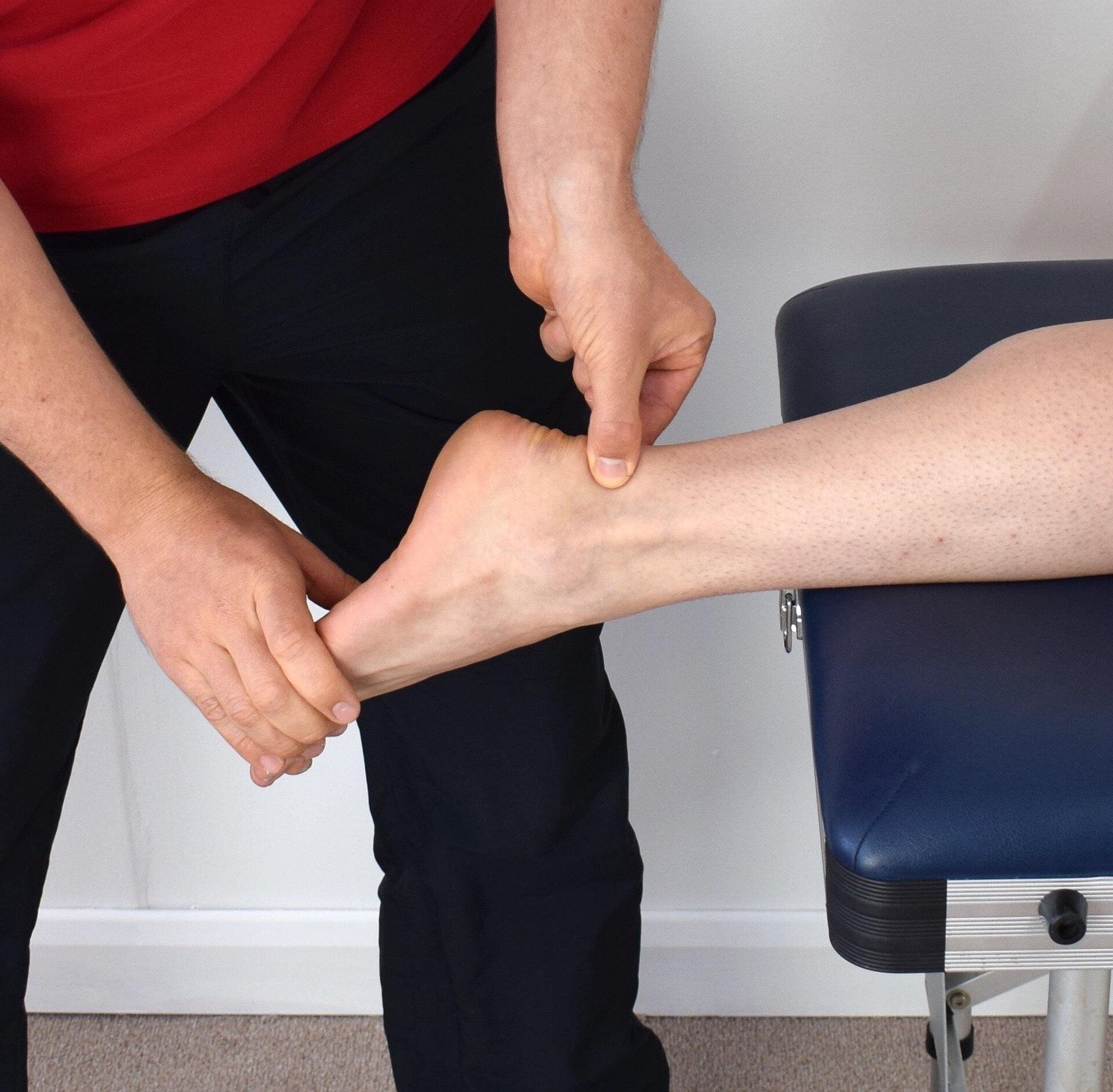
Commonly used injections for Achilles tendinopathy—pain, stiffness and swelling in the Achilles tendon—offer no meaningful clinical advantage over placebo (sham) treatment, finds a clinical trial published by The BMJ.
The results show that high-volume injections—delivering saline, local anesthetic and sometimes a low dose of corticosteroid around the Achilles tendon—did not improve pain and disability compared with sham injection at 12 months, and therefore do not support routine use.
Achilles tendinopathy is a leading cause of persistent lower-limb pain that affects around 6% of people during their lives and disrupts everyday activities such as walking. While exercise-based therapy is recommended, up to 44% of patients do not recover and many seek alternative options, including injection therapy.
Some data suggest that corticosteroid-containing injections may provide short-term symptom improvement, but the longer-term clinical effects and cost-effectiveness of high-volume injections with or without corticosteroid remain uncertain.
To address this, researchers enrolled 192 adults (mean age 49; 55% male) with midportion Achilles tendinopathy from a radiology clinic in Melbourne, Australia, between December 2019 and July 2022. Participants were randomly assigned to three groups: sham injection (64), high-volume injection without corticosteroid (63) or high-volume injection with corticosteroid (65).
All groups received the same exercise program, education and activity modification advice.
The main outcome of interest was self-reported pain and disability at 52 weeks based on the Victoria Institute of Sport Assessment-Achilles (VISA_A) scale (0–100, where 100 is no pain or disability). Cost per quality-adjusted life-year (QALY)—a combined measure of quantity and quality of life—was also assessed.
At the start of the trial, participants reported moderate to high pain and disability (mean VISA-A score 48.7) and a median symptom duration of two years.
VISA-A data for 181 of 192 (94%) participants at 12 months showed no clear differences between sham and high-volume injections, either with or without corticosteroid, and between the two injections.
High-volume injection with no corticosteroid showed no benefit over sham at any time point. High-volume injection with corticosteroid provided small, short-term improvements over sham at six weeks, but worse outcomes than high-volume injection without corticosteroid at 26 weeks.
High-volume injection with corticosteroid was more effective (QALYs gained) and less costly than sham, but the overall clinical findings do not support routine use. No serious trial-related adverse events were recorded.
The authors acknowledge that they recruited participants primarily via social media, potentially limiting generalizability, that they were unable to mask injection providers, and that there is a risk that some effects may reflect chance rather than true treatment effects.
However, they say this evidence “should prompt clinicians to reconsider the rationale for using these injections in people with Achilles tendinopathy.”
Corticosteroids are neither all-good nor all-bad and must be used only in the correct context (where short-term needs predominate over longer-term needs), says John Orchard at the University of Sydney in a linked editorial.
Crucially, he stresses that a patient should never be told that a corticosteroid will fix or cure a tendinopathy.
“All clinicians recommending or performing corticosteroid injections for tendinopathy need to understand this trade-off and make every effort to explain the broader overview to the patient as part of the informed consent process,” he concludes.
Publication details
Efficacy and cost effectiveness of high volume injections with and without corticosteroid compared with sham for midportion Achilles tendinopathy (Inject trial): randomised controlled trial, The BMJ (2026). DOI: 10.1136/bmj-2026-100807
Journal information:
British Medical Journal (BMJ)
Clinical categories


Citation:
Achilles injections show no meaningful benefit over sham treatment (2026, October 28)
retrieved 28 October 2026
from https://medicalxpress.com/news/2026-10-achilles-meaningful-benefit-sham-treatment.html
This document is subject to copyright. Apart from any fair dealing for the purpose of private study or research, no
part may be reproduced without the written permission. The content is provided for information purposes only.