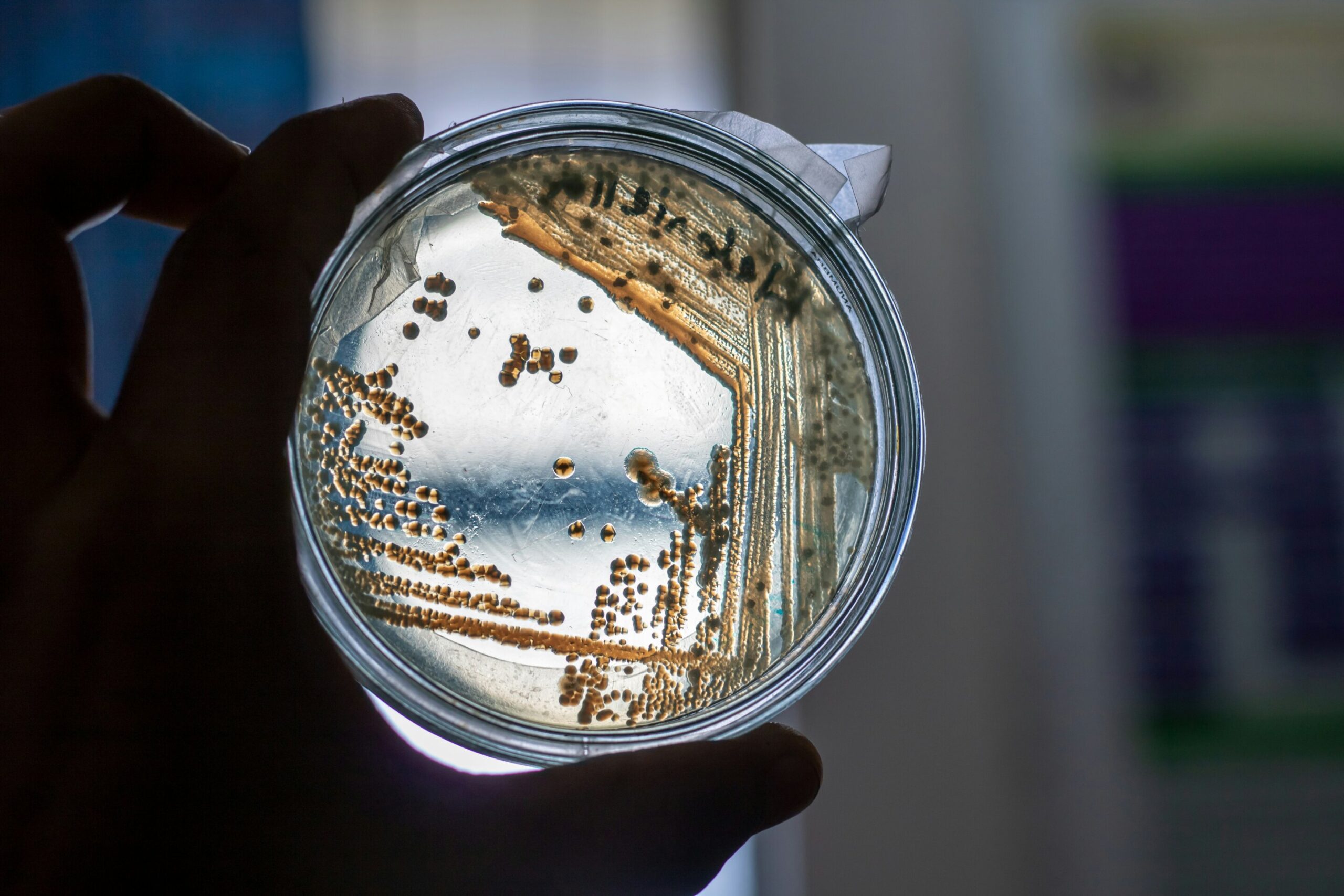
At a clinic in South Africa, researchers have identified airborne ESKAPE bacteria that survive most antibiotic medicines. The clinic is in a densely populated inner-city area.
Researchers from the University of Johannesburg (UJ) published the study in Indoor Air. They sampled air in the clinic and identified bacteria found in the air. Then they tested how these bacteria survive exposure to antibiotic medicines.
They found that a wide variety of dangerous ESKAPE bacteria from the clinic successfully resist first-line drugs. Many are also highly resistant to multiple first-line drugs. Some already resist drugs reserved for use when nothing else is effective.
“The high HIV and TB infection rates in South Africa increase the risk of lower respiratory tract infections (LRIs) caused by these bacteria,” says Dr. Lee Heine, the lead author of the study.
The bacteria found in the clinic’s air cause LRIs such as bronchitis, bronchiolitis and pneumonia. They can cause community-acquired, hospital-acquired and ventilator-associated pneumonia.
“All these infections can be fatal. This is because ESKAPE bacteria tend to be multidrug-resistant or even extensively drug-resistant,” adds Heine.
“If patients are already immunocompromised, then the risk of death due to pneumonia caused by a multidrug-resistant strain of one of these bacteria increases, as they are likely to spread to the bloodstream and cause sepsis.”
Heine is a researcher at the Water and Health Research Center within the UJ Faculty of Health Sciences.
Bacteria surviving last-resort antibiotics
Among the gram-negative ESKAPE bacteria they tested, a highly concerning resistance to first-line drugs and drugs of last resort was found. They analyzed Enterococcus faecium, Staphylococcus aureus, Klebsiella pneumoniae, Acinetobacter baumannii, Pseudomonas aeruginosa, Enterobacter species and E. coli bacteria from the clinic.
Colistin is a toxic “last defense” to save a patient’s life. It is only used in critical situations where all other drugs have already failed. Yet 80.5% of the gram-negative bacteria from the clinic survived exposure to this drug.
Ertapenem and meropenem are carbapenems, an advanced class of broad-spectrum antibiotics only used after first-line antibiotics fail. When exposed to these drugs, 31.2% of gram-negative bacteria survived ertapenem, and 26% survived meropenem.
In addition, all of the gram-negative bacteria showed resistance to at least one drug in three or more antibiotic categories. When exposed to common first-line treatments like cefuroxime, 85.71% of bacteria survived. With ceftazidime, 67.53% of bacteria survived. All of these were classified as multidrug-resistant (MDR) in the study.
Worse, 3.9% of the gram-negative bacteria were classified as extensively drug-resistant (XDR). This is because they survived at least one drug in all except one or two antibiotic categories. XDR bacterial infections leave doctors with very few options for treating patients.
Gram-positive bacterial resistance
The study’s findings on methicillin-resistant Staphylococcus aureus (MRSA) were highly concerning. This bacterium can rapidly infect even intact skin and can easily be spread from person to person, says Heine.
“Worldwide, 10% of people are carriers of S. aureus in their nasal passages or armpits. If health care workers are identified as carriers, they need to be treated with appropriate antibiotics to clear the MRSA from their bodies before they are allowed to be in contact with patients again.”
Exposure to a variety of single drugs led to survival rates between 71.8% and 94.8%. Only vancomycin, a reserved or last-resort drug, was about 95% effective in killing the bacteria. For this species of bacteria, the MDR rate was 6.3% and the XDR rate 5.6%.
ESKAPE bacteria and newborns in ICU
In a related study, Professor Tobias (TG) Barnard and Heine identified ESKAPE bacteria in a public hospital’s intensive care unit for newborn babies (NICU). Barnard is the director of the UJ Water and Health Research Center. The study is published in Infection Prevention in Practice.
The hospital is in the same city as the clinic. The researchers collected hundreds of surface swabs from incubators and handwash samples from nurses, doctors, cleaners and clerks at the NICU.
In the study, the vast majority of ESKAPE bacteria (over 85%) from the NICU were categorized as MDR.
Highly vulnerable population
The ESKAPE pathogens are grouped this way because they have the ability to ‘escape’ the activity of an increasing number of antibiotics, says Heine.
“These bacteria are very effective in causing infections. They are specifically associated with infections contracted at hospitals and clinics.
“Using antibiotics to treat infection relies on an intact immune system. The body works with antibiotics to eliminate bacteria. Without an intact immune system, treatment can be prolonged or unsuccessful.”
However, South Africa has one of the highest rates of TB and HIV co-infection in the world. Because of this, many people are vulnerable to lung infections and live with suppressed immune systems.
In 2024, tuberculosis (TB) was fourth, HIV-related diseases fifth, and influenza and pneumonia a combined sixth in causing natural deaths among all age groups in South Africa, according to the September 2026 Stats SA mortality report.
In addition, water supply has become increasingly unreliable across the country. This impacts disinfection as part of infection control at clinics and hospitals.
Growing global problem
The clinic and NICU in the studies are among the many medical facilities all over the world struggling to reduce the numbers of patients getting ill with LRIs during their treatment.
“Antimicrobial resistance (AMR) is when bacteria are unaffected, i.e., not killed or neutralized, when exposed to the usual dose or concentration of antibiotic used to treat infection,” says Heine.
“AMR is increasing for all bacteria in South Africa and globally. AMR bacteria thrive in hospital and clinic environments because the use of antibiotics and disinfectants selects for their reproduction over less resistant bacteria,” she adds.
Meanwhile, global guidelines for allowable numbers of bacteria (pathogenic and nonpathogenic) exist for water quality. They also exist for surfaces in food preparation facilities and for surfaces in health care facilities, says Heine.
But there are no comparable standards for airborne bacteria and fungi in indoor environments. Given the increasing rate of bacterial resistance to antibiotics, indoor quality standards for bacterial counts need to be established in South Africa, she says.
Heine concludes, “There are no stipulated allowable numbers of respiratory pathogens for a given volume of air. Monitoring bacterial and fungal air quality should be mandatory in health care facilities.
“Medical facilities should adhere to infection prevention and control protocols at all times. Routine air quality monitoring needs to be added to their infection prevention and control protocols.”
Publication details
Lee Heine et al., Pathogenic Molds and Multidrug‐Resistant Respiratory Bacterial Pathogens Isolated From Air Samples Collected From a Clinic in Johannesburg, South Africa, Indoor Air (2026). DOI: 10.1155/ina/1612232
L. Heine et al., Neonates at a risk of hospital-acquired ESKAPEE infection despite implementation of infection prevention protocols, Infection Prevention in Practice (2026). DOI: 10.1016/j.infpip.2026.100523
Journal information:
Indoor Air


Citation:
Airborne ESKAPE pathogens at inner-city clinic resist advanced antibiotics (2026, October 26)
retrieved 26 October 2026
from https://medicalxpress.com/news/2026-10-airborne-eskape-pathogens-city-clinic.html
This document is subject to copyright. Apart from any fair dealing for the purpose of private study or research, no
part may be reproduced without the written permission. The content is provided for information purposes only.