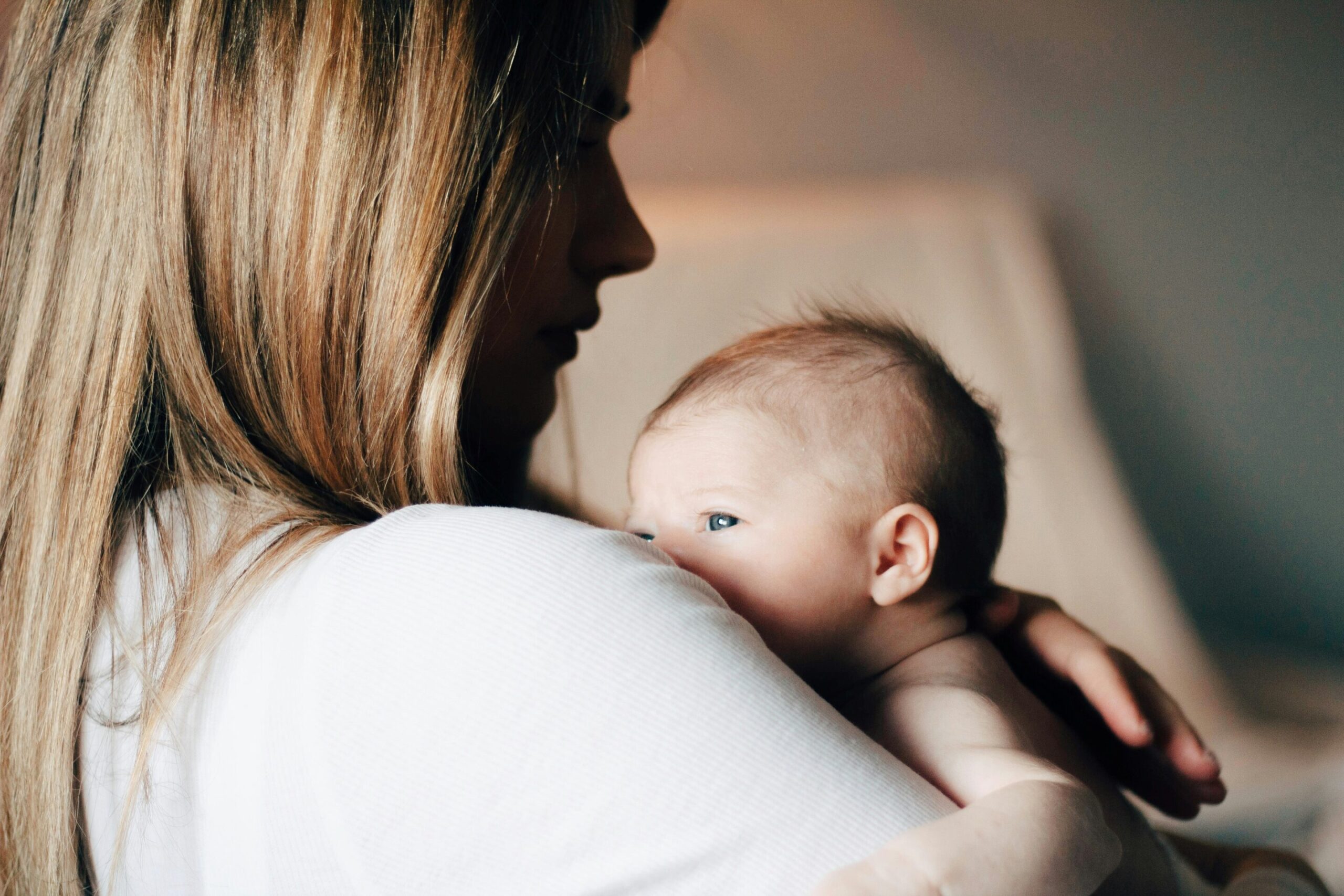

For many new mothers, sleeping uninterruptedly every night is challenging or unfeasible. One reason for this is that their newborn’s crying can easily wake them, even when another caregiver is present and could tend to their babies.
Researchers at Southern Medical University carried out a study on mice that could help to explain how motherhood influences responses to a baby crying during sleep. Their paper, published in Nature Neuroscience, identifies a neural pathway that appears to contribute to mouse mothers waking up in response to pup calls.
“Sleep fragmentation is common among postpartum mothers and is considered an important contributing factor to various physical and mental health problems,” Feixue Liang, senior author of the paper, told Medical Xpress.
“One major reason for this disrupted sleep is that mothers are particularly sensitive to their babies’ cries and can be easily awakened by them. Interestingly, we observed a similar phenomenon in mice: mother mice readily wake up in response to their pups’ calls.”
Studying sleeping female mice while pups call
During their earlier research, Liang and his colleagues observed that, similarly to human mothers, mouse mothers also seem to quickly wake up when their pups call. This similarity inspired them to investigate the neural mechanisms underlying this behavior in mice, whose brains are easier to study in detail in experimental settings.
“Using mice as a model, we aimed to identify the specific brain circuits that enable mothers to selectively detect and awaken to their offspring’s calls during sleep,” said Liang.
In their experiment, the researchers recorded the brain and muscle activity of female mice as they were sleeping, including both mothers and females that had never mated before or cared for pups. The mice’s brain activity was captured using electroencephalography (EEG), a technique to record the electrical activity produced by groups of brain cells, typically using small electrodes that are surgically implanted on the mice’s skulls.
Muscle activity was tracked using electromyography (EMG), a technique that records the electrical activity produced by muscles using electrodes placed on the skin or inserted in muscle tissue. The researchers used a combination of EEG and EMG recordings to distinguish between when female mice were sleeping and when they were waking up.
While the female mice were sleeping, the team played recordings of pup calls. Using analytical approaches, they compared the brain electrical activity, muscle activity and awakenings of mothers and virgin females while the pup calls were playing.
“We then used advanced imaging techniques to monitor the activity of individual neurons and identify the neural circuit involved in maternal awakening,” explained Liang. “Finally, we used genetic and pharmacological tools to selectively activate or inhibit specific neurons and their projections, allowing us to determine how this circuit enables mothers to wake up in response to their pups’ calls.”
The researchers found that specific neurons in the brains of mothers were more responsive to pup calls during sleep than those in the brains of naive virgin females. Most notably, however, they were able to identify a specific neural pathway that appeared to trigger the mothers’ awakening in response to pup calls, but not to various other sounds.
They observed that when pup calls were playing, neurons in two brain regions called the temporal association and ectorhinal cortices of mothers sent signals to the preoptic area, a small region that plays a role in the regulation of sleep, body temperature and parental behaviors. In addition, the team found that increased expression of dopamine D1 receptors in the activated cortical neurons contributed to the mothers waking up in response to pup calls.
Understanding why mothers wake up if babies cry
The findings of this study could contribute to the understanding of the postpartum sleep disruptions experienced by many new mothers. In particular, they could offer a possible explanation for the well-documented tendency of mothers to readily wake up when their newborns cry.
“Our most important finding is the identification of a specific neural circuit that enables mother mice to wake up selectively in response to their pups’ calls,” said Liang.
“We also discovered that motherhood increases dopamine D1 receptor expression in this circuit, making it more sensitive to pup calls. These findings reveal how the maternal brain prioritizes signals from offspring during sleep and provide new insights into the neural mechanisms underlying maternal vigilance and postpartum sleep disruption.”
As the researchers’ experiments involved mice, further research is needed to establish whether a neural pathway comparable to the one they identified also exists in humans. In addition, new studies could try to determine whether fathers or other caregivers also display similar neural circuits.
“Building on our current findings, we plan to further investigate the neural mechanisms underlying physical and mental health problems associated with motherhood, particularly postpartum depression and postpartum obesity,” added Liang. “We hope these studies will provide new insights into how motherhood affects brain function and may ultimately contribute to the development of better strategies for improving maternal health.”
Written for you by our author Ingrid Fadelli, edited by Sadie Harley, and fact-checked and reviewed by Robert Egan—this article is the result of careful human work. We rely on readers like you to keep independent science journalism alive.
If this reporting matters to you, please consider a donation (especially monthly). You’ll get an ad-free account as a thank-you.
Publication details
Peiwen Tang et al., A corticohypothalamic circuit that mediates maternal awakening to pup cries, Nature Neuroscience (2026). DOI: 10.1038/s41593-026-02458-y.
Journal information:
Nature Neuroscience



© 2026 Science X Network
Citation:
Brain circuit helps mothers wake up when their pups call (2026, October 30)
retrieved 30 October 2026
from https://medicalxpress.com/news/2026-10-brain-circuit-mothers-pups.html
This document is subject to copyright. Apart from any fair dealing for the purpose of private study or research, no
part may be reproduced without the written permission. The content is provided for information purposes only.