
Children of parents with bipolar disorder are known to be at elevated risk of developing mental health problems as they grow older, such as depression, anxiety, substance use problems and bipolar disorder.
A new Concordia-led study suggests that the environment in which these kids are raised can influence their mental health into young adulthood. The researchers suggest that long-term exposure to disorganization and inconsistency—a common experience for kids in households where a parent has bipolar disorder—is linked to an elevated cortisol awakening response, even years later.
The “cortisol awakening response” is the natural rise in levels of the stress hormone cortisol during the first hour after a person wakes up and is thought to help prepare the body for the demands of the day.
More than just genetics
The study, published in Psychoneuroendocrinology, followed 132 young people: 68 individuals whose parents had bipolar disorder and 64 whose parents had no history of an affective disorder. Researchers assessed family life using the parents’ reports on the structure, support and control in their family when the children were between 4 and 12 years old. They returned to the participants roughly 12 years later to measure cortisol and mental health symptoms.
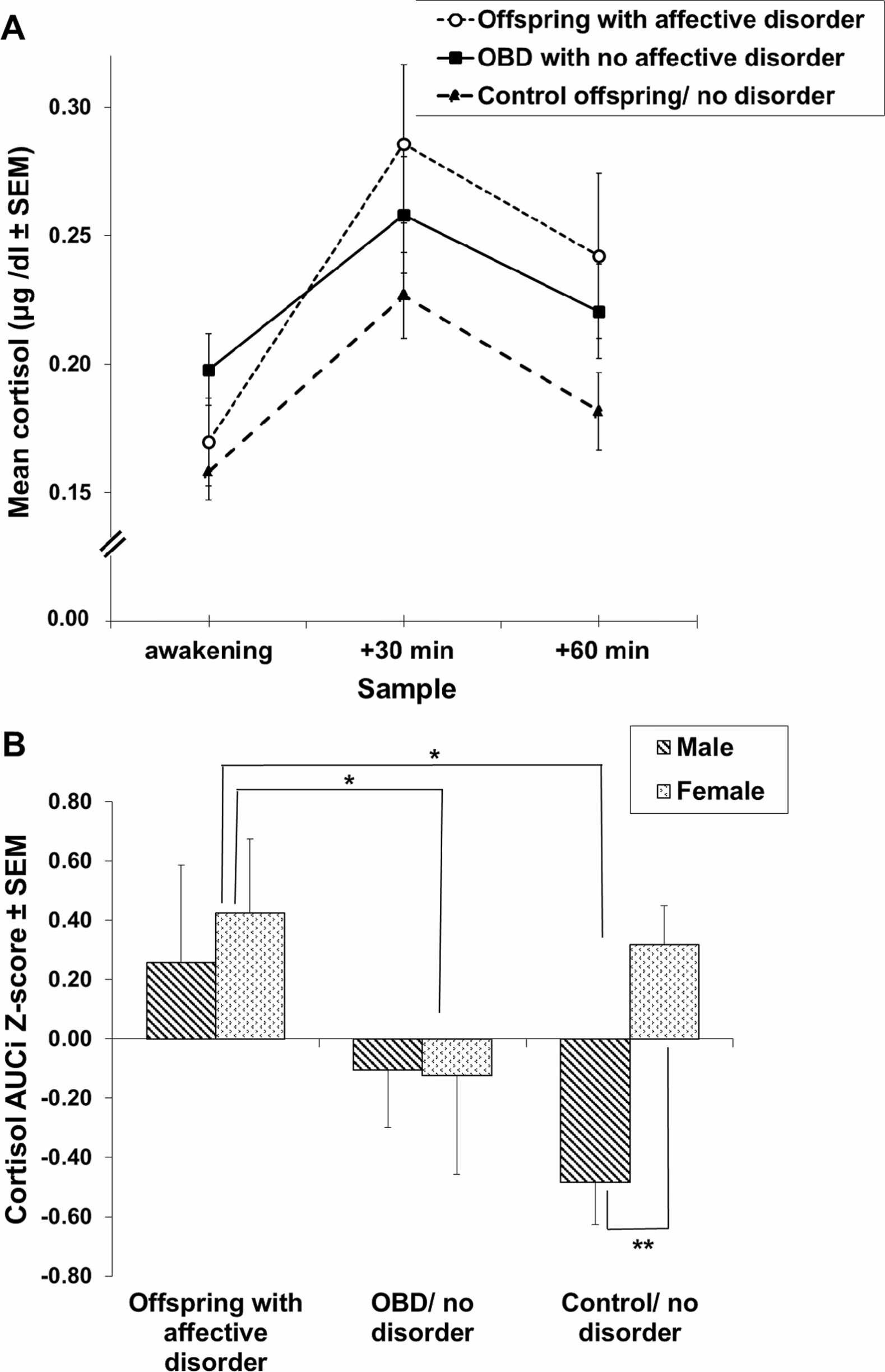
The team found that children of parents with bipolar disorder who grew up in homes with less structure—meaning less organization, consistency and predictability in the home—tended to show a stronger cortisol awakening response in late adolescence and young adulthood. The higher cortisol responses were subsequently associated with more depression and anxiety symptoms.
The researchers also found that participants who had developed an affective disorder themselves, either major depressive disorder or bipolar disorder, had a higher cortisol awakening response than both children of parents with bipolar disorder who did not exhibit an affective disorder and those in the control group.
“We do not think that children in these families go on to develop mental disorders due just to genetics,” says lead author Mark Ellenbogen, a professor in the Department of Psychology. “We found that kids who grew up in stressful environments, with parents who are in and out of hospitals and who have high neuroticism, experience changes in their hypothalamic-pituitary-adrenal axis, which produces cortisol and manages the body’s stress response.
“The findings support our hypothesis that a disorganized and inconsistent home environment predicts risk for mental disorders via long-term changes in stress hormone function.”
Predictable environments are key
For this study, parents reported on the structure, support and control in their family when their children were in middle childhood, between the ages of 4 and 12. About 12 years later, participants provided saliva samples over three days so researchers could measure cortisol after waking. They also underwent a structured assessment of their mental health.
The researchers note that few longitudinal studies have examined links between stressful home environments and later stress system functionality in children of parents with mental disorders. While this study established a relationship between these factors, the researchers emphasize that home environment should not be interpreted as a cause of later mental health problems.
However, they say the findings point to the importance of predictable, consistent and organized home environments for children who may already be at elevated risk. The study also supports the idea that family-based prevention programs could be one way of helping reduce risk by strengthening organization and predictability at home.
Ellenbogen and his team will soon launch a randomized controlled trial of a new prevention program, Reducing Unwanted Stress in the Home (RUSH), for families with a parent who has an affective disorder.
Publication details
Mark A. Ellenbogen et al., Low levels of organization and consistency in the home in middle childhood predicts cortisol levels and internalizing symptoms 12 years later among the offspring of parents with bipolar disorder, Psychoneuroendocrinology (2026). DOI: 10.1016/j.psyneuen.2026.107904
Journal information:
Psychoneuroendocrinology
Key medical concepts

Citation:
Childhood environment may shape long-term mental health risk in children of parents with bipolar disorder (2026, October 20)
retrieved 20 October 2026
from https://medicalxpress.com/news/2026-10-childhood-environment-term-mental-health.html
This document is subject to copyright. Apart from any fair dealing for the purpose of private study or research, no
part may be reproduced without the written permission. The content is provided for information purposes only.