When it comes to blood clots, it is not only how they form that is crucial, but also how the body can break them down again. A team of researchers at the University of Koblenz, led by Prof. Dr. Marie-T. Hopp, has demonstrated that heme—a component of hemoglobin—can influence this process. The findings, published in the International Journal of Biological Macromolecules, provide a new molecular approach to better understanding the link between hemolysis and an increased risk of thrombosis.
How does the body break down blood clots?
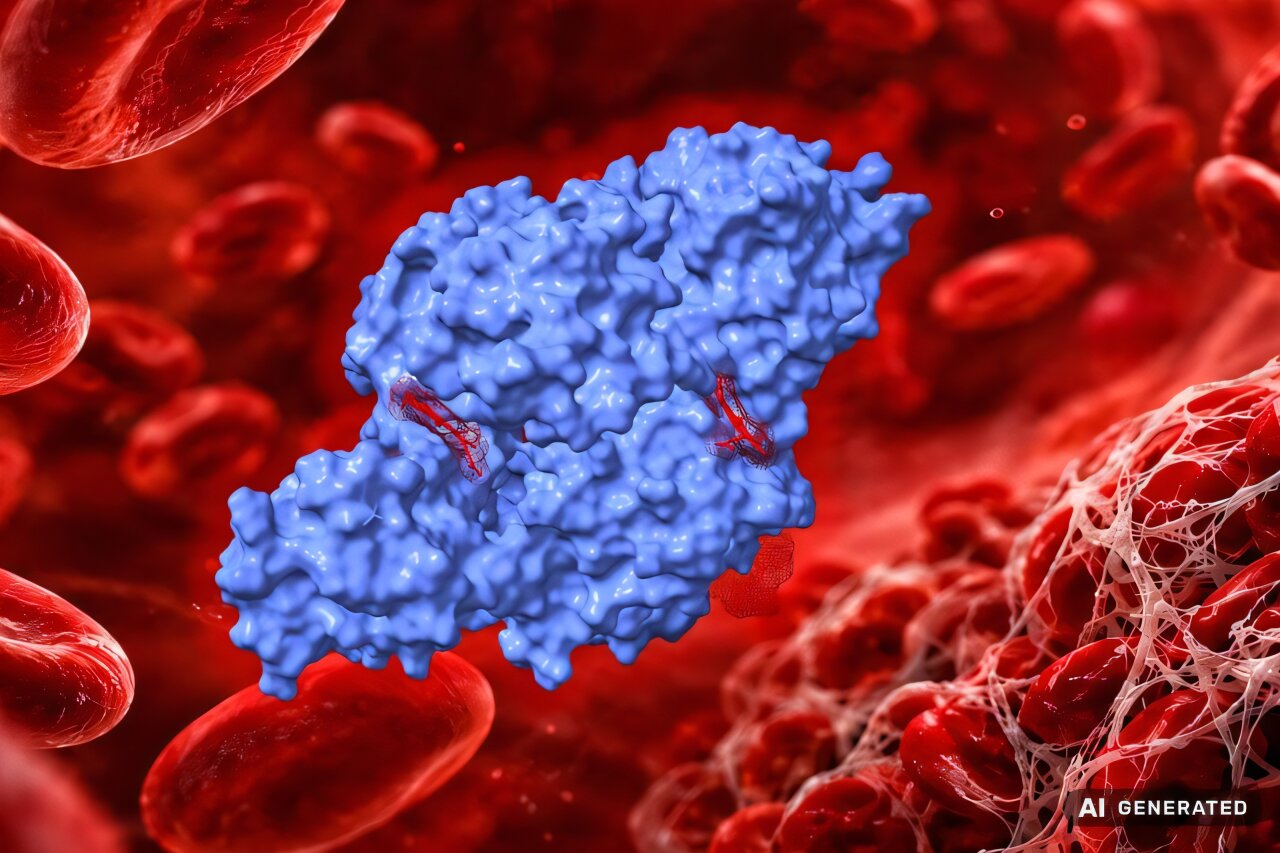
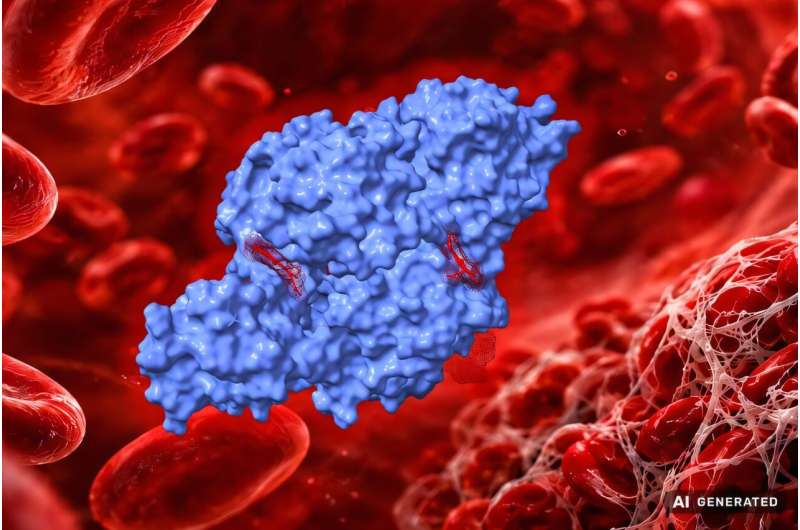
Blood clots help to stop bleeding. To ensure that they do not subsequently block blood vessels permanently, they must be broken down. This process is known as fibrinolysis. During this process, the enzyme plasmin breaks down the stabilizing protein network of the clot—known as fibrin—thereby enabling it to dissolve.
Heme inhibits the breakdown of blood clots
In certain diseases, red blood cells are destroyed at an increased rate. This process is known as hemolysis. During this process, labile heme can be released into the blood—an iron-containing component of hemoglobin that can interact with other proteins and influence their function.
Four female researchers at the University of Koblenz have now discovered that plasmin also binds heme with high affinity.
“We were able to demonstrate for the first time that plasmin binds heme with high affinity. Building on this, we investigated the effects of this strong interaction on fibrinolysis, that is, the natural breakdown of blood clots. Our findings now provide a new molecular insight that helps us better understand why people with certain hemolytic disorders face an increased risk of thrombosis,” explains Hopp, head of the Bioorganic Chemistry research group at the University of Koblenz.
Using biochemical and biophysical methods, Hopp and her team investigated the binding of heme to plasmin. Their findings showed that plasmin can bind several heme molecules very rapidly. By analyzing short peptides derived from plasmin and conducting supplementary computer simulations, the researchers identified six potential heme-binding sites. Three of the binding sites on the enzyme’s surface appeared particularly promising.
The scientists also discovered that bound heme significantly inhibits plasmin’s ability to break down blood clots, with the extent of inhibition depending on the heme concentration. This effect was already observed at heme concentrations such as those that can occur in cases of pathologically increased destruction of red blood cells.
A potential building block for understanding the risk of thrombosis
The findings provide new insights into how excess heme impairs the body’s natural process of breaking down blood clots. Reduced fibrinolysis could contribute to the increased risk of thrombosis observed in certain hemolytic disorders. Further research is needed to determine whether, and to what extent, the heme-plasmin interaction actually plays a role in this process.
More information
Isabeau Weyand et al., Attenuation of fibrinolysis through heme binding to the serine protease plasmin, International Journal of Biological Macromolecules (2026). DOI: 10.1016/j.ijbiomac.2026.154990
Clinical categories


Citation:
Hemoglobin component heme shown to inhibit enzyme that helps dissolve blood clots (2026, October 26)
retrieved 26 October 2026
from https://medicalxpress.com/news/2026-10-hemoglobin-component-heme-shown-inhibit.html
This document is subject to copyright. Apart from any fair dealing for the purpose of private study or research, no
part may be reproduced without the written permission. The content is provided for information purposes only.