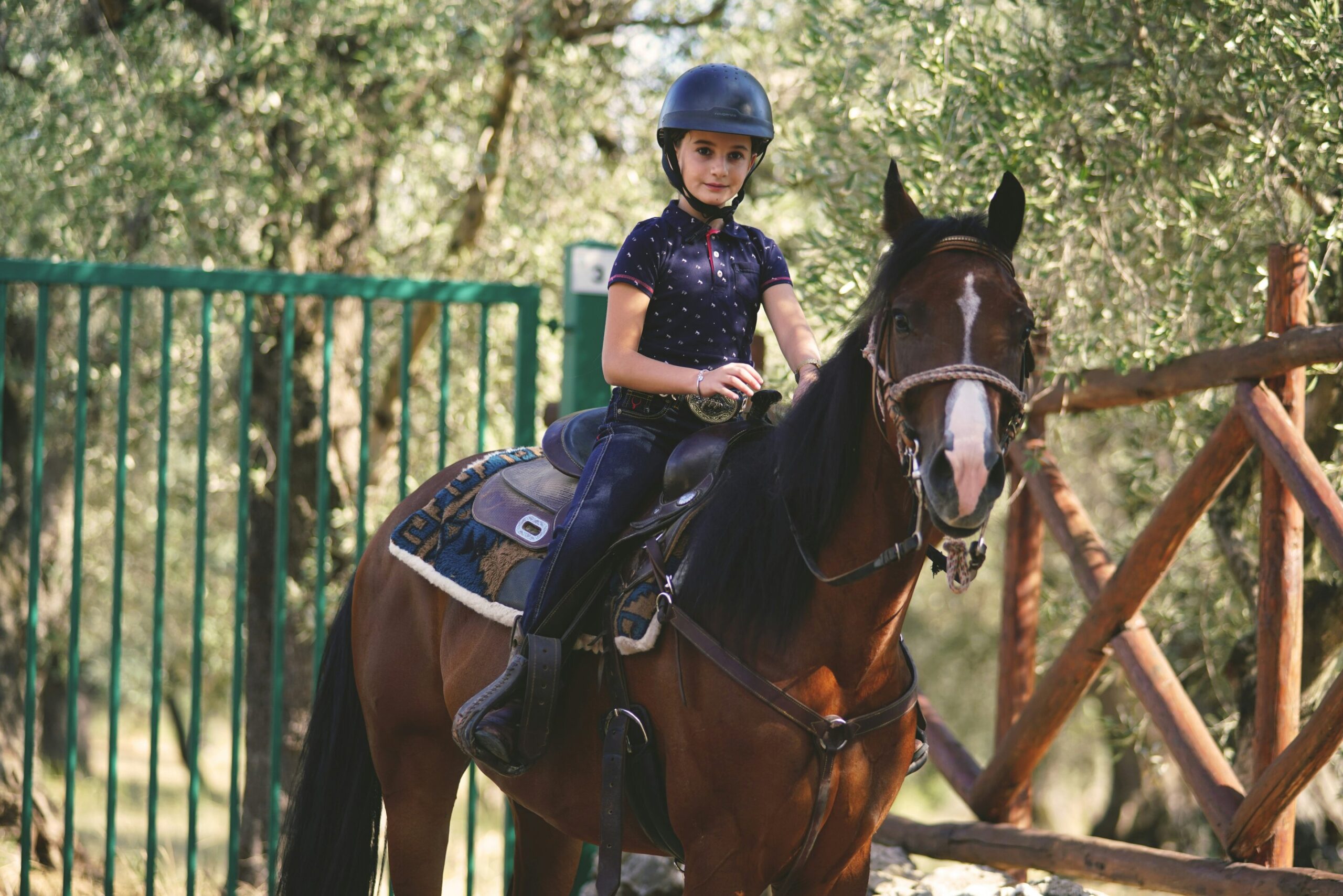
Occupational therapy that incorporates horses helps reduce the body’s stress response in autistic children, according to new research from Colorado State University.
“That power of the horse-human interaction for autistic children has often been referred to as ‘magic,’ but this study provides empirical data to support and explain how interacting with horses impacts autistic children physiologically,” said Caiti Peters, an assistant professor in CSU’s departments of Occupational Therapy and Animal Sciences. She leads research at the Temple Grandin Equine Center in Denver and Fort Collins and is a co-author on this study.
Previous studies have found that equine therapy has beneficial effects on behavioral skills and social communication in people with autism spectrum disorder.
The new CSU study builds on those findings by illustrating a measured physiological response to working with animals and shows a greater impact when horses are involved compared to traditional clinical therapy settings.
The research, published in the Journal of Autism and Developmental Disorders, examined how children’s bodies responded to 10 weeks of occupational therapy involving horses and compared that data with outcomes from traditional, clinic-based therapy.
Researchers at CSU’s Temple Grandin Equine Center on the CSU Spur campus in Denver enrolled 72 children ages 6 to 11 and measured two biological markers in their saliva: cortisol, a hormone involved in the body’s stress response, and alpha-amylase, an enzyme linked to nervous system activity.
Cortisol levels decreased during therapy sessions in both groups, but the reduction was greater among children receiving therapy with horses, which researchers say indicates the children felt calmer and more comfortable.
Researchers also found that alpha-amylase levels increased during therapy sessions in both groups and then returned toward their baseline levels within 20 minutes. The pattern suggests that the children’s bodies became more physiologically activated during therapy and then recovered. Researchers said this response, paired with the decreased cortisol, may reflect excitement and positive engagement.
“Autistic children often experience physiological hyper-arousal when they come into the therapy center. That can look like a child who is irritable or hyperactive, which limits their ability to participate. But oftentimes, as an autistic child is riding a horse, you can see them calm down, almost like a big sigh of relief, which then enables them to better socially engage,” Peters said.
The findings are significant as participation in equine-assisted therapy rises worldwide among people with a range of physical, cognitive and emotional challenges, including people with autism spectrum disorder.
University Distinguished Professor Temple Grandin, an autistic woman and namesake of the center where the research occurred, is known for improving the welfare of beef cattle and for serving as a champion for people with autism and their families. She often says horses saved her when she was struggling as a teenager and began riding and working at the horse barn at her boarding school. Those interactions with horses set Grandin on her path to becoming an animal scientist.
People frequently tell Grandin that their nonverbal autistic children spoke for the first time after equine-assisted therapy; the newly published CSU research provides scientific evidence helping to explain why that might occur.
The study’s other authors include Ellen M. Rankins, a postdoctoral researcher at CSU’s Temple Grandin Equine Center when the study was conducted.
In a 2021 study led by Peters, researchers found that autistic children ages 6 to 13 who participated in occupational therapy incorporating horses made progress toward personal goals, showed increased social motivation and decreased irritability.
The new research builds on that work by examining children’s physiological responses during therapy, offering clues about how the therapeutic environment may influence their experiences.
Examining the differences between two therapeutic environments
During the new study, the children were assigned to one of two groups: occupational therapy involving horses and therapy in a more traditional clinical setting.
The participants underwent one hour of therapy each week for 10 weeks. During each session, researchers collected saliva samples at four points: before the session began, while it was in progress, immediately afterward and 20 minutes after therapy ended, when patients had spent time winding down and quietly playing with toys.
The researchers sent the samples to a laboratory in California to analyze the levels of the two biomarkers.
“Engagement in therapy is a strong predictor of therapeutic outcomes,” Peters said. “We believe that integrating horses into therapy can be both calming and motivating for many autistic children, increasing their engagement and therefore improving therapeutic outcomes.”
She added, “This study demonstrates that integrating horses into occupational therapy facilitates that calm but engaged physiological state, significantly more so than the same therapy in a traditional clinic.”
The latest study happened alongside research led by Rankins analyzing how horses respond to these therapy environments. During this study, Rankins monitored the physical response of the animals as well as their heart rate and cortisol levels.
Publication details
Ellen M. Rankins et al., Effects of Incorporating Horses into Occupational Therapy on Adrenocortical and Sympathetic Nervous System Reactivity and Regulation in Autistic Children: A Randomized Controlled Trial, Journal of Autism and Developmental Disorders (2026). DOI: 10.1007/s10803-026-07540-9
Journal information:
Journal of Autism and Developmental Disorders
Citation:
Horse-assisted therapy linked to lower stress in children with autism, study finds (2026, October 19)
retrieved 19 October 2026
from https://medicalxpress.com/news/2026-10-horse-therapy-linked-stress-children.html
This document is subject to copyright. Apart from any fair dealing for the purpose of private study or research, no
part may be reproduced without the written permission. The content is provided for information purposes only.