What Experts Say What Experts Want You to Know About Trying This Pre-Sleep Trend There’s nothing wrong with relaxing with some tea and a scalp massage before bed, especially if it’s keeping you from doomscrolling. “It’s not like it’s an overall bad idea to replace scrolling and other stimulating or distressing things before bed with either more-productive or less-stimulating, less-concerning things,” says Neal Walia, MD , a board-certified sleep medicine physician and an assistant professor of sleep medicine at UCLA Health in Santa Monica, California. But doing all this in bed isn’t a good plan. In fact, it’s the opposite of the core tenet of good sleep hygiene , which is that the bed should be reserved for sleep and sex, he says. “This is truly the opposite of what we suggest when we’re doing things like cognitive behavioral therapy for insomnia (CBT-I),” says the registered psychologist Jennifer Caspari, PhD , who practices at Tall Tree Integrated Health in Vancouver, British Columbia. Dr. Caspari is trained in CBT-I, a short-term form of talk therapy that’s the first-line and gold-standard treatment for people with insomnia .e60dc2a1-f33c-4a05-9b50-8e3e8e597629b17c0c6f-998c-4235-9f6d-7b6b713e3b86 “From a sleep perspective, I don’t think it’s a very helpful trend.” That doesn’t mean the activities in a bedtime stack are inherently bad. “A lot of the activities I saw people mention are great wind-down activities,” Dr. Walia says. Reading, journaling, skin-care, folding laundry, and even painting your nails can be calming pre-sleep activities , but you can do them elsewhere. “Ideally, you decouple it from physically being in bed,” he says.
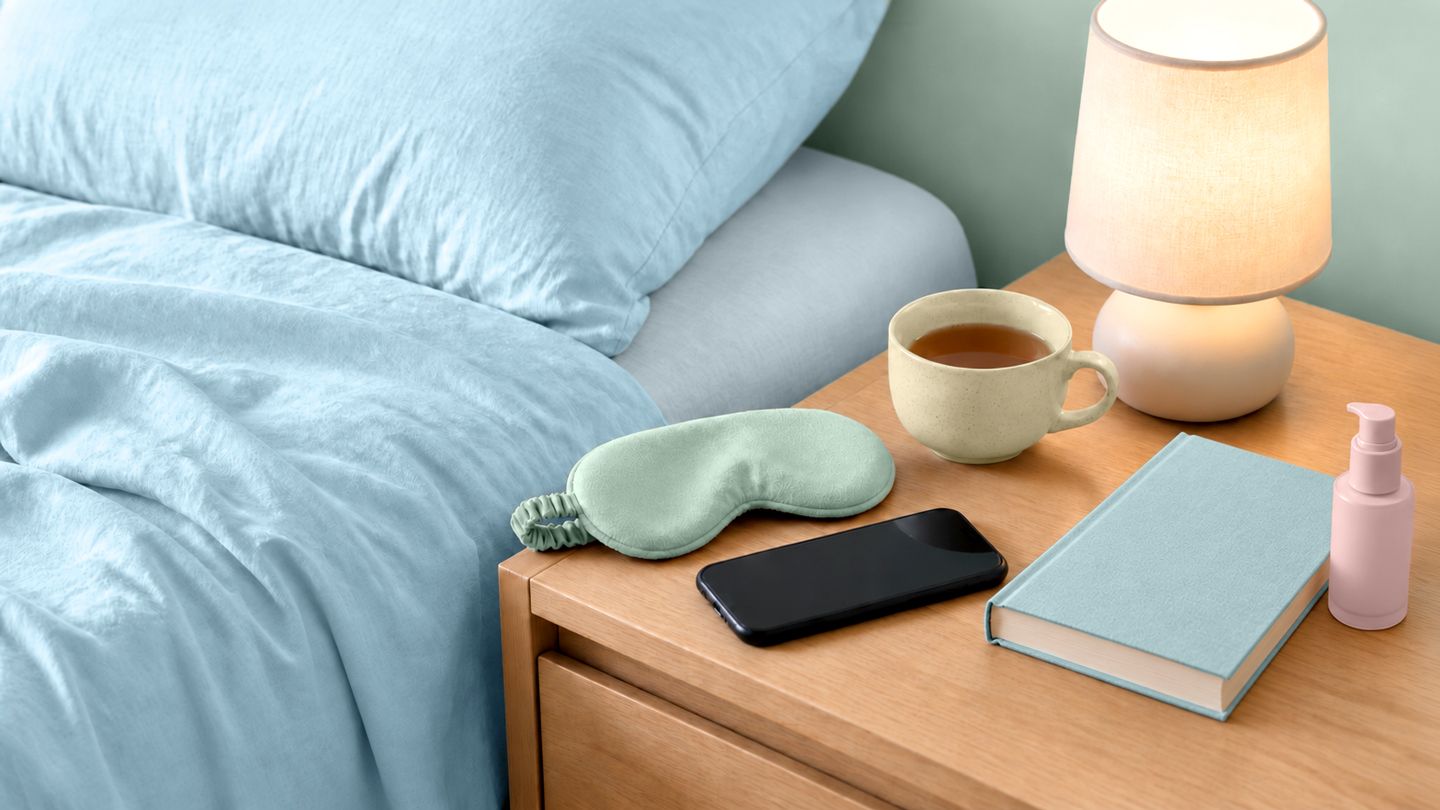
What It Is What Is ‘Bedtime Stacking’? When bedtime stacking first started trending on social media, news outlets credited the term to the TikToker Linnéa Pham .e60dc2a1-f33c-4a05-9b50-8e3e8e597629595dc49b-144e-4113-b93c-95a79a63be16 In her popular bedtime stack TikTok video , which has more than 486,000 views, Pham stacks hand cream, a lip mask, snacks, a journal, a book, her iPad, a bottle of water, and a neck massager, among other items. The idea is to accomplish as much as possible without having to get up, like a more-productive version of “bed rotting.” Pham doesn’t explain where she came up with the term, but many have noted the idea seems at least loosely related in name to the concept of “habit stacking.” Habit stacking , a productivity tool popularized by the writer James Clear, is when you pair (or “stack”) a new behavior with a current habit to help the new behavior stick.e60dc2a1-f33c-4a05-9b50-8e3e8e59762965fbbd5e-7042-4e3f-a62c-500f8ab98cc0 Other Instagram videos show creators including tea, sleep-promoting supplements , lavender spray, and e-readers in their bedtime stacks. Another Instagram example brings a red light therapy mask , scalp massager, and face tape into bed. It all depends on what they hope to accomplish there.
How It Affects Sleep and Health How Bedtime Stacking Affects Your Sleep and Health There are a few reasons why sleep experts aren’t too keen on bedtime stacking. Associating Your Bed With Being Awake When you do activities other than sleeping or having sex in your bed, your brain starts to associate bed with those things, which can make it harder to fall asleep.e60dc2a1-f33c-4a05-9b50-8e3e8e597629a909df98-0c0b-4f76-914c-f39549da94cf “For my insomnia patients, a lot of times their insomnia began when they were starting to do a lot more work in bed; maybe they’re eating in bed, or they’re watching TV starting at 7 p.m. in bed, and then the line between the bed being for sleep and the bed being for other things is blurred,” Walia says. “When that occurs, [the bed is] not really a stimulus for sleep; it’s more of a stimulus for these wakefulness activities.” This might leave you awake in bed for long periods of time, unable to fall asleep or fall back to sleep if you wake in the middle of the night. “Anytime you’re awake in bed, you’re training your brain that the bed itself is a cue for being awake,” Caspari says. If poor sleep persists , your long-term health can suffer. An umbrella review linked sleep deprivation (which the research defined as consistently fewer than seven hours of sleep a night) to greater chances of high blood pressure , type 2 diabetes , obesity , anxiety , depression , stroke , and heart disease .e60dc2a1-f33c-4a05-9b50-8e3e8e5976299b23bfd2-2522-48b4-976f-40e7bc5206e7 Overstimulation Some bedtime stacks include tasks that might take hours to complete, which is almost like turning the time before sleep into a mini workday, Walia says. If those tasks are stressful, research suggests your sleep quality might suffer.e60dc2a1-f33c-4a05-9b50-8e3e8e5976290c6c56f3-be27-4297-a9d8-933789e49a64 And if you’re overly focused on getting stuff done, it might be harder to fall asleep, because you’re completing tasks instead of relaxing, and pushing back what’s called sleep onset, the time when you fall asleep, he says. If you have to get up in the morning for work, school, or other responsibilities, delaying when you fall asleep cuts down on your total sleep time , which can also lead to sleep deprivation. Plus, according to research, putting off your bedtime is also associated with worse sleep health in general, including less-restorative sleep.e60dc2a1-f33c-4a05-9b50-8e3e8e597629c8e56688-a208-49bf-857a-bba7a45e8816 “In general, [during] that time before bed, ideally you want to do things that feel relaxing, that feel soothing, that really have this sense of winding down your brain, not feeling like your brain is really activated and turned on,” Caspari says. “Give yourself permission that you don’t need to constantly get things done every waking hour of your day.” Light Exposure The bright light from phones, laptops, and other screens you might bring into bed as part of your stack can be disruptive to sleep because the light signals to your brain that it’s time to be awake, throwing off your circadian rhythm .e60dc2a1-f33c-4a05-9b50-8e3e8e597629d005f360-edc9-413c-bdc2-43cc396d85e5 “Light runs the risk of suppressing melatonin when we want it to be peaking and carrying us into sleep,” Walia says. Indeed, in a study of university students in Norway, just one extra hour of screen time after bed was linked with a 59 percent higher chance of insomnia symptoms that night and 24 fewer minutes of rest.e60dc2a1-f33c-4a05-9b50-8e3e8e5976290615a3ec-7065-4bd2-917f-311c69bdd6bc (Note: One of the study’s authors was employed by the makers of a sleep-tracking app.)
Bedtime Tips to Unwind 3 Ways to Unwind Without Disrupting Your Sleep Optimize your environment for the best sleep possible, Walia says. Here are some ways to satisfy that urge for cozy decompression without messing with your rest. Create a wind-down zone outside the bedroom. Take the most calming items from your bedtime stack and engage with them outside of bed, Caspari says. She recommends a sleep routine that includes giving yourself 30 to 60 minutes ahead of bedtime for your favorite wind-down activities, but doing them from a comfy chair or couch. “It’s great to have that buffer zone between the more active part of the day and the period of time that you’re wanting to go to sleep, but it’s really important to not do it in bed,” she says. Then, when you’re starting to feel sleepy, you can move to your bed and maybe do one more screen-free, calming activity like reading or journaling before you fall asleep, Walia says. Swap active tasks for passive relaxation. Cut down the number of activities in your stack to only the most relaxing ones, like reading and journaling, Walia says. Consider adding in meditation or gentle stretching , he says, and swapping out more stimulating activities like answering emails. Keep screens out of the bedroom. Easier said than done, but do your best to avoid bringing technology into your bedroom so your phone doesn’t undermine your sleep . “It’s a helpful practice to limit screens so we feel like our brain and our body can fully unwind and relax,” Caspari says. “It can be helpful for people to charge their phone in another room or put their phone across the room.” It’s hard for most people to ditch screens in the bedroom entirely, Walia says, but the general guidance is to wrap up screen use within the 30 to 60 minutes before bed. It may help to invest in an old-school clock radio or alarm clock.e60dc2a1-f33c-4a05-9b50-8e3e8e597629d3466f51-7fa8-4594-888f-a14d2dc3ea25
Sleep experts like to say your bed should be used for only two things — sleep and sex.e60dc2a1-f33c-4a05-9b50-8e3e8e5976297c2ab964-91a6-45ca-bfad-11d2f4997724 But lately, a TikTok trend is adding a new s-word to that list: stacking, as in bedtime stacking.e60dc2a1-f33c-4a05-9b50-8e3e8e597629a0a24fd1-d374-42ee-868a-3d89364ae007 The idea is that you physically get into bed early, but you bring all sorts of personal items with you so you can still be productive without having to get out of bed. In bedtime stacking videos, people bring skin-care products, journals, laptops, and even snacks into bed with them as an antidote to “bed rotting,” or lounging in bed for long periods of time while intentionally accomplishing very little.e60dc2a1-f33c-4a05-9b50-8e3e8e5976292588fab3-9f40-4461-ba22-ee88bea6602f But if you remember the “only for sleep and sex” adage, you can probably guess that sleep experts aren’t too happy with this new trend. Bedtime stacking might be too overstimulating to encourage sleep, and it could cause you to associate your bed with productivity instead of rest.
What Is ‘Bedtime Stacking’ — and Should You Try It?