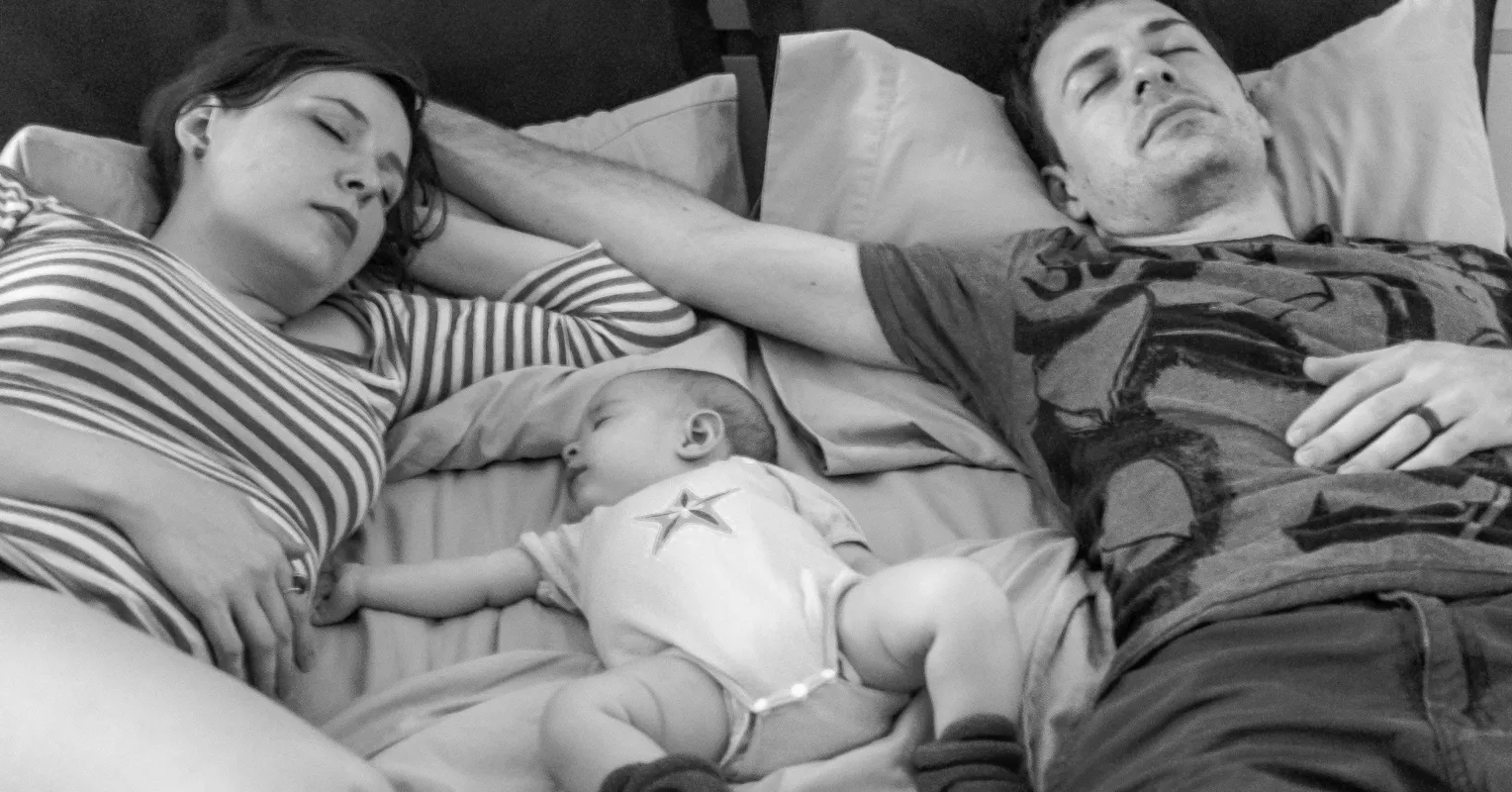
Many parents have shared a bed with their child at some point. Sometimes it’s a deliberate choice. Other times, after a period of sleep difficulties, fears, nightmares, or life changes. Do you wonder whether bed-sharing might affect your child’s mental health? Our new research offers reassuring, though nuanced, answers.
Parents often receive conflicting messages about children’s sleep. Some are told that bed-sharing fosters closeness and security, while others worry it may encourage dependency or emotional difficulties. The reality may be more complex.
What We Already Knew About Bed-Sharing
Earlier, we examined whether bed-sharing during infancy was associated with children’s later emotional well-being and attachment (Bilgin and Wolke, 2022; Bilgin and colleagues, 2024). Reassuringly, we found no evidence that bed-sharing in infancy was linked to poorer mental health outcomes in childhood or less secure attachment in infancy.
These findings challenged the common assumption that sharing a bed with an infant has important consequences for children’s emotional development. Instead, they suggested that bed-sharing during infancy is often a normal part of family life and may reflect a variety of practical, cultural, and parenting considerations.
Yet one important question remained unanswered: Could bed-sharing mean different things depending on when it begins? A baby who routinely shares a parent’s bed may not be experiencing the same challenges as a preschooler who suddenly starts seeking a parent’s bed at night.
Our new study built on this work by asking a different question: Could the age at which bed-sharing begins matter?
Why Timing Matters
To answer this question, we turned to data from the Avon Longitudinal Study of Parents and Children, a UK study that has followed thousands of families from pregnancy onward. We examined whether bed-sharing was associated with anxiety and depression across childhood and adolescence. Importantly, rather than asking whether children bed-shared, we looked at when bed-sharing began (Bilgin and Parsons, 2026).
The results painted a more nuanced picture than a simple yes-or-no answer.
Bed-sharing during infancy was not linked to an increased risk of anxiety or depression later in childhood or adolescence. Children who slept in their parents’ bed at six months of age did not show elevated rates of emotional disorders years later.
However, a different pattern emerged for children who started bed-sharing after infancy, during toddlerhood (at 18 months) or early childhood (at 3.5 years). These children were more likely to experience anxiety disorders later on. Children who began bed-sharing at 18 months or 3.5 years had approximately three times greater odds of anxiety at age 8 compared with children who did not bed-share.
Does This Mean Bed-Sharing Causes Anxiety?
Probably not.
This is perhaps the most important message for parents.
Our findings do not suggest that bed-sharing itself causes anxiety. Bed-sharing that begins beyond infancy may signal that a child or family is already experiencing challenges. It may be better understood as a marker of underlying difficulties than as a cause.
Think of it this way: A child who suddenly wants to sleep in their parents’ bed at age 3 may be experiencing worries, separation difficulties, nightmares, a period of stress, or sleep problems. The bed-sharing is not necessarily the problem. Instead, it may reflect other difficulties.
Children often communicate their needs through behaviour. When bed-sharing begins beyond infancy, it may indicate a child’s emotional world rather than causing emotional difficulties itself.
Looking Beyond Sleep Arrangements
We also found that later-onset bed-sharing was more common among families experiencing other challenges, including:
- Child sleep problems
- Maternal mental health difficulties
- Single-parent households
- Social and economic disadvantage
This suggests that children’s sleep arrangements do not occur in isolation. Instead, children’s temperaments, sleep patterns, family well-being, and the wider circumstances in which families live can shape this.
For this reason, focusing solely on whether a child sleeps alone or with a parent may miss the bigger picture.
What Should Parents Do?
If your child occasionally sleeps in your bed, there is no reason to panic.
For many families, bed-sharing is a temporary response to illness, disrupted sleep, developmental transitions, or stressful life events.
Instead, consider the context:
- Has your child recently become more fearful or anxious?
- Have there been changes at home or school?
- Is your child struggling with sleep, nightmares, or separation at bedtime?
- Are there stresses affecting family well-being?
These questions may be more informative than the sleep arrangement itself.
If bed-sharing begins suddenly in toddlerhood or early childhood and persists because a child appears distressed or unable to sleep independently, it may be worth exploring the underlying reasons. Addressing the child’s worries, sleep difficulties, or sources of stress may be more helpful than focusing on bed-sharing alone.
The Bigger Takeaway
Parenting discussions around bed-sharing are often framed as a debate between “good” and “bad” sleep practices. However, taken together with our previous studies on infant bed-sharing, the evidence points to a more nuanced conclusion.
Bed-sharing during infancy was not associated with poorer attachment relationships or later mental health difficulties. In contrast, bed-sharing that begins beyond infancy may reflect different developmental processes and family circumstances.
Rather than treating all bed-sharing as the same, researchers and parents may benefit from paying closer attention to when it occurs and why it begins.
For parents, the key question may not be, “Is bed-sharing harmful?” But rather, “Why is my child seeking extra closeness at night right now?”
Sometimes children’s sleep behaviours tell us something important, not about where they sleep, but about what they may need from the people who care for them.
This content uses an AI language translation tool.