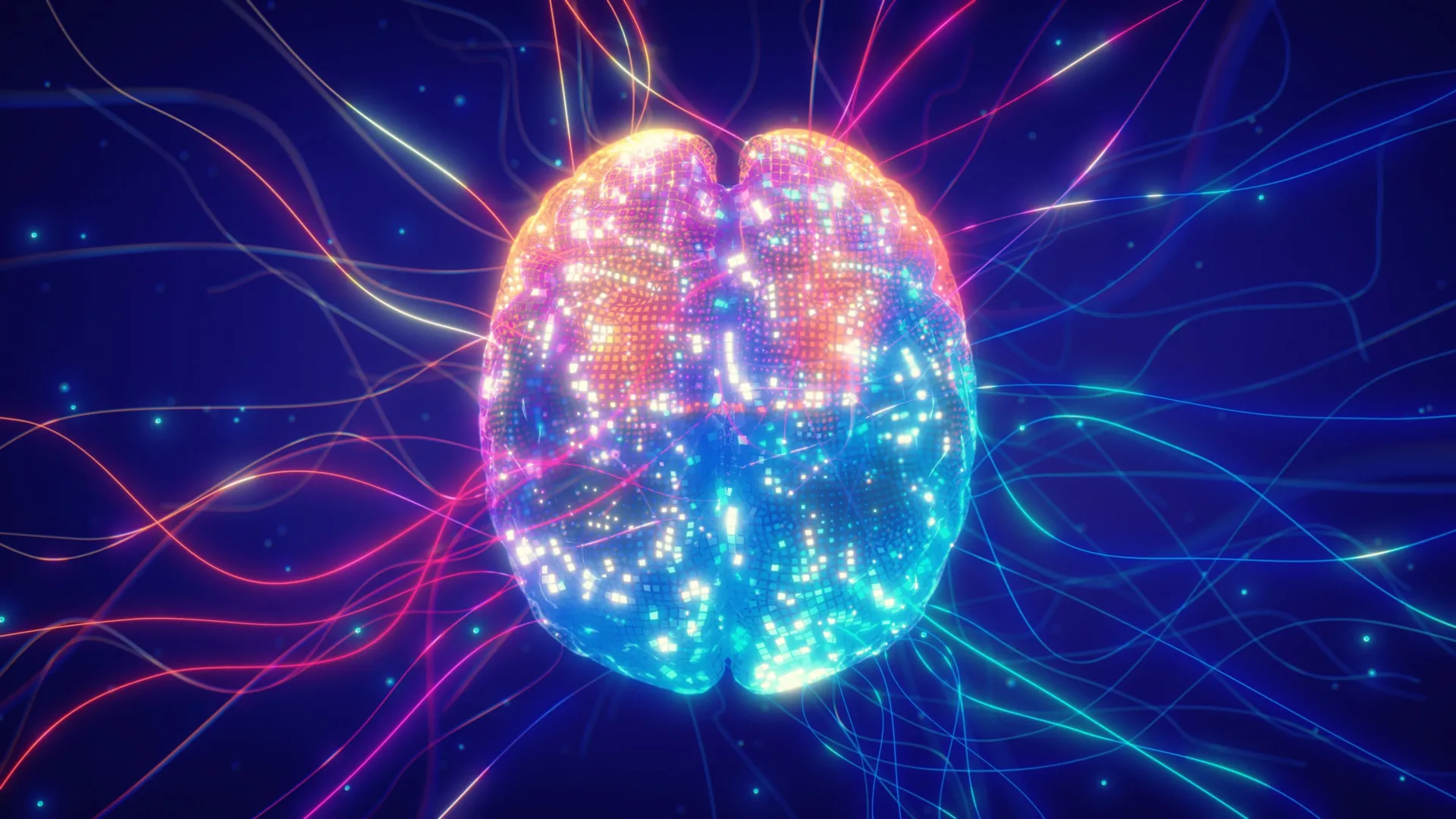
Elon Musk’s courage in driving modern technologies, particularly in combining the brain and computers, should push philosophers to keep pace and address the new issues arising from these advances. It is not surprising that computers and the web will soon be connected with the brain and may become part of its ability. In the case of the brain–computer interface (BCI) and the connection of the brain into a global network, the main question for us is: What will happen to human consciousness? Does this connection to the web make us similar to one another and dissolve our sense of selfhood and identity? With this perspective in mind, we can go even further and ask an old question similar to the question of the Ship of Theseus: If all parts of the brain are gradually replaced with silicon microchips, would consciousness emerge in a silicon brain? This question was first proposed by Tom Cuda and David J. Chalmers as a thought experiment [1,2]. They use this thought experiment to argue that if the functional organization is preserved, conscious experiences must also be preserved.
Let’s look at possible substrates of consciousness. First, we should consider probable consciousness in other living beings on Earth.
1. May other living beings on Earth possess consciousness?
The definition of consciousness is itself controversial among scientists and philosophers. If we define consciousness as a subjective, inner experience, we can better discuss its presence in other species. In this context, it is important to know that we are only sure about our own conscious experiences and do not have direct access to the experiences of others; we can only infer that others have similar experiences. In the philosophy of mind, this can lead to “solipsism,” which is the notion that “I am the only mind that exists,” expressing doubt about the existence of other minds. We must remember that attributing consciousness to other living beings is questionable. Most of the evidence for possible consciousness in other living things is just seeing complex behavior that can be interpreted as conscious experience.
However, Kristin Andrews, Jeff Sebo, and Jonathan Birch, with 39 other neuroscientists, announced on April 19, 2024, at a New York University conference, the New York Declaration on Animal Consciousness. They hold that there is strong scientific support for conscious experience in mammals and birds, and at least a realistic possibility that it exists in all vertebrates and many invertebrates, including cephalopods, decapod crustaceans, and insects [3].
2. Possibility of consciousness existence in extraterrestrial life
A recent, interesting paper argues that life beyond Earth need not be based on the same carbon-and-water chemistry as terrestrial life, as some astrobiologists have also hypothesized. The authors estimate that at least 1,000 species exhibiting complex behaviors may have existed, currently exist, or may arise in the universe, potentially with a physicochemical basis different from that of life on Earth. They suggest that some of these species may possess a form of consciousness. They therefore argue that consciousness may emerge from substrates different from those found in humans and other terrestrial species. Their main reasoning involves estimating the number of worlds where life might arise and evolve into species with complex behaviors, given the enormous number of galaxies and stars in the universe.
The authors also use the Copernican principle in their argument, which opposes assuming that humans or life on Earth have a special or unique position in the universe. By applying this principle to consciousness, they concluded that we should not assume that Earth’s biological substrate, on which human consciousness depends, is the only one capable of supporting consciousness [4].
Their argument is theoretical and probabilistic rather than based on direct empirical evidence of extraterrestrial consciousness. However, the most important innovation of the article is not simply the claim that consciousness could arise in different materials, but its reframing of the problem. Rather than focusing on the possibility of replacing brain neurons with silicon microchips, the authors ask: In a universe with different evolutionary paths and potentially different chemistries, must consciousness be restricted to a specific biological substrate?
3. Is consciousness linked to life?
Although life itself is a complex concept without a clear definition, many scientists and scholars believe that consciousness is the result of evolutionary processes in living beings. In this context, non-living entities cannot develop conscious experiences. However, some scholars who argue that replacing biological neurons with silicon chips preserves subjective experiences suggest that a robot with a fully silicon-based brain might also develop consciousness, similar to the robotic characters in the series Westworld. Although future advancements may soon reveal the answer to this question, it appears that if we adopt a comprehensive perspective on the formation of consciousness, rather than one focused solely on the brain, we would likely conclude that artificial brains or entities with biochemistries different from our own may not possess consciousness comparable to ours.
One of the authors of the aforementioned paper, Jeremy Pober, contends that while we currently lack sufficient evidence, it is unreasonable to assume that robotic brains and artificial intelligence possess consciousness. But he maintains that consciousness does not require a biological basis. Conversely, another author, Eric Schwitzgebel, adopts a more open-minded stance regarding the possibility of consciousness in AI.
Overall, consciousness is a complex concept with limited consensus regarding its definition. It cannot be measured directly; therefore, scientists infer its presence in an entity by observing indirect changes in brain function or behavior. If we assume that consciousness is a product of the brain alone and ignore the effects of body organs, microbes that live within us symbiotically, environmental factors, and individuals around us, we can propose that it may be found in each living and non-living informational processing system, from an alien with different chemistry to a computer and artificial intelligence. But in a holistic view, humans consist of the body, symbiotic partners, environment, and a biological brain. The integration of bodily and environmental signals by the brain helps to form the consciousness that we know. Therefore, consciousness in other forms of life may differ from our own, particularly if it emerges from a different biological substrate and a different relationship with the body and environment. Understanding such forms of consciousness may be even more difficult for us.