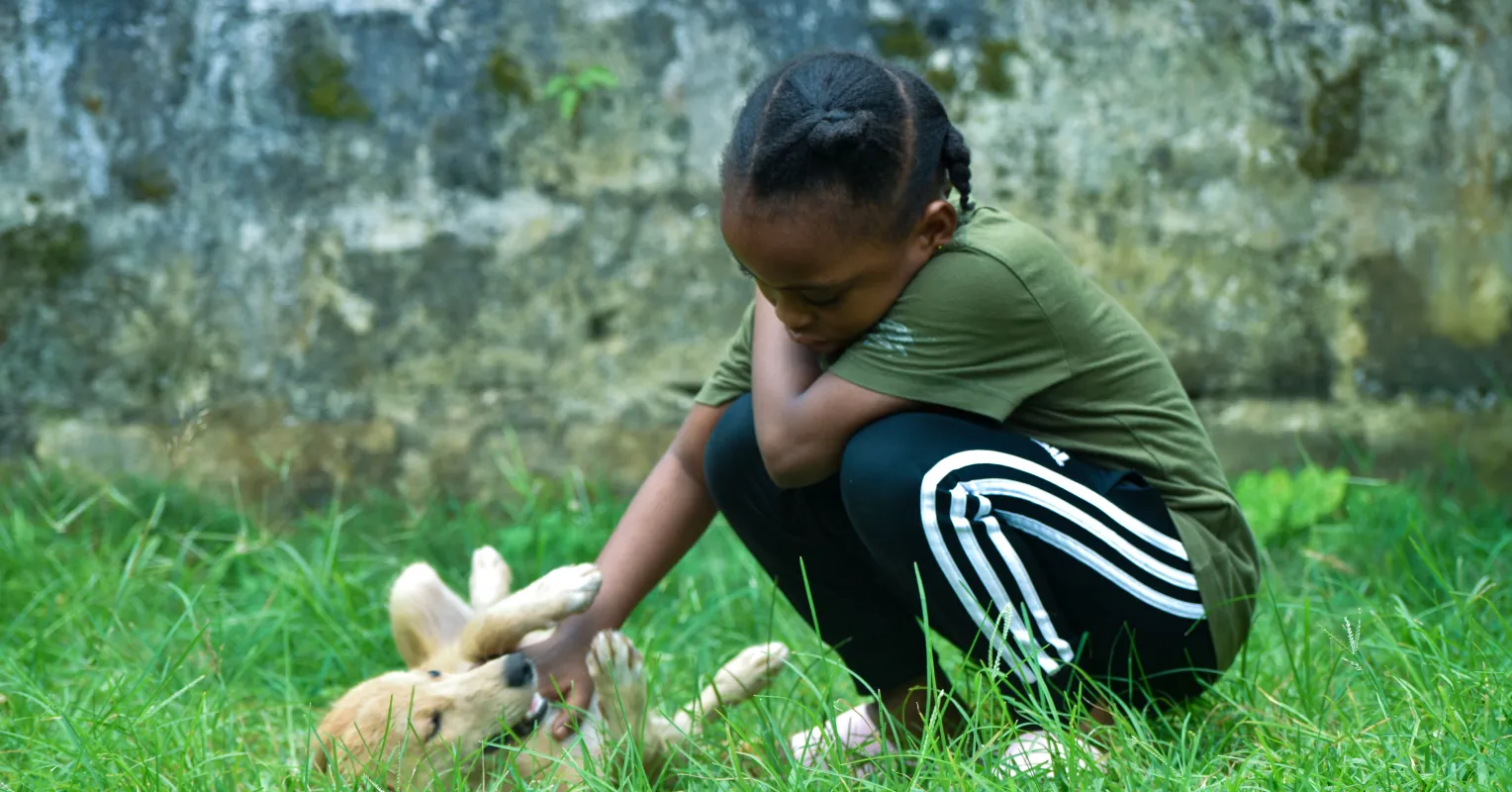
Imagine your child coming home after a challenging day at school. They failed a test. A so-called friend embarrassed them during lunch. You can tell they need space, so you don’t ask questions. You watch your child collapse onto the couch. The family dog immediately snuggles besides them. For a few minutes, there is nothing that must be done. There is just connection between two beings who love each other unconditionally.
Having a pet offers many benefits for children. A pet may offer companionship. It may teach a child about responsibility and respect and love. A pet may help a child manage anxiety, stress, or sadness. A pet in the home may lead to a child who develops a deeper sense of empathy and compassion.
Pets offer comfort during challenging life events
In a study of 101 children aged 7 to 12, researchers asked participants to complete stressful speaking and math problems. Children accompanied by their own dogs reported a smaller increase in stress than children accompanied by a parent or no support figure. The study did not find an overall difference between groups in the level of the stress hormone cortisol. [1]
That distinction is important. Feeling comforted is valuable, but it does not mean a pet completely eliminates anxiety. For some children, alone time with a family pet l may help make a difficult moment more manageable. If parents notice a child struggling, they can ask their child, “Would you like to have our pet sit by you?”.
It is important to respect your child’s response. Some kids would rather watch an animal from a distance, and some do not want animal contact at all. It is important to respect your child’s preference. At the same time, a family pet is not obligated to comfort anyone. A pet needs the freedom to move away; comforting a child is never an animal’s obligation.
Caring for a family pet deepens empathy
Empathy involves recognizing, understanding, and sharing the emotions of others. A child may want to cuddle a cat that wants to be left alone. That moment allows for the practice of self-control. A parent might say, “She’s walking toward her litter box. Let’s give her space.” This encourages observation and a behavioral response that is respectful and caring. Children can learn that demonstrating affection includes respecting boundaries.
An observational study surveying 1,646 parents found that preschoolers in dog-owning households were more likely to show prosocial behaviors and less likely to have peer problems. It is important to note that the study was observational. That means that the study cannot establish a causal relationship. Environmental circumstances may also contribute. [2]
Having a pet encourages responsibility
A dog’s water bowl needs refilling even when a child would rather ride their bike. Fish need to be fed even when a child has a homework assignment to complete. These tasks can provide practice an opportunity to follow through and contribute to family life. Consider starting with one manageable job, such as helping an adult fill a water bowl. Explain why it matters: “Fresh water keeps our dog healthy.” Specific information helps to connect the child’s involvement of care to the effect that their action has.
Adults need to remain responsible for making sure every need of the pet is met. If a child forgets to complete their pet-related chore, help them try again. An animal should never go hungry or without water in attempts to teach a lesson. As animals get older, children watch how adults respond when care is inconvenient. Calmly cleaning an accident or adjusting a routine for an aging pet provides an example of continued care and compassion. These moments provide families with an important lesson to discuss that caring continues even when it requires extra effort.
Shared pet-related routines can create connections
Walking a dog together as a family creates time for moving, being present, and engaging in meaningful conversation. Playing fetch with the family dog can encourage a loving bond while simultaneously keeping kids off of electronic devices.
The relationship may also provide a child with something meaningful to share: a funny story to tell their friends, a new picture to share with their grandparents, or the opportunity to help a pet learn a new skill or trick. Parents can follow the child’s interest and use it to engage in conversation. Yet it is important for a parent to set boundaries. Pets should never be expected to be a solution for friendship difficulties, loneliness, or mental health disorders.
Find a good match for your family
Before purchasing a pet, make sure that the arrangement works for everyone. Consider allergies, costs, time and energy available to care for the pet. It is also important to gauge the the child’s comfort level with the pet, as well as the animal’s temperament and needs. Please note, the majority of the research discussed in this blog relates to dogs; findings should not automatically be applied to every animal species.
A family pet can become a beloved companion. Additional benefits include providing an opportunity to practice kindness and compassion, as well as an opportunity to meet another’s needs and to show up consistently. Finally, family pets can lead to an experience of unconditional love. That’s a win for everyone.