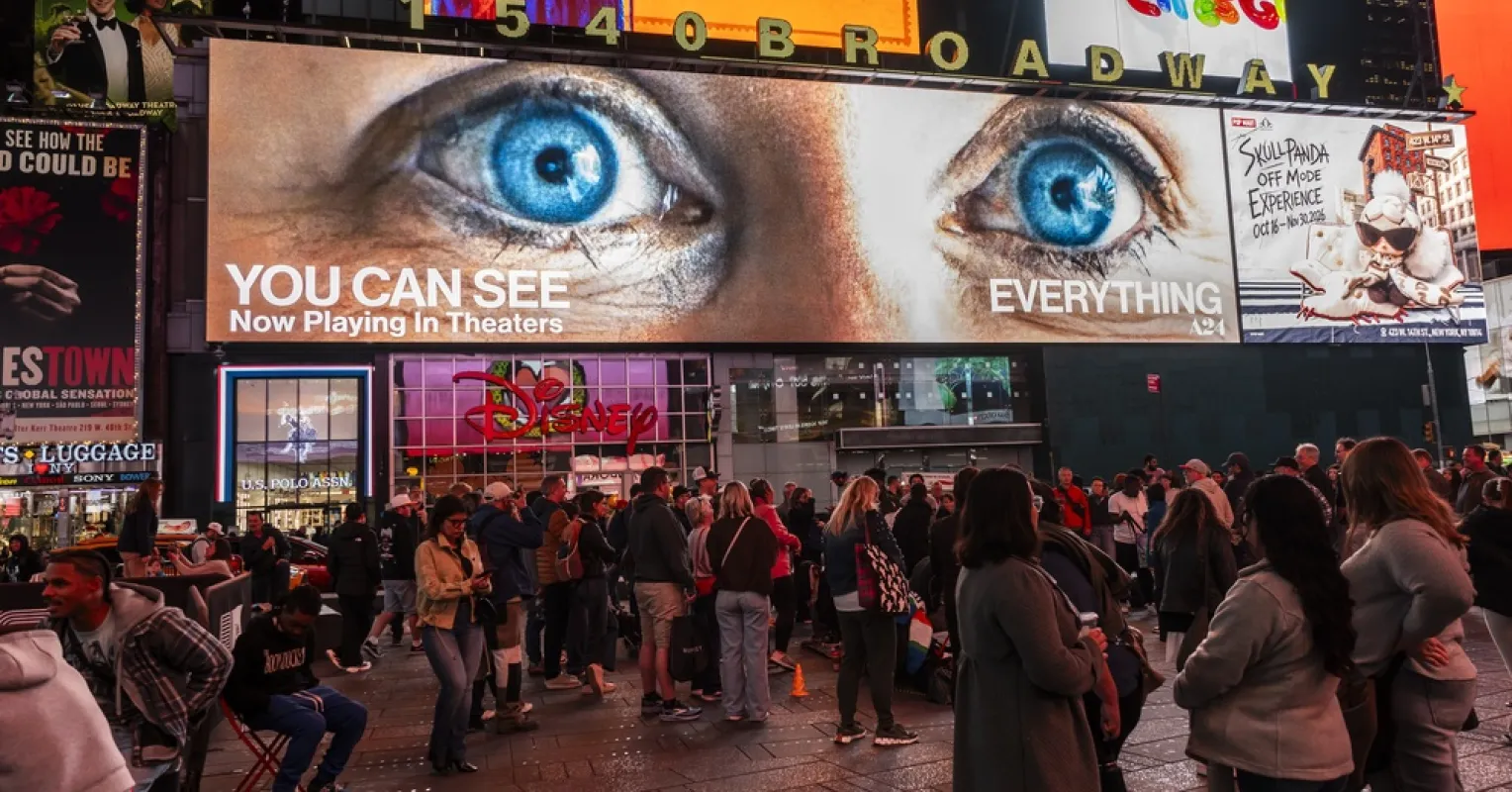
You Can See Everything, directed by Nathan Fielder and Lance Oppenheim, is a revolutionary piece of filmmaking that blurs the boundaries between documentary, reality, and storytelling.
Elizabeth Holmes founded Theranos, a Silicon Valley company that promised to transform healthcare by performing hundreds of blood tests using just a few drops of blood. The technology failed to deliver on those promises, and Holmes was eventually convicted of defrauding investors and sentenced to more than 11 years in federal prison.
In 2023, shortly before reporting to prison, Holmes and her partner, Billy Evans, invited filmmakers into their rented beachfront home in Del Mar, California. The documentary offers an intimate look into Holmes’ life during those final weeks of freedom. We watch her prepare, both psychologically and practically, for her impending prison sentence, spend time with her two young children, navigate her relationship with Evans, and continue revisiting the technology and ambitions behind Theranos. Through zoomed-in conversations, ordinary domestic moments, and uncomfortable exchanges, we are given seemingly unprecedented access to one of Silicon Valley’s most controversial figures.
When a Documentary Becomes Theater
You Can See Everything blurs the boundaries between documentary filmmaking, reality, and storytelling.
The cameras capture intimate family interactions, uncomfortable conversations, and ordinary domestic routines, but the deliberately composed shots and extraordinary close-ups give the film a theatrical quality.
Amanda Seyfried, who portrayed Elizabeth Holmes in The Dropout, returns to play Holmes, this time with the intention of understanding the real woman, reenacting conversations and events that took place outside the documentary’s scope.
The film becomes as much about the construction of a narrative as the narrative itself. We watch people going about their lives, but we also watch them respond to the knowledge that they are being observed, sometimes making it difficult to distinguish between spontaneous behavior and calculated performance.
No Straight Answers
Throughout the documentary, Fielder asks incessantly direct questions and makes blunt remarks, yet the answers seem to manage to go in circles.
In one exchange, he tries to help Holmes understand the difference between saying the Theranos machine can perform certain tests and saying it could perform them if the technology were developed.
It seems like a straightforward question and an easily understandable distinction, but the dialogue becomes increasingly confusing as Holmes continues defending her understanding of what she had promised as being congruent with what she claimed.
At one point, Fielder introduces the famous Abbott and Costello comedy routine “Who’s on First?” to illustrate how language can create perplexity when people assign different meanings to the same words. It was mind-blowing how frequently this pattern repeated itself in the documentary.
Later, when Seyfried asks Holmes whether she knew Seyfried was visiting Evans, Holmes offers another evasive non-answer, where she says she doesn’t know if she knew. Although this answer begs the interpretation that she, in fact, did know, it doesn’t allow us to identify that as definite.
In my clinical work, this is an exchange that I witness regularly, when people deflect questions because they feel shame, fear, or emotional overwhelm. In some cases, the person is so invested in a narrative that considering another perspective feels threatening. And sometimes, of course, people deliberately avoid answering because they fear the consequences.
Decoding Facial Expressions
Holmes frequently appears with unusually wide eyes, raised eyebrows, and repetitive nodding, especially in moments when she is challenged about her actions or asked to acknowledge responsibility. At times, her words communicate reassurance and certainty while her facial expressions appear confused, even frightened.
Interestingly, during more ordinary interactions, such as announcing that she is going outside or taking a phone call, her demeanor appears congruent with her statements, and her incessant nodding and surprised expression subside.
Fielder’s body language and facial expressions in response to Holmes is very readable, His jaw often drops, and his brows frequently lift in disbelief when Holmes offers an evasive answer or seems unable to understand the point he is trying to make.
Body Language Essential Reads
Evans’ facial expressions are also fascinating to watch. At times, his reactions appear immature, almost childlike, while at other moments he seems visibly stressed or intimidated by the direction of a conversation. Occasionally, he appears so uncomfortable that he leaves the conversation altogether.
In psychotherapy, we pay close attention to moments when someone’s body language or facial expression seems incongruent with the story they are telling.
When someone describes a painful childhood experience while smiling or making a dismissive comment about the event, as a therapist, I might gently nudge the client toward curiosity about the discrepancy. Perhaps they have learned to minimize their emotional needs, or defending their parent has become a way of preserving an important relationship, or embracing the sadness feels too overwhelming.
We learn to understand the world through other people’s body language and facial cues. Children search their caregivers’ faces for reassurance, danger, affection, and trustworthiness. When something unfamiliar happens, a caregiver‘s frightened expression may increase the child’s distress, while a calm, reassuring demeanor can help the child feel safer.
When someone’s body language and gestures seem inconsistent with their words, we may experience discomfort because the signals are difficult to reconcile.
Holmes’ sustained eye contact, wide eyes, constant nodding, and sometimes seemingly-fixed expressions create ambiguity and uneasiness and raise questions about the words she is saying. The film repeatedly invites us to confront this incongruence.
Some of the documentary’s most emotionally intense moments for me were Holmes’ grief around the approaching separation from her children. To me, her sadness and tears about being apart from her young kids felt extremely genuine and painful.
We Could See Everything, But Did We See Anything?
Despite the access, intimate conversations, emotional revelations, and almost relentless close-ups, the documentary leaves a lot of questions unanswered.
Fielder and Oppenheim have created an artistically profound work by challenging the assumption that seeing more necessarily means knowing more.
Being able to relate to another person requires curiosity, context, and a willingness to question our own interpretations. It’s important to remember that we are listening to someone’s story, and our interpretation of it is inevitably influenced by our own experiences, emotional state, and level of vulnerability in the moment.
The camera can show us someone’s face, but it cannot give us direct access to their internal experience or to the series of events that led the person to where they are.
I left this documentary thinking about how much we communicate without words, how carefully we construct the stories we tell about ourselves, and how readily we believe we can make sense of another person simply by watching them.