Christa Pike, 50, has returned to Tennessee’s Deborah K. Johnson Rehabilitation Center after surviving a failed execution that exposed serious questions about the state’s lethal-injection procedures and the constitutional limits of capital punishment. According to the Associated Press, Pike’s attorneys announced on October 10 that she had been discharged from hospital, where she had remained since Tennessee attempted to execute her on September 30 for the 1995 murder of classmate Colleen Slemmer.
“She is grateful to the first responders and her medical team for their care in these extraordinary circumstances,” her lawyers said. “She is continuing to receive medical care at the prison, and we will continue to track her recovery.”
Pike survived after receiving two doses of pentobarbital, the drug Tennessee uses for lethal injection. The attempt failed to produce her death, and she was transported to hospital for emergency treatment. The Death Penalty Information Center, which monitors executions across the United States, described her case as the first known instance of a prisoner surviving after lethal-injection drugs were administered during an execution attempt. Previously documented failures generally involved difficulties establishing intravenous access before execution drugs were delivered.
Her hospital discharge, however, does not mean she has been cleared of the consequences of the ordeal. Her attorneys have reported serious injuries and concerns about possible lasting neurological damage. The extent of her recovery remains uncertain.
Can Tennessee Legally Try to Execute Her Again?
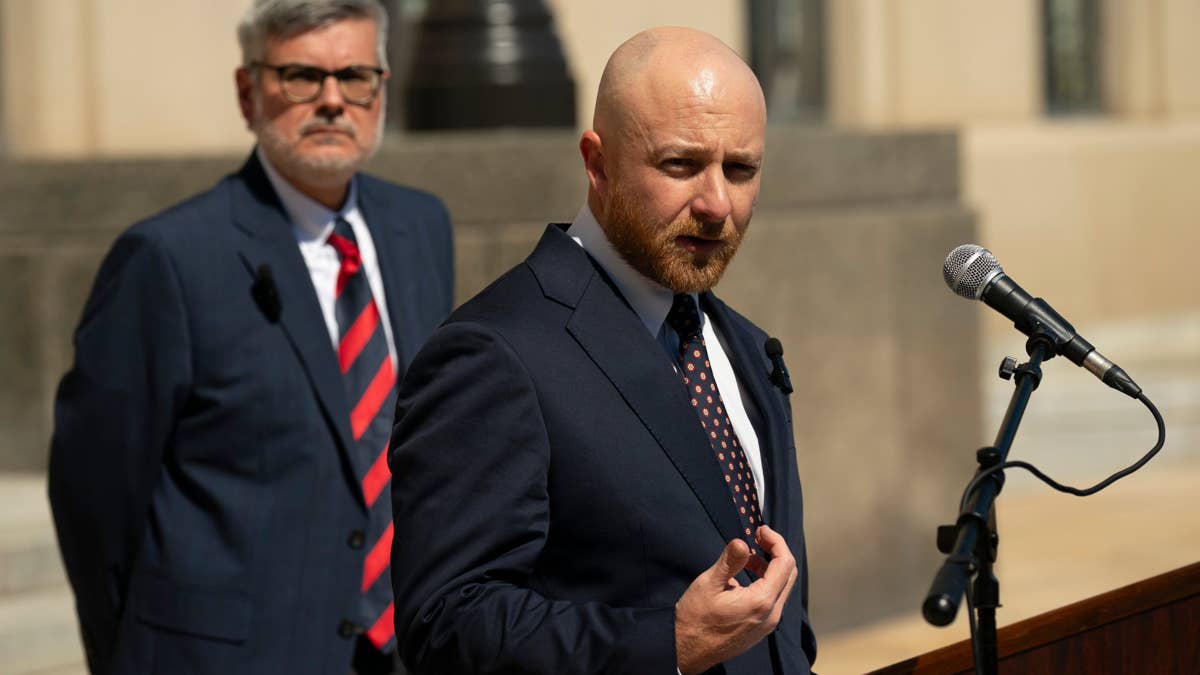
DENNY SIMMONS / THE TENNESSEAN / USA TODAY NETWORK via Imagn Images
Her death sentence has not automatically disappeared. Returning to prison does not amount to a release from custody, a commutation of her sentence, or a judicial declaration that Tennessee has lost the authority to execute her. The central legal question is whether another execution attempt would violate the US Constitution’s prohibition against cruel and unusual punishment.
A major precedent is the 1947 Supreme Court case Louisiana ex rel. Francis v. Resweber. Willie Francis survived an attempted electrocution because of an apparent mechanical failure. The Supreme Court permitted Louisiana to attempt another execution, rejecting his federal constitutional objections. But Pike’s circumstances raise a crucial distinction: she received two doses of execution drugs and survived.
Francis’s execution failed because the electric chair malfunctioned. Pike’s case involves the administration of lethal drugs followed by serious medical complications. Her lawyers could argue that subjecting her to another attempt after this experience would inflict constitutionally impermissible suffering. That argument is not guaranteed to succeed.
Nevertheless, the Supreme Court’s decision in Resweber does not conclusively settle Pike’s case because the medical circumstances differ substantially. Her legal team could also pursue challenges based on Tennessee’s execution protocol, her physical condition, and her ability to withstand another attempt without unconstitutional suffering.
What Happens Now?

Tennessee Governor Bill Lee has ordered an independent investigation into the failed execution, and the state has suspended its remaining scheduled executions for 2026 pending the review. A judge has also ordered officials to preserve evidence, including execution equipment, medical materials, recordings, and relevant communications. These developments could prove decisive.
Investigators must establish what went wrong, whether the execution protocol was followed, and whether officials ignored known medical risks. Pike’s attorneys may use the findings to strengthen arguments against another execution attempt or renew their request for clemency. The state, meanwhile, would have to confront the legal and practical implications of attempting to carry out the sentence again.
In the meantime, Pike remains imprisoned, her death sentence remains in force, and another execution has not been announced. Her return to prison marks neither a final victory for her legal team nor the end of Tennessee’s responsibility for what happened. It opens a new chapter in a case that could test how far the law permits a state to go when its first attempt to execute a prisoner ends in survival rather than death.