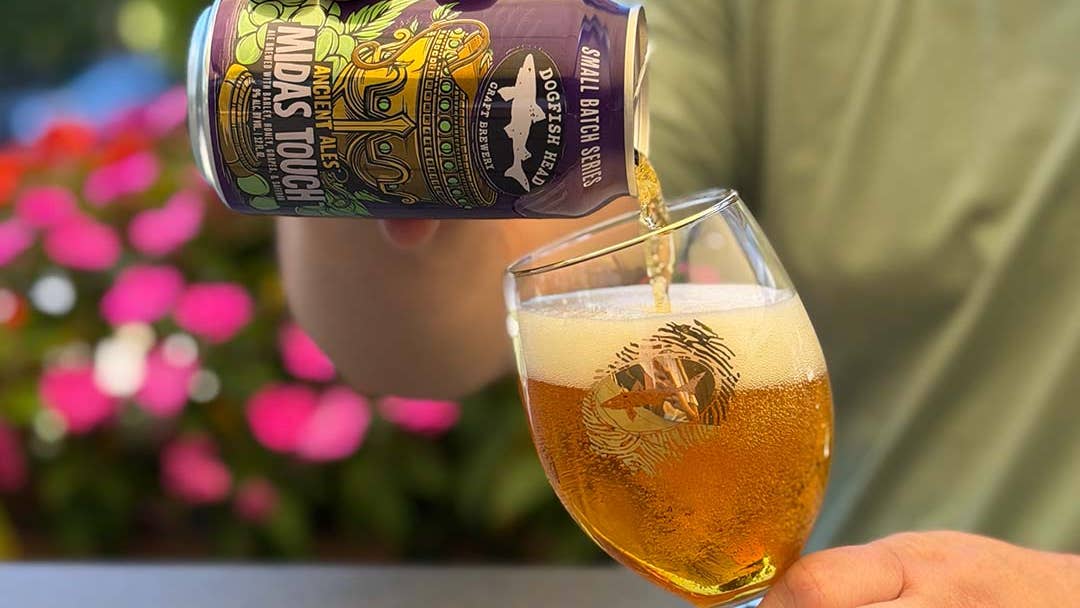
What does a 2,700-year-old beer taste like? Back in 1999, Dogfish Head attempted to figure that out. The Delaware-based brewery worked with biomolecular archaeologist Dr. Patrick McGovern to recreate a brew sourced from residue in drinking vessels discovered in a tomb associated with King Midas.
The result was Midas Touch, an award-winning beer that kicked off Dogfish Head’s Ancient Ales series of millennia-old beer recreations. In spite of its popularity, the brewery eventually stopped production of Midas, but this month they’ve thankfully announced its revival.
A quick background on King Midas: More than two millennia ago, in what is now Türkiye, lived King Midas of Phrygia. As the legend goes, anything that Midas touched turned into gold. Supposedly a reward from the god Dionysus, this magic touch nearly caused the ruler to die of starvation.
During an excavation of King Midas’s tomb over 2,700 years later, Dr. McGovern (from the University of Pennsylvania Museum of Archaeology & Anthropology) uncovered a preserved drinking vessel with remnants of a mysterious liquid. The good doctor was able to determine the ingredients of the drink, which was something akin to beer, wine, and mead.
Working with Dr. McGovern, Dogfish Head founder and brewer Sam Calagione recreated the recipe as best he could in 1999, when the original Midas Touch was released. “I was pouring beers at the Dogfish Head booth at a beer festival within the University of Pennsylvania’s Museum of Archaeology. It was kismet that Dr. Pat McGovern’s laboratory was literally directly below my booth,” says Calagione. “He came by and tried Dogfish’s medieval Braggot, which is a blend of beer, mead, and British herbs. He loved the beer and the historical context and invited me down to his lab to see the residue he had analyzed within the clay pots of the tomb believed to belong to King Midas. The two of us immediately began scheming on reviving the recipe.”
Courtesy Brand
The biggest challenge in recreating these ancient brews? Fermentation. “Ancient ales in every culture, in every corner of the world, existed pre-human understanding of sterilization or pasteurization,” says Calagione. “It’s likely that all ancient beers tasted more similar to modern Belgian lambic beers, meaning they likely had wild yeast and bacteria in them.” So the one creative liberty the brewery did take was fermenting these beverages with a pure yeast strain. “Sometimes we’ll use a beer strain, sometimes a wine strain, sometimes a champagne strain. We do this because we want the ingredients, beyond the yeast, that were the cornerstones of these ancient recipes to shine through instead of introducing bacteria and wild yeast to the beers, which would make them all taste very similar and very sour.”
The ancient brew proved to be popular. Midas Touch received a gold medal at the Great American Beer Festival and became one of the most requested beers in the history of Dogfish Head. It was even part of a tasting on the Today show. “It’s definitely one of the key beers, along with 90 Minute IPA, that put Dogfish Head on the national map in the early era of the craft brewing renaissance,” says Calagione.
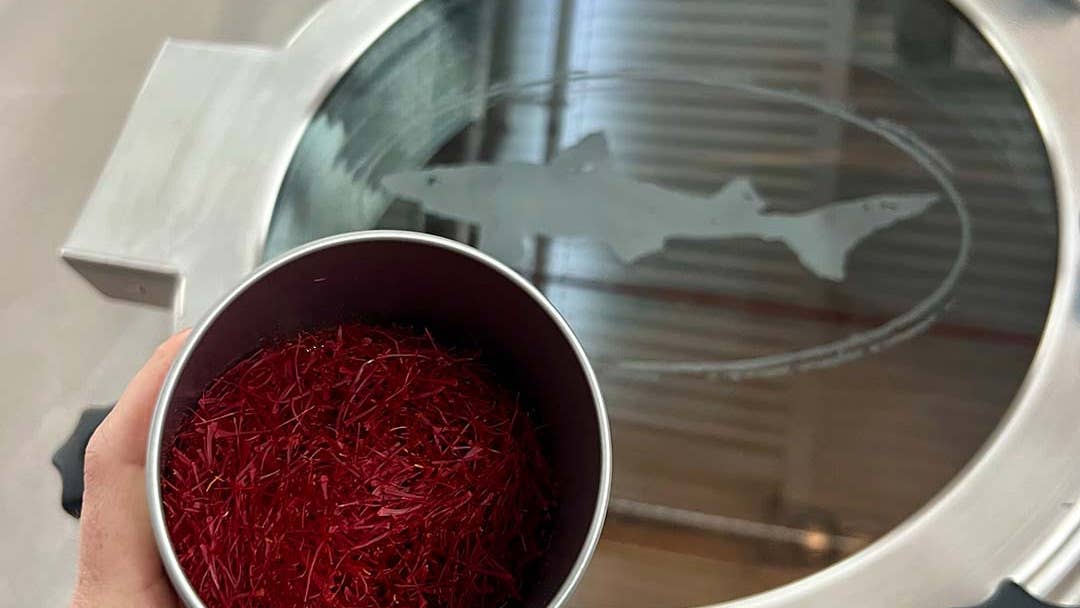
The beer ingredient list on Midas Touch includes barley, honey, white Muscat grapes, and saffron. Coming in at 9.0% ABV, the beer is both sweet and dry, offering notes of honey and orchard fruits with a bit of spice. Given that description and the ingredients list, it’s surprisingly quite sessionable. “That’s because instead of having a modern hop bitterness, it has a more subtle and nuanced dryness that comes from the traditional addition of saffron,” says Calagione. “So it’s very smooth on the palate.”
Courtesy Brand
The brewer and Dr. McGovern later collaborated on other Ancient Ale releases, including Chateau Jiahu, a recreation of a 9,000-year-old beverage brewed in China with orange honey blossom, Muscat grape juice, barley malt and hawthorn fruit; Ta Henket, a recreation of an ancient Egyptian beverage brewed with wheat, loaves of bread, chamomile, doum-palm fruit and various Middle Eastern herbs; and Kvasir, which replicates a 3,500-year-old Danish beverage brewed with red winter wheat, bog-grown berries, honey, birch syrup and herbs.
While those previously released Ancient Ales may also be revived, Calagione promises that the series may offer new (well, technically very old) beers in the near future.
“Beauty is in the eye of the beer-holder,” Calagione says (yes, that’s an eye-rolling pun). “It’s a beautiful thing that so many different styles of beer existed historically, and that so many different styles of beer exist today.”
Related: Why This Craft Beer Icon Is Still the Gold Standard for American IPAs