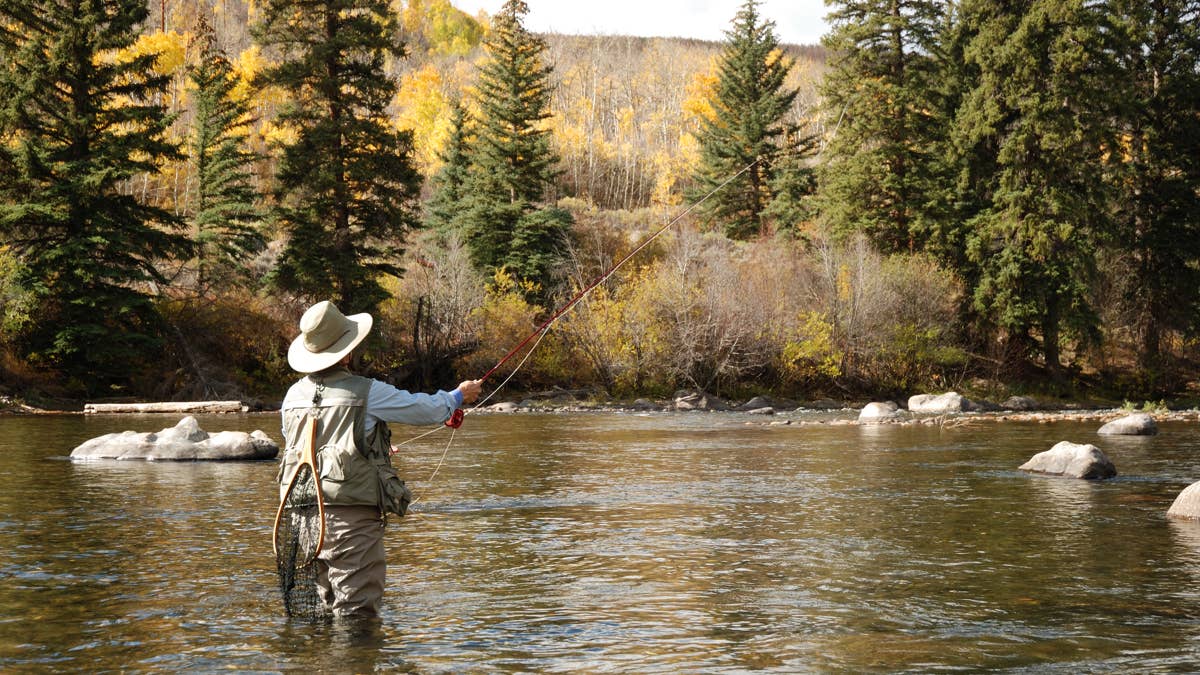
Anglers looking for one more productive trip before winter sets in have a very narrow window, and it opens this Friday. The Farmers’ Almanac gives October 30 and 31 its highest fishing rating of the month, identifying the evening as the best time to cast a line on both days.
What Does the Almanac Say About the Final Days of October?
The 2026 fishing calendar rates October 28 and October 29 as Fair, with evening marked as the better time to fish. Then the rating jumps. October 30 and October 31 are both marked Best, again with evening flagged as the prime window.
A Fair day, by the Almanac’s own definition, is one when you might catch a fish or two, but you’ll have to work for them. A Best day is described as one when you may get something almost every time the line hits the water. That puts Friday night and Saturday night at the top of the month’s fishing calendar, on a weekend when plenty of anglers already have the days off.
Readers ask the same question repeatedly in the comments under the calendar, so it’s worth settling here. The grade and the time of day are separate pieces of information. The grade rates the whole day, while the Morning or Evening label tells you which half of the day is the better bet if you go. In other words, a Fair evening does not mean the morning will be equally productive.
[POLL]
Be honest: does the fishing calendar hold up on your water?
- It works. My best days line up with the calendar almost every time.
- Only around the full and new moon. The rest of the month, I see no difference.
- Not really. Weather, water temperature, and time of day decide my days.
- Never tested it. I fish whenever I can get out and take what I get.
Why Do the Ratings Jump at the End of the Week?
The Almanac does not rate days based on weather. Its formula uses the phase of the moon, the zodiac sign the moon occupies, and what generations of anglers have reported over the years.
The lunar half rests on solunar theory, which holds that fish activity tracks the position and phase of the moon. The sun and moon together drive ocean tides, and solunar thinking extends that influence to feeding behavior more broadly. Inland lakes and rivers have no tides, though, and how much the moon actually shapes the bite on any given water remains an open question.
Evening appears in the calendar for a separate reason. The evening rise is one of the two most productive stretches of the day because fading light makes fish bolder and brings them closer to the surface.
Saltwater anglers can narrow the window further by working the hour on either side of high or low tide, when moving water stirs up bait. Tide predictions for US coastal stations come from NOAA, which runs the official service.
Does the Moon Actually Move the Bite?
Ralph Manns, a fishery scientist and longtime contributor to In-Fisherman, published a two-part analysis of solunar theory in 1992 that remains one of the more thorough attempts to test it. His conclusion was mixed. A detectable solunar effect on fish behavior and catch rates does exist, he found, but it is one influence among many, and light conditions and weather frequently outweigh whatever the moon is doing.
Peer-reviewed research points in the same direction. A study of muskellunge catch rates found that moon phase did register in the numbers, but its effect was smaller than those of time of day, fishing pressure, and water temperature.
The Almanac itself is clear that none of this overrides what’s actually happening on your water. Local conditions, tides, and weather still influence the outcome, and the two Best ratings are the Almanac’s assessment of these dates, not a forecast anyone has verified for your lake. But low light remains one of the few factors nearly everyone agrees on. If the plan is to get one outing in before the month closes, go at dusk.