Still doing side bends? Let us put you onto a similar-looking, but totally different exercise: kettlebell windmills. Unlike side bends, which primarily hit the obliques, windmills take the range of motion further down your body. To initiate the movement, you hinge at the hips and lower your torso toward the floor, engaging your obliques, abs, glutes, and hamstrings. Holding the kettlebell overhead adds an upper-body component, too, involving your shoulders and lats in the mix.
Kettlebell windmills are also a test of functional core strength, challenging you to keep your torso stable as you deliberately move through a greater range of motion with weight overhead. The rotational movement encourages thoracic spine mobility, which is important for maintaining good posture, while the hip hinge mimics everyday movements like bending down to pick something up off the ground. Ultimately, adding this core exercise to your workouts makes for an efficient way to build strength, mobility, and stability all in one move.
Related: Want to Torch Your Obliques? This Hanging Move Is Seriously Hard
How to Do Kettlebell Windmills
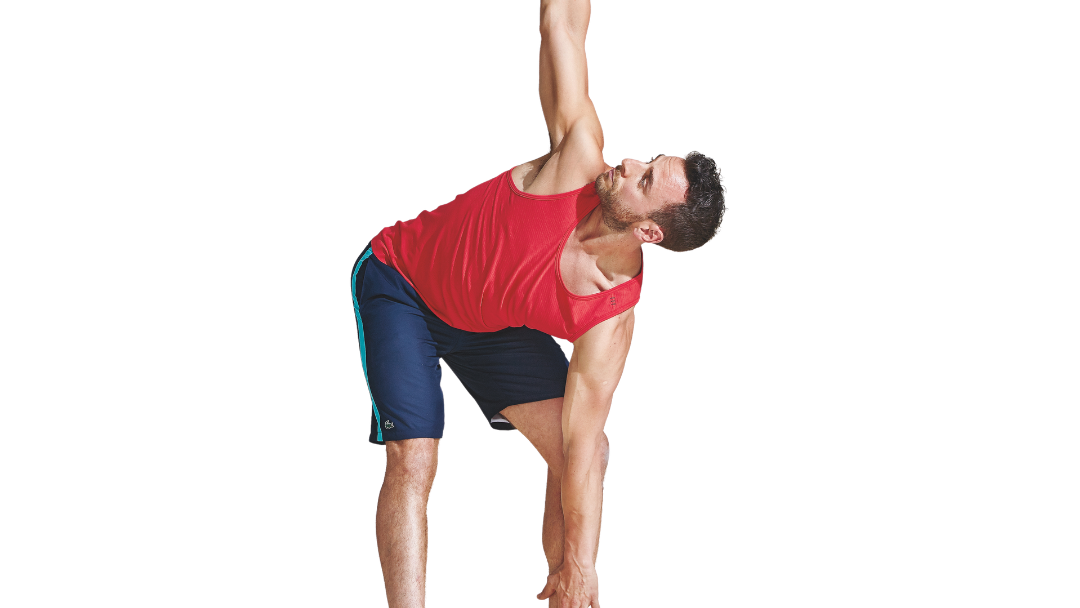
- Stand with your feet about shoulder width, holding a kettlebell overhead in one hand with your arm fully extended.
- Shift your hips toward the side holding the kettlebell. Slowly hinge at the hips, sliding your free hand down your opposite leg toward the floor while keeping your eyes on the kettlebell.
- Lower as far as you’re able to while keeping your arm straight and your chest open.
- Drive your hips forward to return to the starting position. Perform for the desired reps and repeat on the opposite side.
Related: The 4 Daily Core Exercises Personal Trainers Use to Instantly Fix Bad Posture
Why You Should Trust Me
I’m a health and fitness writer for Men’s Journal and an ACE-certified personal trainer with more than five years of experience training clients and coaching various group fitness modalities, from HIIT to indoor cycling.
