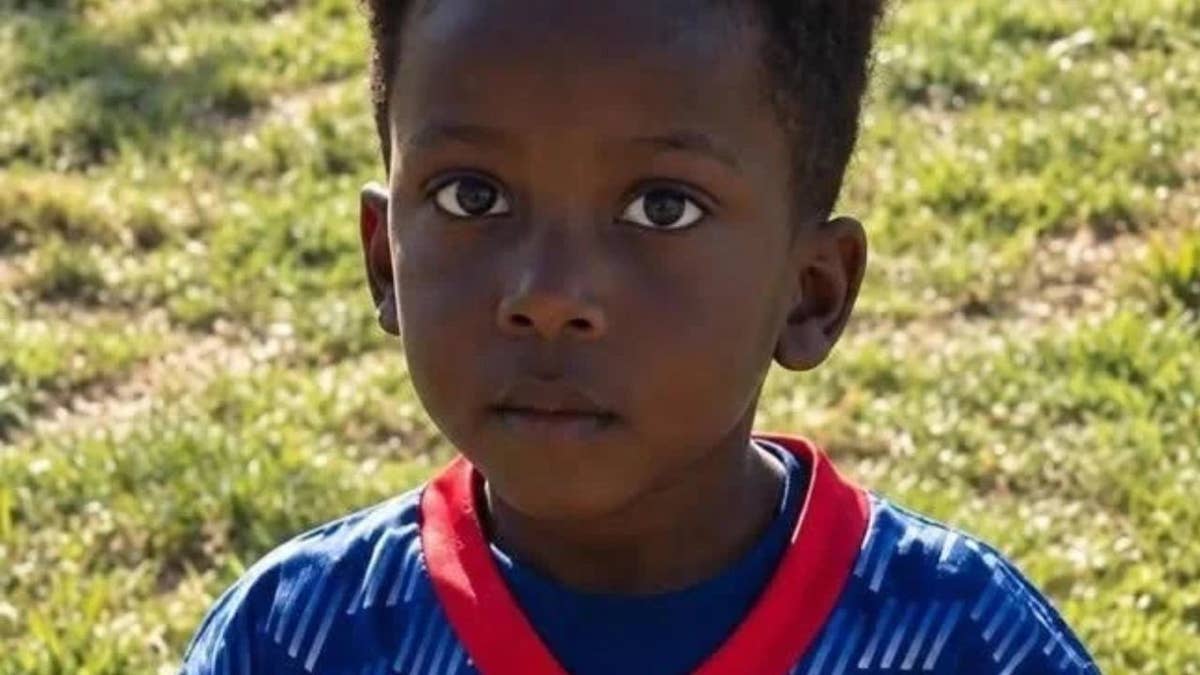
I’ve watched clips of little Nevada dribbling past older children and marveled at his soccer skills. I’ve come to learn that the boy is just three, which is beyond incredible because his control of the round leather, confidence on the pitch, and ability to weave around opponents give you the impression of a mini-Messi.
I didn’t waste more than a second on the first social media post I saw claiming police had been called on mini-Messi because he was too good. I scrolled on immediately because I didn’t want to waste more mental bandwidth than I needed to on a ridiculous engagement-farming stunt. I mean, who would do that for real? No one would turn a preschool soccer match into a cops and body cameras spectacle.
Then another post making the same claim, backed by police footage. Wait a minute. Could this be real? Apparently, it happened.
On Saturday, October 24, 2026, Nevada Pierre was playing in an i9 Sports youth soccer program at Martin Luther King Jr. Park in Winter Park, Florida, against children reportedly around five years old. Videos shared by his parents, Martasia Griffin and Don Pierre, show the toddler dribbling around opponents and scoring goals with remarkable confidence. His family says he scored approximately 10 goals during limited playing time that day.
The footage went viral, attracting millions of views and turning an ordinary youth sporting event into a national debate about talent, fairness, and adults’ ability to handle a gifted child.
Now, here’s the thing: Every post I’ve seen suggests “cops were called on a kid because he made other kids feel inadequate.” It’s what’s known as ‘viral framing,’ except this ‘framing’ has compelling substance.
Parents call police to US children’s soccer game after father refuses to take his 3-yo son off the field for playing too well
Other parents complained the boy wasn’t sharing the ball and was dribbling past every opponent to score himself
The league later suspended the child pic.twitter.com/2eBWCqnrBd— RT (@RT_com) October 26, 2026
According to CBS News’ reporting on the released body-camera footage, league director Thomas Hayes acknowledged Nevada’s ability, telling officers: “The kid is very good … He’s great. Really good.”
He also described the child as “really advanced” compared with his teammates. His complaint, however, contradicted the narrative trending online. He says he called the cops because Nevada pushed other kids while scoring and that his parents argued with league officials over playing-time decisions.
The thing is none of the numerous videos of this kid playing soccer shows him pushing other kids. It would make better sense if he was accused of hugging the ball and not sharing with either his teammates or opponents.
Nah, call the FBI, something doesn’t add up on this kid pic.twitter.com/3XWCxEKR9g
— P.E.G.A.S.U.S 🐎 (@Reagangemini) October 26, 2026
Why Did a Preschool Soccer Match Require Police?
According to police records and reporting by Orlando’s News 6, Hayes called 911 at approximately 9:50 a.m., describing an allegedly disruptive parent and requesting assistance with a dispute. The disagreement followed the decision to limit Nevada’s playing time. Hayes reportedly said the parents were arguing with him, following him, and calling him names.
Nevada’s mother disputes that explanation.
In the body-camera footage, Griffin tells officers: “They’re mad at my son because he actually plays soccer.” She maintains that the family was targeted because the child was exceptionally good, while the league’s director says his concerns included alleged pushing and the parents’ conduct.
Winter Park police subsequently clarified that officers were called over a dispute involving adults, not because a child had committed an offence. Their statement said: “The incident was a civil matter between those parties and not criminal.” It added: “No one was arrested, trespassed, or forced to leave the park.”
The family said the game had ended and they were leaving. The league offered a refund, and i9 Sports Maitland/Winter Park announced that it had contacted the family and begun reviewing the incident. The organization said it would not “speculate or share unverified information” while investigating.
The Real Losers Might Be the Adults
The story about 3-year-old soccer prodigy who had the COPS called on him has gone VIRAL
And now Bodycam footage has been released 👀 pic.twitter.com/0WnMX6KjBD— Daily Loud (@DailyLoud) October 27, 2026
Let’s be clear: the available evidence does not establish that every complaint was motivated by jealousy, nor does exceptional talent excuse genuinely aggressive behavior. If Nevada was pushing other children, that deserved appropriate intervention. Three-year-olds are still learning boundaries, cooperation, and how to play safely.
But there’s no video evidence, at least available to the public, showing the boy pushing other players. The accusations rests solely on the league director’s account of what happened, including that the parents were arguing with an official.
But here’s the bigger problem: why was a disagreement over a preschooler’s playing time allowed to escalate to a police response? A youth league should be capable of managing substitutions, explaining its rules, and resolving parental disagreements without introducing armed authority into a children’s sporting environment unless a genuine safety concern warrants it.
And if a talented toddler really was being penalized simply because other children struggled to dispossess him, that would be an embarrassing failure of youth sportsmanship. Competitive balance matters, but so does nurturing exceptional ability rather than treating it as an inconvenience.
Former NFL quarterback Robert Griffin III criticized the situation, writing on X: “Punishing a 3-year-old child for being too good at a sport is RIDICULOUS.” Children’s entertainer Ms. Rachel also expressed interest in welcoming Nevada onto her show.
First time watching 3-5 years old play soccer huh? 🤣
— Robert Griffin III (@RGIII) October 26, 2026
Ironically, this controversy could give Nevada’s talent an even bigger audience. Coaches and training opportunities may follow, although nobody can guarantee that viral attention will produce a professional career.
In all this ugliness, my greatest concern is what the boy takes away from this experience. At three, he should be learning that football is joyful, challenging, and shared with others, not that his abilities can provoke adult hostility. If the adults involved want to protect children’s sporting experiences, they should start by behaving like adults themselves.