America’s safest city is Juneau, Alaska, according to WalletHub’s 2026 ranking, released Monday, October 19. But there’s a surprising detail behind the victory: Juneau finished just 46th for home and community safety.
The Alaska capital earned 75.89 points out of 100, beating 181 other cities. Its advantage came partly from ranking first for natural-disaster safety and fourth for financial security, revealing why the safest place to live isn’t necessarily the city with the strongest overall crime statistics.
Next: Map Shows US States With the Noisiest Cities and a Hidden Health Risk
Why Juneau Beat 181 Other Cities
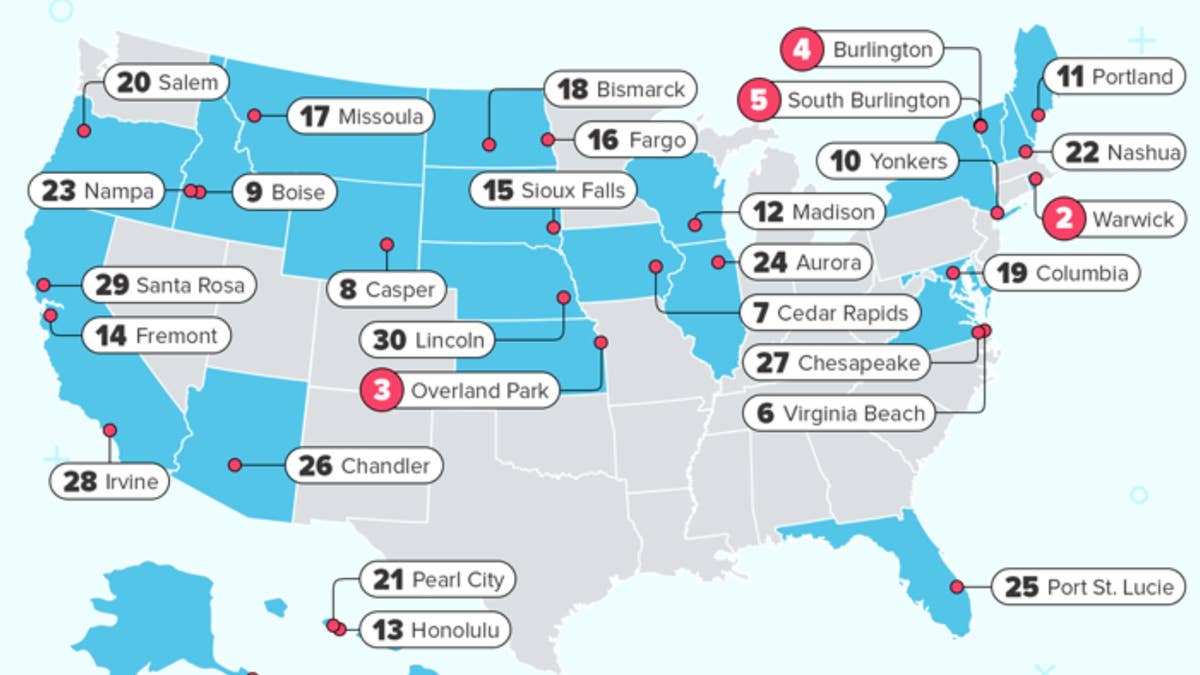
WalletHub evaluated 41 indicators, including violent crime, traffic fatalities, natural disasters, unemployment, and financial stability.
Juneau recorded the lowest murder rate and pedestrian fatality rate in the study. It also ranked second-lowest for flooding and tornado risk and seventh-lowest for wildfire risk.
WalletHub analyst Chip Lupo explained that safety extends beyond crime and accidents: “The safest cities in America protect residents from these threats of bodily harm and property damage, but on top of that, they also help secure people’s financial safety.”
Juneau’s financial standing helped. It ranked ninth for median credit score and 20th for annual employment growth.
Next: Map Shows US States Where Americans Are Happiest in 2026
These Four Cities Rounded Out the Top Five

Warwick, Rhode Island, finished second with 72.35 points, followed by Overland Park, Kansas, at 70.19.
Burlington and South Burlington, Vermont, completed the top five.
The contrast between the leaders is revealing. Overland Park ranked fourth for home and community safety but 138th for natural-disaster risk. Juneau’s category rankings were nearly the reverse.
At the opposite end, New Orleans finished 182nd, followed by Baton Rouge, Baltimore, Memphis, and Philadelphia.
Next: California City, Ranked No. 1, Named the Happiest Place in America for 2026
What the Rankings Actually Mean
WalletHub weighted home and community safety at 60 percent, with natural disasters and financial security accounting for 20 percent each.
That distinction matters when choosing where to live. A city’s overall position cannot establish the safety of an individual neighborhood or predict every emergency residents might encounter.
For Americans considering relocation, the takeaway is straightforward: compare local crime, disaster exposure, and financial stability separately before deciding which city offers the protection that matters most.
Next: Map Shows 20 US Cities Named the Most Challenging Places to Live With Asthma
Related: Woman’s Mysterious Hallucinations Led Doctors to a Terrifying Discovery in Her Brain