Next, I watched an episode of House of the Dragon using the HBO Max app via Google Cast. During a scene with a dragon, the scales looked visible but not nearly as textured as they did when using the UR9. Whether the subtle difference is worth paying more for the higher model remains to be seen, but the differences are noticeable nonetheless.
In the movie The Creator on Fandango at Home, a beach landing looked a bit washed out and dark. During The Batman, gunfire looked bright enough in a dark hallway scene, but—similar to the aforementioned dragon scene—lacked rich detail.
The Super Mario Galaxy Movie on Peacock is tailor-made for testing colors: Stars floated around on the screen in a brilliant rainbow of colors, appearing bright and accurate, but some of them had too much blooming (aka a halo effect where bright tones bleed onto their darker surrounding colors). In all fairness, the UR9 also rendered this scene in a similar way.
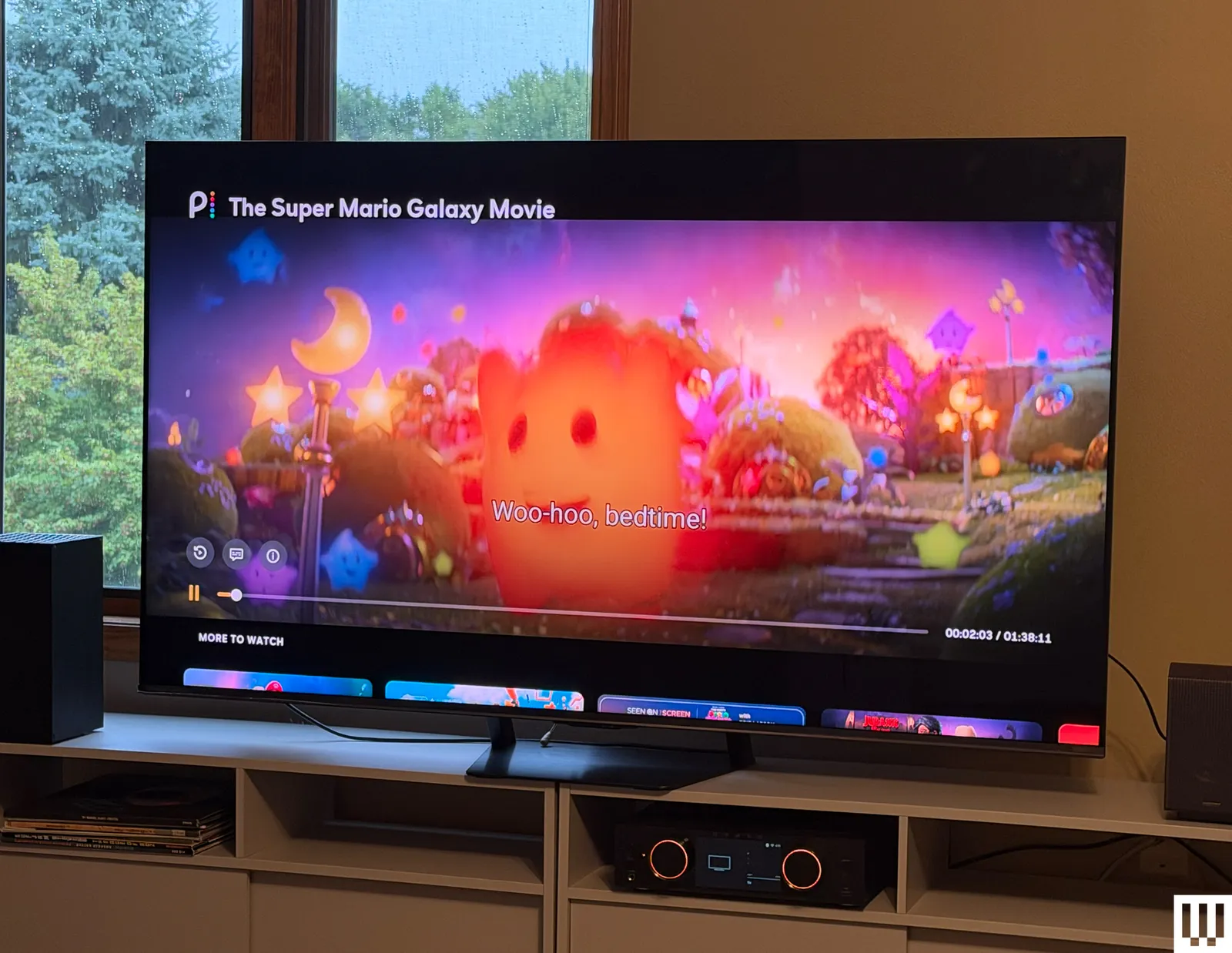
Photograph: John Brandon
It’s not all bad news, though. In fact, in the movie Guardians of the Galaxy Vol. 2 on Disney+, the RGB tech kicked into high gear. The color accuracy was ultrarealistic, showing bright blues, reds, and oranges in an opening scene. My only issue was that the contrast was not as tonally rich as it was on the UR9, and it also lacked some shadow detail. The LG Micro RGB Evo rendered this scene even brighter.
For benchmark tests using the Spears & Munsil discs, skin tones looked dimmer and less varied than the LG Micro RGB Evo or the Hisense UR9. The demo reel revealed a few other differences, too: White mist on a white mountain didn’t look as distinct as it did on the UR9, but (thanks again to the color accuracy) it did render green grass by a fence to a similar appearance as what the UR9 produced. A scene showing dark trees at night looked much clearer on the UR9 thanks to the higher nits rating. On the UR8, you could see the texture on the trees, and a red cactus and yellow flower also looked darker on the UR8.
Games People Play on RGB and More
This is a great TV for video games, as it can sense the game content, adjust for latency, and even help improve picture quality. Every time I started a game, the UR8 (similar to the UR9) automatically made key picture adjustments. Blacks looked a bit richer than expected, which was great for Resident Evil: Requiem, because it seemed the entire game took place in the dark. Here, the Hisense UR8 delivered an atmospheric look: dark and moody but not washed out. In fact, I didn’t notice much of a difference in latency compared to playing the same game on the UR9. (Indeed, Hisense reps told me the latency was roughly the same.)
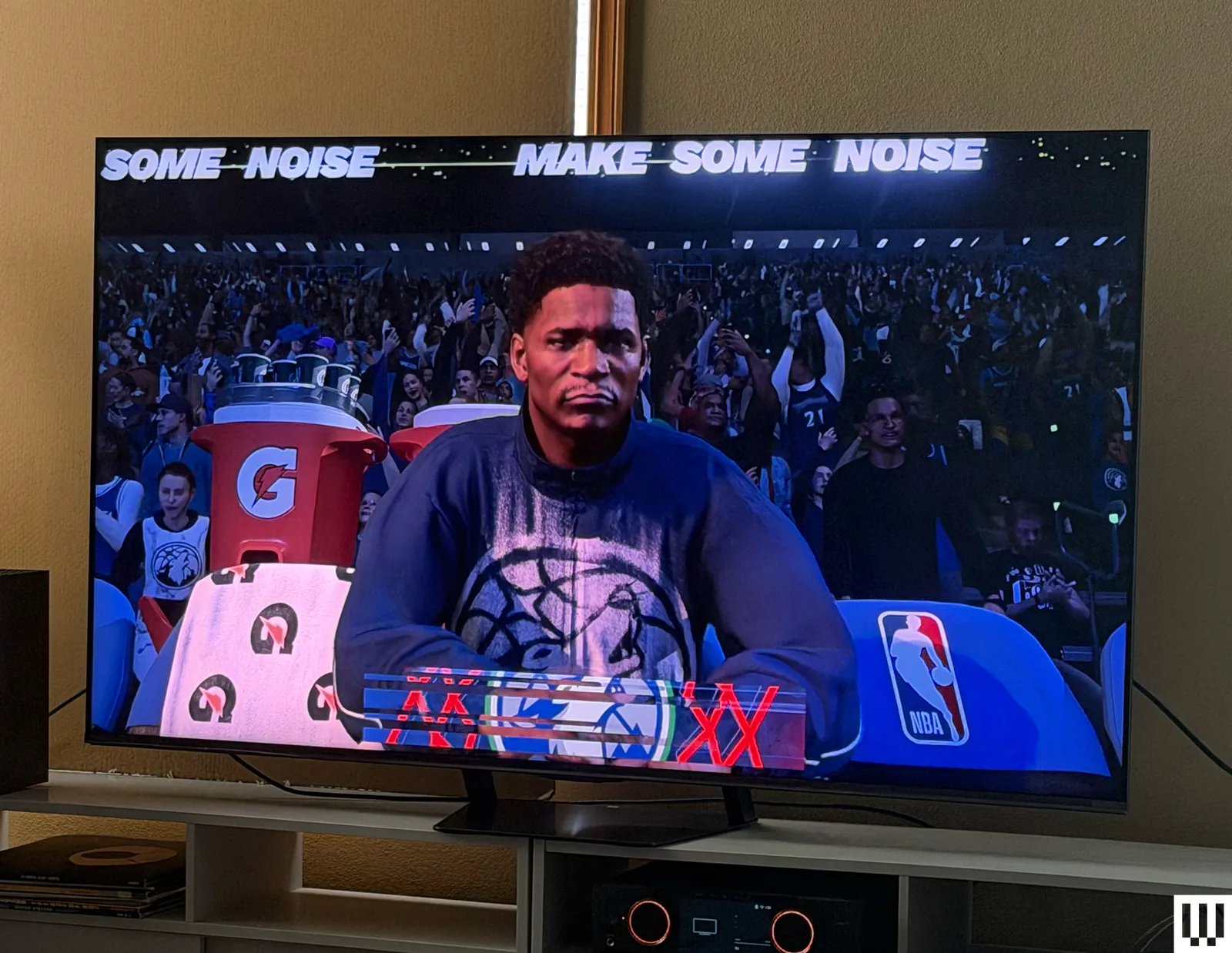
Photograph: John Brandon