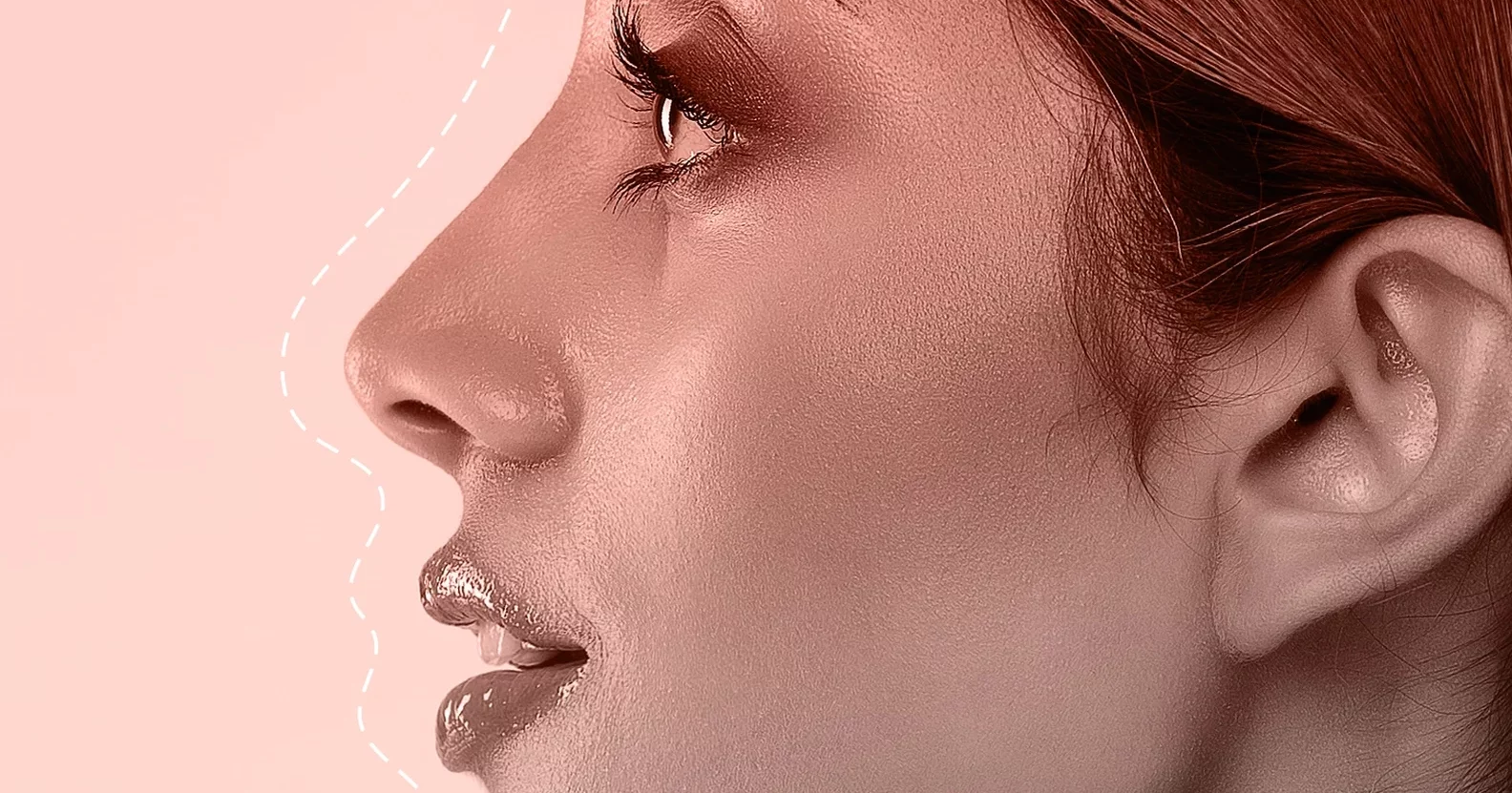
When it pertains to physical insecurities, a lot of us have functions we have actually spent years fixating on. As we get older, we either grow into them, discover to approve them, or they remain to afflict us. Noses , specifically, have lengthy ranked among the most typical features individuals choose to alter surgically. Several of my buddies have actually obtained rhinoplasty for many years. Some blamed a “deviated septum,” while others were completely upfront regarding desiring an aesthetic change.
Currently we’re going into a brand-new era of appeal requirements. Many thanks to significantly advanced AI, it’s possible to see extremely practical variations of ourselves prior to ever entering a doctor’s office. This goes far past the cartoonish Snapchat and Bold Beauty filters of the past.
Rather than trying out a new hairdo or a set of sunglasses online, we can currently “try on” cosmetic procedures with a couple of faucets. The modern technology is without a doubt fascinating, but it also elevates a bigger concern: If AI can show us an idealized variation of ourselves prior to we ever before meet a doctor, is it helping us make even more informed choices, or establishing impractical assumptions? To divide reality from fiction, I consulted with 3 board-certified plastic surgeons.
Professionals Included in This Write-up
- Krishna Vyas , MD, is a plastic surgeon at Blechman Plastic Surgery based in New york city.
- Goretti Ho Taghva , MD, is a board-certified cosmetic surgeon based in Newport Coastline, CA, concentrating on aesthetic and rebuilding plastic surgery with a focus on face procedures.
- Michael Bassiri-Tehrani , MD, is a board-certified facial plastic and reconstructive specialist in New York City that focuses on nose surgery, face rejuvenation, and rebuilding facial surgical treatment.
AI Filters vs. Surgical Simulations
If you have actually ever made use of a nose job filter on TikTok, Instagram, or Snapchat, you’ve most likely seen exactly how swiftly AI can create an extra sculpted variation of your face. Applications like Facetune and Meitu take it an action additionally, letting individuals reshape their noses with the swipe of a finger. These tools are made to create an idyllic outcome, not one that’s based on your anatomy or what’s really possible via surgical procedure.
“The consumer filters are basically an elegance application that uses a generic, idyllic nose algorithmically without expertise of your bone structure, skin thickness, or air passage, and no concept of what’s medically viable,” states plastic surgeon Krishna Vyas, MD. “A filter is developed around what looks visually pleasing on a screen, while surgical preparation is based on what can be safely and genuinely achieved for that patient’s nose.”
Unlike customer filters, the imaging software application cosmetic surgeon make use of throughout examinations starts with a person’s actual anatomy. Board-certified cosmetic surgeon Goretti Ho Taghva, MD, states platforms like Crisalix and VECTRA utilize a client’s very own 3 D check to imitate adjustments within the limits of their skin, bone, and cartilage. “The distinction is basic,” states Dr. Vyas. “One is a medical planning tool grounded in your makeup. The other is an appeal filter grounded in visual trends.”
Are Patients In Fact Bringing AI Filters to Consultations?
Bringing filtered images right into rhinoplasty appointments has ended up being increasingly usual. Dr. Vyas states an increasing number of people are using modified pictures or app simulations to connect their goals, and he doesn’t necessarily see that as a poor thing. “Having an aesthetic referral provides us a concrete starting point to speak via what’s reasonable and what isn’t,” he states. “Filteringed system reference images have actually become one of the defining features of the modern nose job appointment.”
Board-certified cosmetic surgeon Michael Bassiri-Tehrani, MD, agrees, though he states those conversations usually require a truth check. “It’s the new-age version of bringing in a celebrity inspiration image. At the very least they’re bringing photos of themselves.”
Can AI In Fact Predict Your Nose Job Outcomes?
It can be simple to think that if AI can develop a brand-new variation of your face, a doctor can recreate it. The truth is much more difficult. “Typically, they’re not very exact,” states Dr. Taghva. “It’s no more, ‘I want Bella Hadid’s nose.’ It’s, ‘I intend to appear like a somewhat different variation of me that the AI formula created.’ That’s harder to chat someone out of because it really feels individual as opposed to aspirational, and individuals’ expectations of looking precisely like the filtered outcome are much greater since it looks so actual.”
Dr. Bassiri-Tehrani says the precision ultimately depends upon the modification someone is wishing to make. “Some elements of the nose are simpler to change than others, like bringing a bump down. Slimming a nose with thicker skin, for example, has its limits, and AI doesn’t have the info to judge that properly.”
Also physician-grade simulation software program has constraints. Dr. Vyas says those tools can not fully forecast just how tissue heals or exactly how cartilage redesigns gradually, and customer AI filters are far less innovative. “Clients can love a picture that just isn’t achievable,” he says.
Why AI Filters Feel So Convincing
According to Dr. Taghva, AI filters do a better job of convincing patients they would certainly look much better after a rhinoplasty than any type of examination ever before can since they’re silently transforming far more than simply the nose. “Filters skip to a slim, homogenized ideal, frequently a tiny, slim, high-bridged nose with a completely improved pointer, without representing the patient’s actual skin density, cartilage toughness, pore dimension, or ethnic facial percentages,” she states.
The nose isn’t the only thing transforming, either. AI is additionally smoothing skin texture, night out skin tone, softening under-eyes, lessening laugh lines, and discreetly improving the jawline all at once. The result is a face that looks extra well balanced and sleek overall, making it very easy to think the nose is in charge of the improvement.
“Clients credit the nose alone for an improvement that’s actually 5 or 6 subtle edits interacting,” claims Dr. Taghva. “I can’t shape a nose I can’t build out of someone’s very own cells, and I absolutely can’t repair skin high quality or jaw harmony with a nose surgery.”
Can a “Perfect” Nose Come at the Expenditure of Feature?
If there’s something that concerns surgeons most about AI-generated noses, it’s that they often focus on looks over feature. Dr. Vyas says the appearance a filter produces usually demands aggressive narrowing or idea refinement that can compromise or break down the nasal shutoff, making it tough to breathe. Breathing issues are just one of the leading reasons individuals look for alteration rhinoplasty. “A beautiful nose you can not breathe through is a medical failure,” he says. Dr. Taghva mirrors that issue. “Over-narrowing a nasal bridge or strongly improving a pointer can break down the interior shutoff and create breathing troubles. A nose isn’t simply a shape; it’s a useful air passage, and charm filters have no concept of that in any way.”
Your Anatomy Still Matters
Dr. Bassiri-Tehrani claims every rhinoplasty is shaped by variables AI merely can not account for. “Whatever is a factor in nose job. Skin density, cartilage strength, face percentages. Even height, character, and line of work contribute in what form finest suits a potential patient. As specialists, we deal with the client overall and take responsibility wherefore we do. AI filters are a helpful tool, but they still require a captain at the helm to direct the outcomes.”
Dr. Taghva concurs. “Raising a filteringed system image and dropping it onto a different bone-and-cartilage foundation isn’t a surgical plan; it’s a dream. Our task as plastic surgeons is to translate that fantasy into what’s in fact possible for that individual’s face. The danger isn’t simply frustration. It’s pushing someone toward modification surgical treatment or non-surgical ‘solutions’ while going after a picture that was never ever anatomically possible to begin with.”
Iman Balagam is a self-employed journalist and brand name specialist that focuses on appeal, style, and way of living material. The Texas local’s work has shown up in a range of publications, including Vogue, Allure, and Elle.