Frequently asked questions
Why do you need body lotion for aging skin?
Skin can become drier as we age, and dryness makes fine lines and rough texture more noticeable. “In fact, the pH of the skin is known to become more alkaline with age, which interferes with activity of enzymes needed for skin barrier health,” says board-certified dermatologist Joshua Zeichner, MD. A daily body moisturizer helps hold water in the skin, improving softness and comfort.
There’s nothing wrong with choosing a basic lotion that’s really good at hydrating—consistent moisturizing is the foundation of a body-care routine. But if you want to address specific concerns, ingredients like lactic acid can help smooth rough texture, while retinol can help improve the appearance of fine lines and uneven tone. These treatments should be introduced gradually to minimize irritation. There’s no requirement to graduate to an expensive “anti-aging” cream just because you’ve had another birthday; the goal is to choose ingredients that meet your skin’s needs.
How often should you use a body lotion for aging skin?
For a straightforward moisturizer, start with daily use after bathing, while skin is still slightly damp, and reapply when it feels dry. Treatments containing retinol or exfoliating acids need their own schedule. Follow the product’s directions and introduce them gradually. More frequent application isn’t helpful if it leaves your skin irritated.
What is crepey skin and how do you improve it?
“Crepey” describes thin-looking skin with a fine, crinkled texture, rather like crepe paper. “As the skin ages, it loses hydration and collagen and elastic fibers become weak,” says Dr. Zeichner. These changes reflect both genetics and environmental factors, including sun exposure. Chronic dryness can make the texture more apparent. Start with consistent moisturizing and daily sun protection on exposed areas. “Ingredients like glycerin and hyaluronic acid help pull in hydration to the outer skin layer to give a plumping effect,” he says. A well-formulated body lotion can soften the look of dry crinkles, while some people may also benefit from a retinol body lotion treatment.
Is retinol a good ingredient for a body lotion?
Yes, if you’re looking to address fine lines or uneven tone and skin texture and your skin tolerates it. “It enhances cell turnover and increases collagen production,” says Dr. Zeichner. “It typically is used on the face, but certainly can be used on the neck and the body as well.” The moisturizing formula around the ingredient matters, too, since retinoids can cause initial dryness and irritation. Start slowly, follow the label, and use sun protection.
Are there other ways to tighten skin and minimize wrinkles?
Daily broad-spectrum SPF 30 or higher helps protect exposed skin from further sun damage, and moisturizer can make dry wrinkles less apparent. Neither is a substitute for an in-office treatment when significant laxity or sagging skin is the concern. If that bothers you, a board-certified dermatologist can discuss appropriate options and realistic results.
What should you look for in a body lotion to address wrinkles?
First, look for a moisturizer you’ll actually use consistently. “Look for ingredients in your moisturizer that hydrate, protect, and strengthen the skin itself,” says Dr. Zeichner. Ingredients such as glycerin and hyaluronic acid draw in moisture, while ceramides support the skin barrier and occlusives help reduce moisture loss. For concerns beyond dryness, retinol or peptides may be worth considering.
What do dermatologists recommend for aging skin over 60?
There isn’t one formula that becomes mandatory at 60. Dryness, sensitivity, and your existing routine are more useful guides than the date on your driver’s license. A gentle cleanser, a body moisturizer suited to your skin, and sun protection make a sensible starting point. If a light lotion no longer feels sufficient, consider a richer fragrance-free body cream.
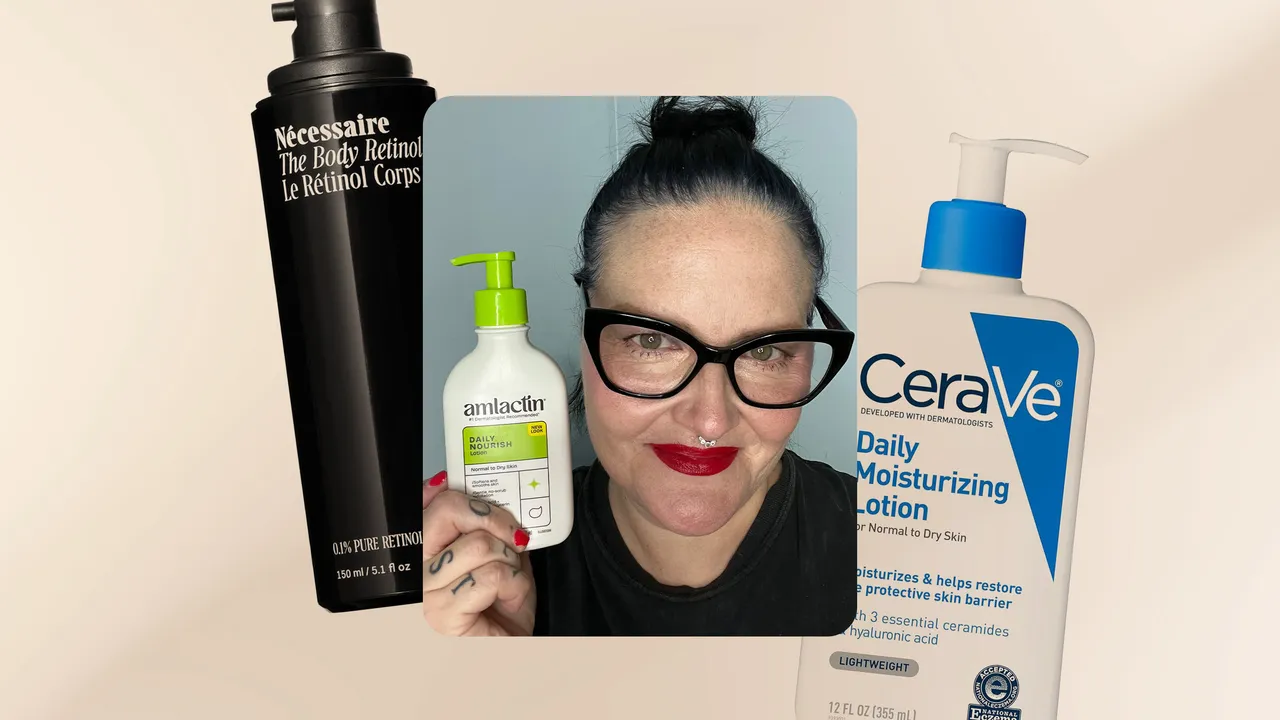
To find the absolute best body lotions for aging skin, our editors and contributors spent weeks testing dozens of top-rated formulas across a range of ages, skin types, and climate conditions. We evaluated each product based on its immediate feel, long-term hydration, absorption speed, ease of packaging, key active ingredients (such as retinoids, AHAs, and barrier-repairing ceramides), and visible performance on concerns like dryness, crepey texture, and loss of firmness.
- Kseniya Kobets, MD, is a board-certified dermatologist and director of cosmetic dermatology at Montefiore Einstein Advanced Care in New Jersey
- Carmen Castilla, MD, is a board-certified dermatologist in New York City.
- Josh Zeichner, MD, is a board-certified dermatologist in New York City.