Frequently Asked Questions
What’s the best type of razor for a close shave?
While different razors offer different means of removing hair, there are some basics every model shares. “The leading edge [of the razor] is designed to gently stretch the skin taut prior to the blade’s arrival,” explains Erum Ilyas, MD, a board-certified dermatologist in King of Prussia, Pennsylvania. It helps to have a razor edge that uniformly stretches the surface flat to allow the blade to come through with minimal nicks, she says.
As for blades, razors can come in single- or multiple-blade formats and can be spaced differently, but “multiple blades can achieve a closer shave with fewer strokes,” says Dr. Ilyas. “Ideally, the blades should be closer together to avoid nicking the skin. If they are too widely spaced, once the first blade drags across a hair, the skin can start to bulge slightly and get nicked by the next blade.” So, a razor with multiple blades can help compensate for the fact that hairs grow in an irregular pattern, meaning more coverage and fewer passes needed, according to San Francisco-based board-certified dermatologist Tracy Evans, MD.
Lastly, the handle should be comfortable enough to avoid the need to vary the pressure applied during the shave, giving you better control with every pass.
How do cartridge razors work?
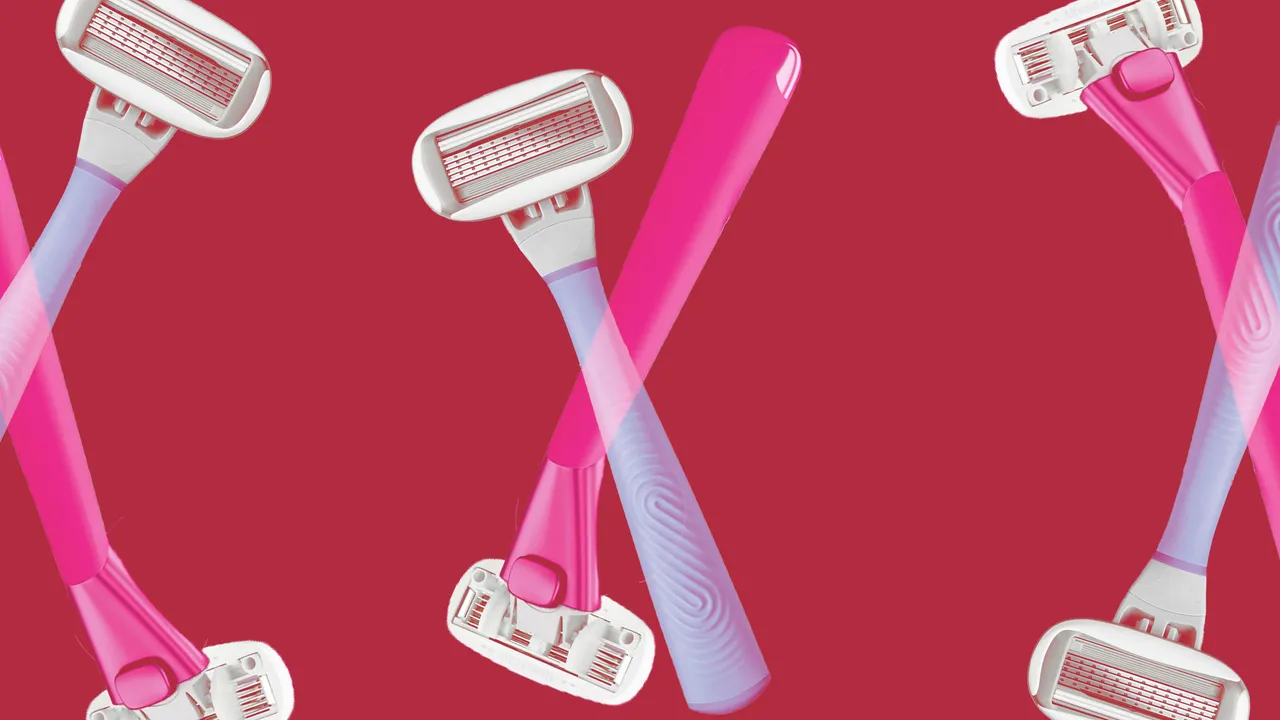
Cartridge razors feature disposable cartridges, where two to six blades are tightly spaced for a quick, close shave. “The cartridge can often be flexible or gently bent to allow the blades in the cartridge to curve,” Dr. Ilyas says, adding that they can be used in areas that require the blade to move with the contours of your skin, like around the knees or bikini area.
While the initial purchase may be cheaper than metal-handled options, the price can add up over time due to the cost of regularly re-upping on cartridges—which you should never skip. If you use a cartridge for too long, you may injure yourself. “Hairs often get trapped between the blades as well, making them less effective over multiple uses,” Dr. Ilyas explains.
Disposable razors are similarly constructed, but they’re only designed for one or two uses, says Sonia Batra, MD, a board-certified dermatologist in California. (For reference, the American Academy of Dermatology, or AAD, recommends changing blades or throwing away disposable razors after five to seven shaves to minimize irritation.) “A disposable razor generally has lower-quality blades, so the shave is less close, and you are more likely to nick or cut yourself,” Dr. Batra explains.
Should I use a safety razor?
If you’re prone to razor burn from cartridge razors, safety razors can be a gentler alternative to minimize irritation. These come “with closed combs and longer handles that are recommended for women’s legs and armpits,” says Dr. Batra, who notes they can also be used on the face as a dermaplaning tool to exfoliate the skin while removing peach fuzz.
Safety razors are single-blade razors made for long-term use with a protective device positioned between the blade’s edge and the skin. Dr. Batra explains that safety razors use disposable blades, which are much cheaper (10 to 20 cents each) than those used in cartridge razors (typically $2 and up). While there is a bit of a learning curve (even with a protective guard), they’re a whole lot easier to glide than a traditional straight razor.
It’s worth noting that you can’t bring safety razors in carry-on luggage—you need to pack it into a checked bag if you plan to travel with one. So, it’s a good idea to keep your safety razor at home and buy a cartridge razor for trips.
What are the benefits of electric razors?
Electric razors have motorized blades topped with “foil,” a.k.a. a thin metal sheet with small holes. “The tiny holes in the foil capture the hair, and the oscillating blades come by and cut it,” says Dr. Ilyas. “This makes for a safe and fast shave, but not necessarily as close as with a traditional razor.” That can come in handy for grooming sensitive, curved areas, like the bikini or underarms.
How it does this: Rotary electric razors have three circular heads arranged like a triangle. “The round guard of each head captures hairs, and an internal spinning blade or cutter shaves these hairs,” Dr. Ilyas says. These gentle yet fast movements allow for quick shaving around the contours of the neck and jawline, where hairs are captured at multiple angles.
However, it’s worth noting that even though these are thought to be less irritating, it’s possible that not only hair gets pulled into the foil, but the skin as well (ouch). So, as with any shaving tool, glide with caution.
Meet the experts
- Erum Ilyas, MD, a board-certified dermatologist based in King of Prussia, Pennsylvania, and founder of UV-protective apparel brand AmberNoon
- Sonia Batra, MD, a board-certified dermatologist based in Santa Monica, California, and a co-host of the TV show The Doctors
- Azadeh Shirazi, MD, board-certified dermatologist based in California
- Tracy Evans, MD, board-certified dermatologist and Medical Director of Pacific Skin and Cosmetic Dermatology based in San Francisco
- Mona Gohara, MD, a board-certified dermatologist based in Connecticut
How we test and review products
When Allure tests a product, our editors look at it from every angle in an effort to best serve you. We are particularly discerning when writing about skin-care devices. This is because of the increased risks and, in many cases, the high price points, that accompany at-home dermatological tools and devices.
Each device undergoes extensive testing and must be approved by a senior member of our beauty team prior to appearing in Allure. Additionally, our editorial team consults board-certified dermatologists and cosmetic chemists about the science behind product claims and independently reviews any studies cited by brands. Testers consider performance across four primary categories: efficacy, safety (including ease of use), research and the science behind specific claims, as well as product value. To learn more information on what’s involved in our reporting, check out our complete reviews process and methodology page.
Our staff and testers
A beauty product is a personal purchase. You might be searching for a face cream to address persistent dryness or a new nail product to add to your Sunday self-care routine; you may simply be browsing around for the latest launches to hit the hair market. No matter what you seek or your individual needs and concerns, Allure wants to ensure that you love anything we recommend in our stories. We believe that having a diverse team of writers and editors—in addition to the wide range of outside testers and industry experts we regularly call upon—is essential to reaching that goal.
After all, can we really say a skin-care product is the “best” for people over 50 if the only testers we’ve solicited opinions from folks who have yet to hit 30? Can we honestly deem a high-end diffuser worthy of your hard-earned cash if it’s never been tested on curls? We’re proud that our staff spans a wide range of ages, skin tones, hair textures, genders, and backgrounds, which means that we are able to fairly assess any beauty product that comes into the beauty closet.
You don’t need eight hours of screen time to watch these Internet celebs spill secrets: