Frequently asked questions
What should I look for when shopping for sunscreen?
According to Dr. Ahmed, there are three things to keep top of mind when shopping for sunscreen as a darker-skinned person: SPF, the type of UV filters, and the formula. “When shopping for sunscreen for darker skin tones, the first thing I tell patients to look for is SPF 30 or higher with broad-spectrum protection,” she says. “This ensures protection against both UVB rays, which cause sunburns, and UVA rays, which contribute to premature aging and hyperpigmentation.”
As for filters, there are “organic” chemical filters—think avobenzone, homosalate, and octisalate, among others—and “inorganic” mineral filters, such as zinc oxide and titanium dioxide; some formulas combine both.
What type of sunscreen is best for dark skin?
“For many patients with deeper skin tones, I often prefer tinted mineral sunscreens because they help protect against visible light, which can worsen discoloration and melasma,” Dr. Ahmed explains. “I also like multitasking formulas that include ingredients such as niacinamide and antioxidants like vitamins C and E to support the skin barrier and improve uneven tone over time.”
Speaking of formulas: “Cosmetic elegance,” as Dr. Ahmed describes it, is also worth considering, since this is a non-negotiable step in your skin-care routine. Simply put: “The best sunscreen is the one you will actually want to wear every single day.” Dr. Woolery-Lloyd echoes this, saying, “You have to find a sunscreen you love so you’re more likely to put it on consistently.”
That said, she also notes that you should consider your own needs and how your skin behaves when choosing a sunscreen. “If a person is concerned about dark spots, ideally a tinted sunscreen is best,” she says. “People with darker skin are at increased risk for hyperpigmentation, and visible light—which is a major driver of pigmentation—is not filtered by traditional UVA/UVB sunscreens. To protect against visible light, you need iron oxides.”
What is SPF, and how much do I need?
Per Sumayah Taliaferro, MD, a board-certified dermatologist at Atlanta Dermatology and Aesthetics, SPF—or sun protection factor—is just a measure of how well your sunscreen will protect your skin from the UV rays. Most dermatologists recommend using SPF 30 or above, but in some cases, the ideal SPF level depends on what you’re doing and where you are. “I often recommend SPF 50+ before more intense exposures like baseball games, golfing, going to the beach, or any other outside activity during peak sun hours,” Dr. Taliaferro says.
Is mineral sunscreen or chemical sunscreen better for dark skin?
To be honest, this all comes down to your skin’s individual needs. If you have sensitive skin, Dr. Woolery-Lloyd says that mineral sunscreen is less likely to cause irritation. But if sensitivity isn’t an issue and you’re more concerned about the white cast commonly associated with mineral formulas, a chemical option is your best bet. “Ultimately, you really need to love your sunscreen so much that you actually put it on every day,” she adds. “For many people with darker skin, that’s a chemical sunscreen since they are completely clear. But if you have sensitive skin, mineral is best.”
Which sunscreen format is best?
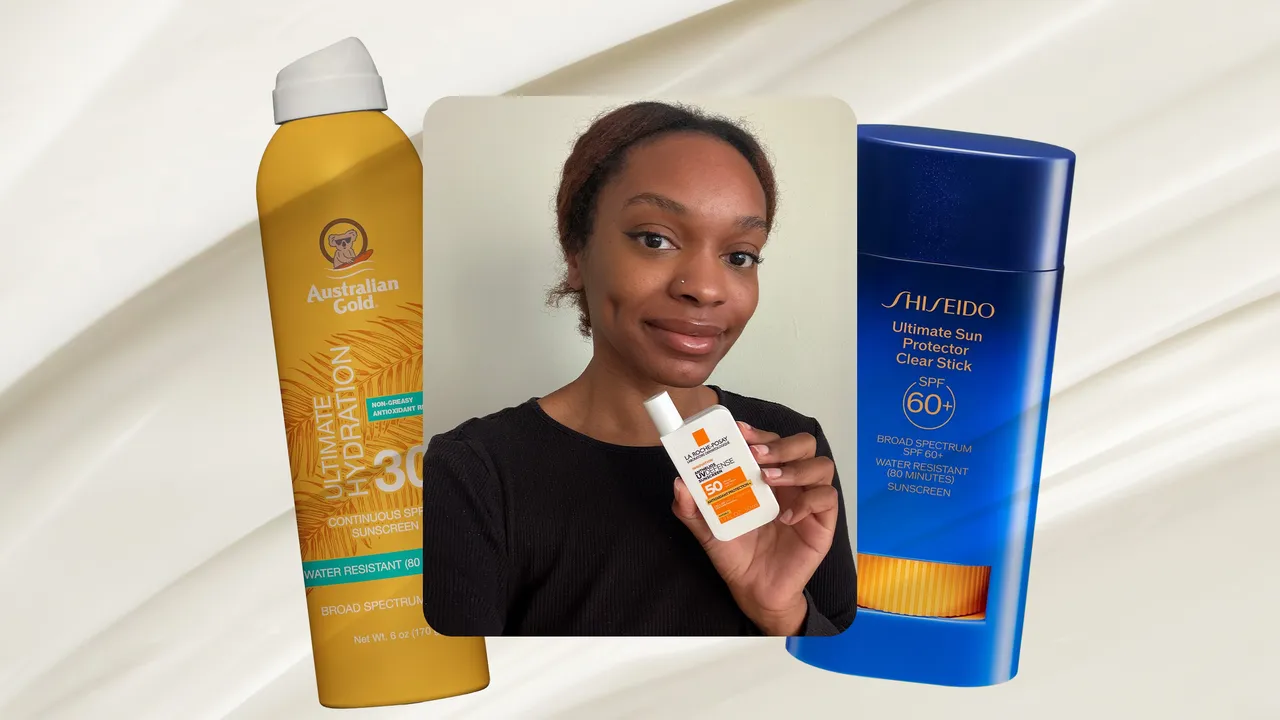
These days, you can find sunscreens in a variety of formats, from powders to creams to sprays. Ultimately, the best sunscreen for you comes down to personal preference, as there are pros and cons with each. A lotion, for example, will give you the most even spread, as stated by Dr. Taliafer, but some lotions can be messy, runny, or oily when left in the sun.
Sunscreen sprays, on the other hand, tend to be less messy in comparison to lotions, and they come in handy on days when you need to reapply your sunscreen over makeup or other products that might be sitting on your face. That said, if you’re using a mist, you also run the risk of not covering the entire surface area of your face or body with the right amount of product. “With sunscreen sprays and mists, extra care must be taken to rub in the product to ensure adequate coverage and to not inhale the product,” says Brittany Oliver, MD, a board-certified dermatologist. “I recommend avoiding spraying onto the face or during windy conditions.”
SPF sticks are also handy for mess-free application. “Sunscreen sticks require multiple passes over the same area followed by rubbing it into the skin to make sure you benefit from the level of SPF listed on the bottle,” she adds. “This also makes it less likely that you’ll miss a spot!”
How can I keep my sunscreen from looking chalky?
When it comes to buying sunscreen, the number one issue that people with darker skin face is sifting through formulas that appear white, gray, or purple against their skin tones. This often happens because light tends to bounce off of mineral formulas and cause them to appear chalky, but believe it or not, there’s a way to minimize this. Per Dr. Woolery-Lloyd, you should look for mineral formulas with nano zinc oxide (as opposed to zinc oxide), since it has smaller particles that won’t reflect as much light.
“Alternatively, chemical sunscreens are completely clear and do not leave a white cast because they include ingredients like avobenzone and octisalate instead of minerals like zinc and titanium dioxide,” she says.
How much sunscreen do I need, and how often should I be re-applying it?
Dr. Ahmed recommends applying “about a nickel-size amount” of sunscreen to your face every two hours, with reapplication being especially important if you’re going to be out in the sun or near windows. And remember: “Sunscreen is not seasonal. It is a daily essential, since UV exposure accumulates over time even on cloudy days.”
What skin concerns can wearing sunscreen help treat?
The real question is what can’t sunscreen help treat? “Sunscreen is really the overachiever of skin care. It is the foundation for both prevention and treatment,” says Dr. Ahmed. “It helps prevent and improve hyperpigmentation, melasma, acne marks, uneven skin tone, rosacea, wrinkles, collagen loss, and skin cancer, which is why it is such a cornerstone in dermatology.”
By protecting you from UV rays, it also helps reinforce all those products in your skin care routine that came before it. “Brightening products, anti-aging treatments, and acne regimens all work better when the skin is consistently protected from daily UV exposure,” she says.
We spent months testing a variety of sunscreens and evaluated them based on a variety of factors including texture, formula, how they dried on the skin, and how they looked on dark skin. We also spoke to a handful of board-certified dermatologists for their expert opinions on the best sunscreens for dark skin.
- Rodaina Ahmed, MD, a board-certified dermatologist with Tribeca Skin Center
- Brittany Oliver, MD, a board-certified dermatologist
- Supriya Rastogi, MD, a board-certified dermatologist at Schweiger Dermatology Group
- Sumayah Taliaferro, MD, a board-certified dermatologist at Atlanta Dermatology and Aesthetics
- Heather Woolery-Lloyd, MD, a board-certified dermatologist and founder of DermFriends