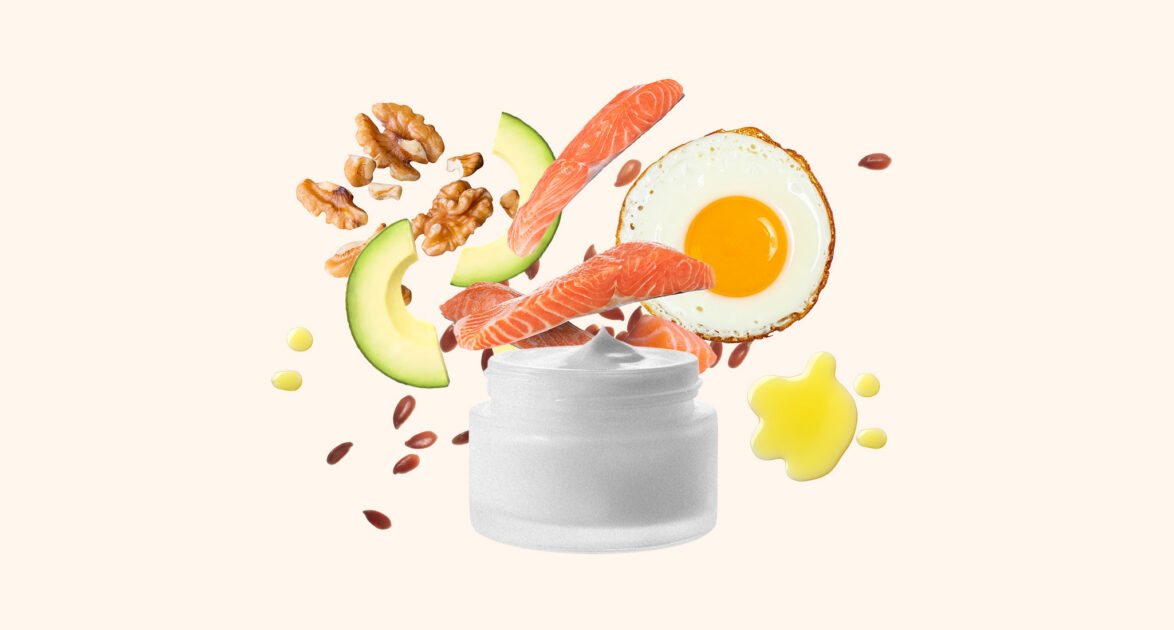
Being able to replace the dozens of bottles on my vanity with a handful of carrots, oranges and kale (drizzled in olive oil, of course) sounds appealing, but unfortunately, it doesn’t work like that.
“Wrinkles and collagen loss are multifactorial, so no single food or supplement is going to make a huge difference if the rest of your diet is poor, you are unhealthy or dealing with inflammation, excessive sun exposure or you don’t have a good skincare regimen,” Dr. Kobets says. Your body distributes nutrients (fatty acids, vitamins, minerals, antioxidants) via the bloodstream after they get absorbed in the gastrointestinal tract. This helps your skin and body function normally. When it comes to topical products, this simply allows you to apply concentrated ingredients on a targeted area.
Additionally, more doesn’t necessarily mean more. It’s important to correct nutrient deficiencies that impede collagen formation (vitamin C, amino acids), but there’s no such thing as stockpiling. Rather, there is an oversaturation point for ingredients like Vitamin C; excess can, Dr. Kobets cautions, lead to GI issues and increase the risk of kidney stones in certain people.
“I think of it as filling the tank. You need the nutrients and building blocks, but overfilling it doesn’t make the collagen-making machinery work faster,” she says.