“Spare Essentials,” by Michael Brenson, was originally published in the October 1995 issue of Vogue.
For more of the best from Vogue’s archive, sign up for our Nostalgia newsletter here.
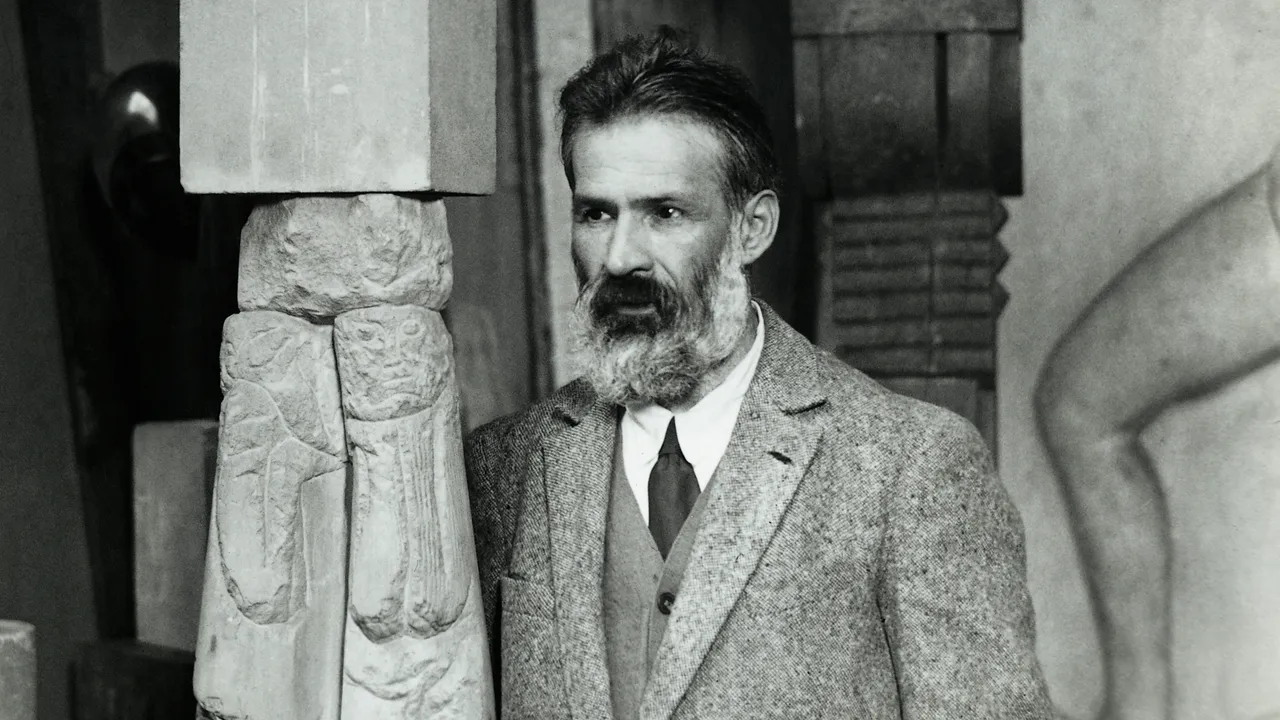
Constantin Brancusi and Pablo Picasso both settled in Paris in 1904, became integral parts of the city’s artistic avant-garde, and both, of course, became world-renowned artists. But in virtually every other respect they were opposites. Picasso had a remarkable, if not unprecedented, ability to transform aggression and violence into sources of unrestrainable creative energy; Brancusi made sculpture that is restrained even when it takes flight. Picasso changed styles all the time; Brancusi’s sculpture of 1940 looks much the same as it did in 1910. Picasso’s paintings are intensely autobiographical, but it is difficult to find evidence of Brancusi’s life in his work. While Picasso (born in 1881) made art that welcomed, indeed almost gauged, the convulsiveness of twentieth-century life, Brancusi (born in 1876) wanted his sculpture to offer a reality beyond the self, beyond the artist, beyond the nightmares and corruptions of politics and history.
In a society that tends to measure success in terms of products becoming bigger and better each year, Picasso’s series of distinct and sometimes startlingly different styles remains the model of appropriate artistic development. Brancusi’s career, in contrast, cannot be easily approached in terms of a word like development. The distinctions among most of the sixteen versions of Bird in Space that he modeled, carved, and polished over 20-some years are so subtle that it is difficult to tell even the order in which they were made. They suggest not a succession of moments but rather a single recurring moment, defined once and for all in its first formulation. Picasso’s flashy, unpredictable, copiously productive oeuvre energized the art market. Brancusi, though successful with American collectors, never had a dealer or gallery in Paris, where he lived for the last 53 years of his life.
Brancusi and Picasso also embody two fundamentally different experiences of time. Picasso’s style is so changeable, his imagery and compositions often so disjunctive, that his work implicitly argues that time stops for no one and threatens to destabilize everything as it marches relentlessly ahead. For Picasso, the new was power; its will to render obsolete what came before was as irresistible as a force of nature. Brancusi believed in timelessness, as Margit Rowell, one of the two curators (with Ann Temkin) of the landmark Brancusi retrospective that opens at the Philadelphia Museum of Art this month, points out. For him, newness, suggested by his spankingly clean surfaces and his recurring images of eggs, embryos, and swollen bellies, was itself timeless, a truth that connected him and everyone else to other cultures and ages. Time for Brancusi is a seamless, accepting, ever more expansive moment in which new and old, past, present, and future, forever coexist.