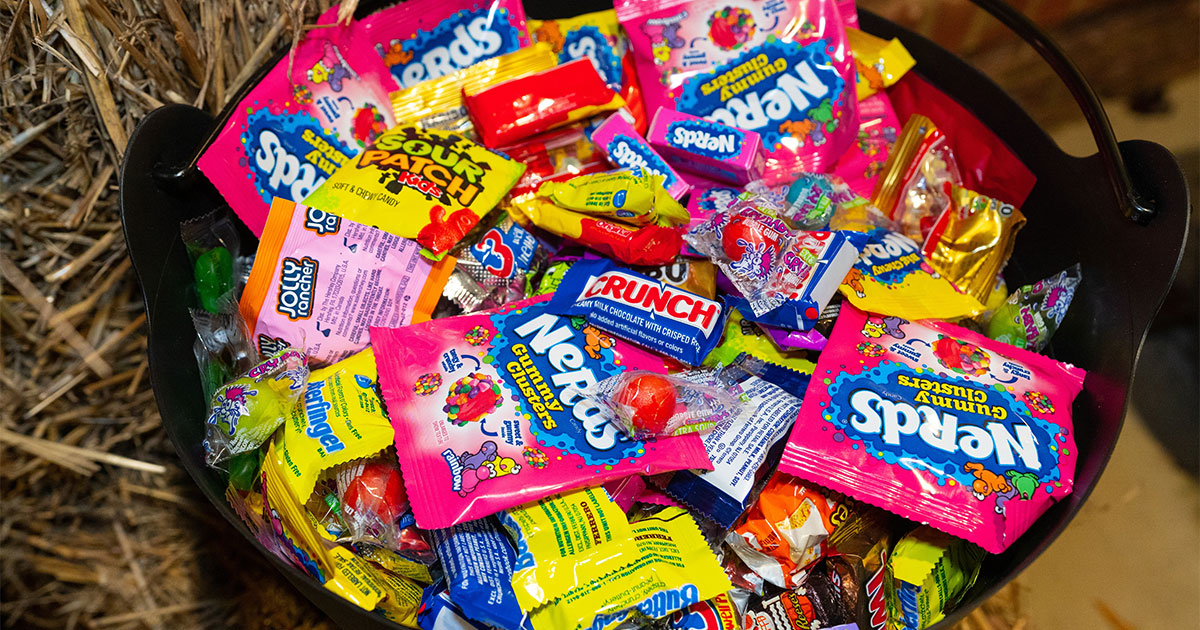
After all, Halloween is a holiday about being somebody you’re not, throwing the caution to the wind and trying something audacious—a new hair color, an inflatable chicken costume, a new kind of Skittle. Keeping and eating your candy does not mean you are now a candy fiend subsisting only on Sour Patch dust. It just means you’re human. A human looking for a few nights of wild abandon and dizzying glucose spikes.
But more to the point, trading in their stash would simply be a deep bummer for most red-blooded children, who look forward to Halloween candy all year-long, with the negotiating and trading almost as fun as the consuming itself. (My son goes out of his way to secure his sister’s favorites, not out of love, but for greater leverage during the living-room-floor-barter portion of their evening.)
And plenty of actual experts (not employed by Mars, Inc.) agree that forcing kids to relinquish candy may do more harm than good. Dr. Tracy Tyson, a physician at Monarch Maples Pediatrics and President of the Vermont Chapter of the American Academy of Pediatrics, worries that, “if the candy is simply removed and blamed on a witch, it isn’t teaching any lesson other than: simply eat as much as you can the one night you can.”
Plus, learning to keep and portion out candy responsibly is a lesson in and of itself. “I think teaching moderation with sweets is important,” Dr. Tyson says. “One night of candy with great habits all year is better than making the child feel the candy will be gone and never come back.”