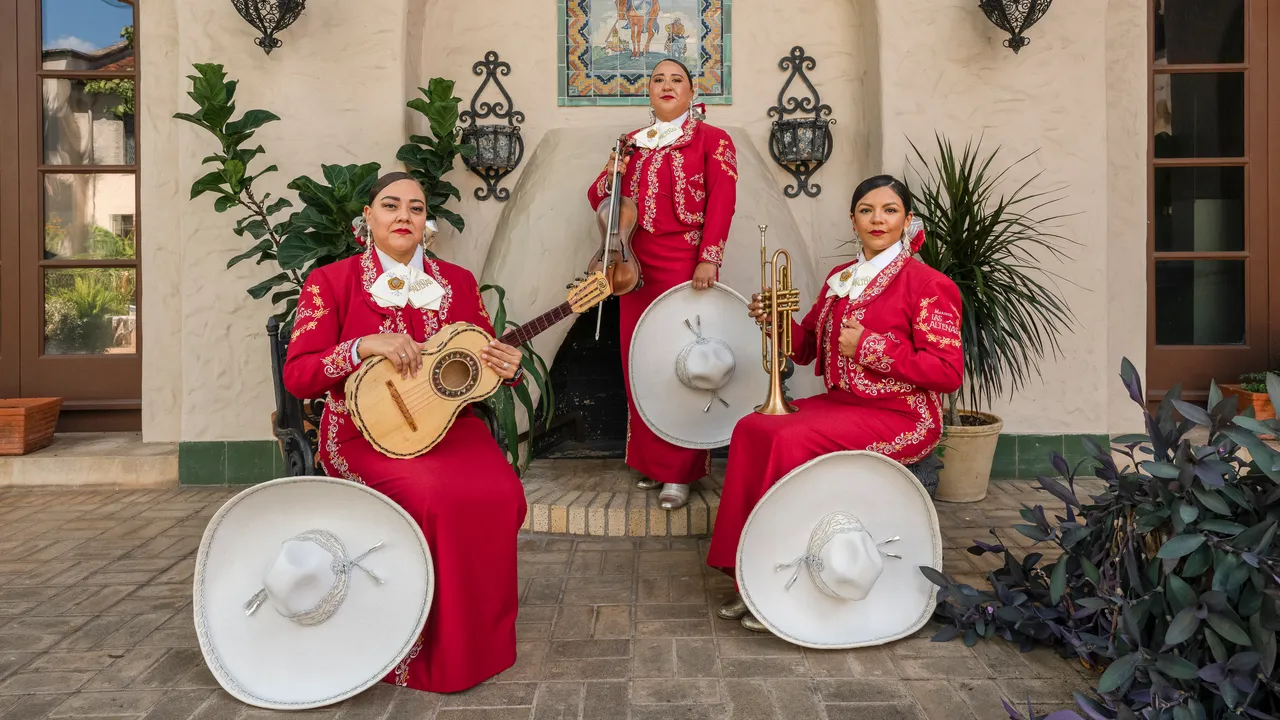
The culture shifted somewhat in the 1970s, when the introduction of mariachi programs in U.S. public schools, particularly in California and Texas, gave girls new opportunities to learn and perform. Even so, skilled female musicians often found themselves competing for just one or two coveted spots in an otherwise male lineup.
For many families, mariachi is the soundtrack to life’s milestones, from baby showers and communions to weddings and funerals. At 13, Marín found her calling at a family party. “A few days before the party, I said to my mom, I feel that something in my life is missing. So, we go to this party and the band walks in, and they’re kids my age, but they’re playing Vicente Fernández, who is my idol,” she recalls, referring to the Mexican singer and actor. “I remember seeing them play, turning to my dad and saying that’s what’s missing: I need to be a mariachi.”