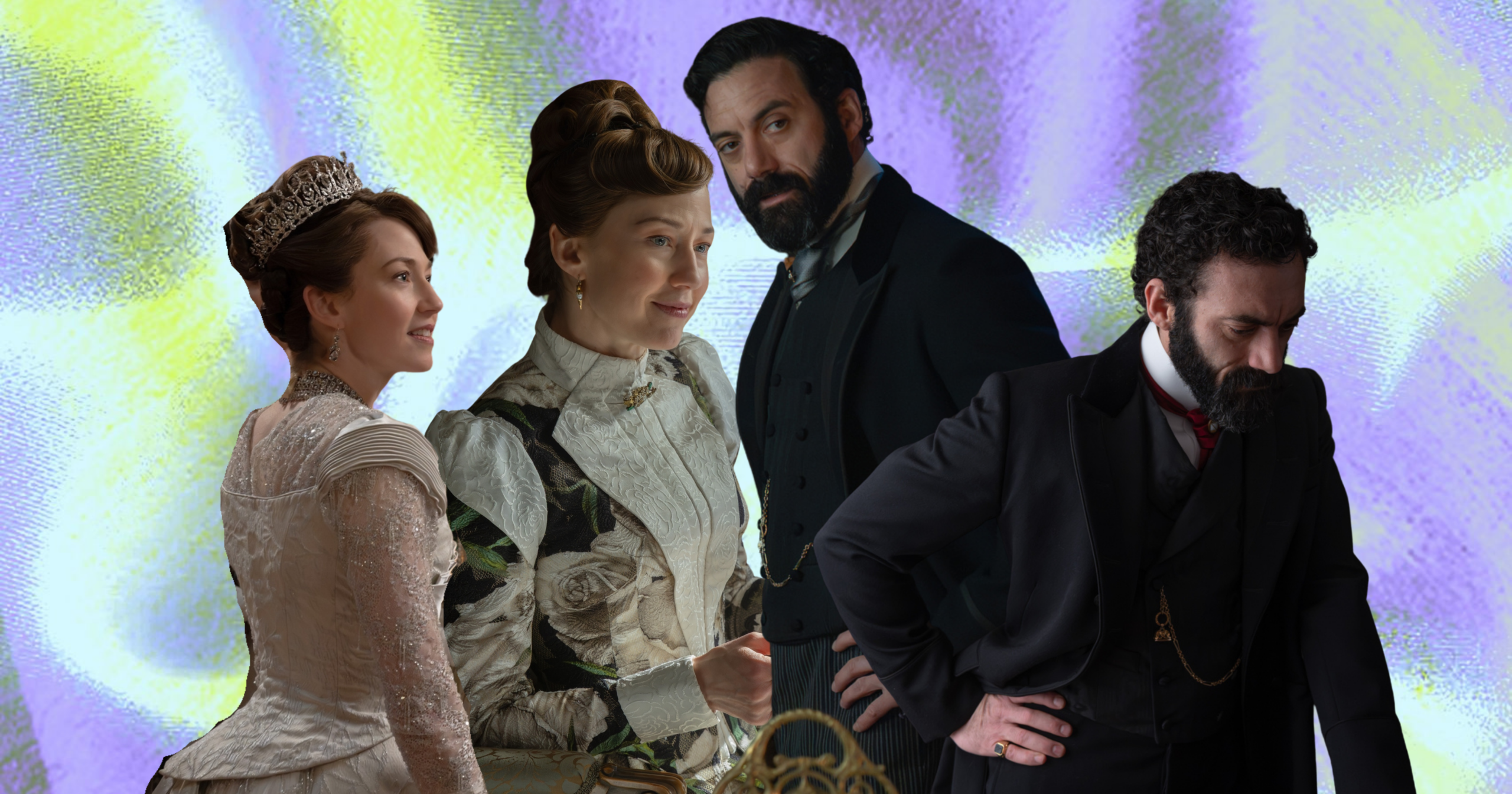
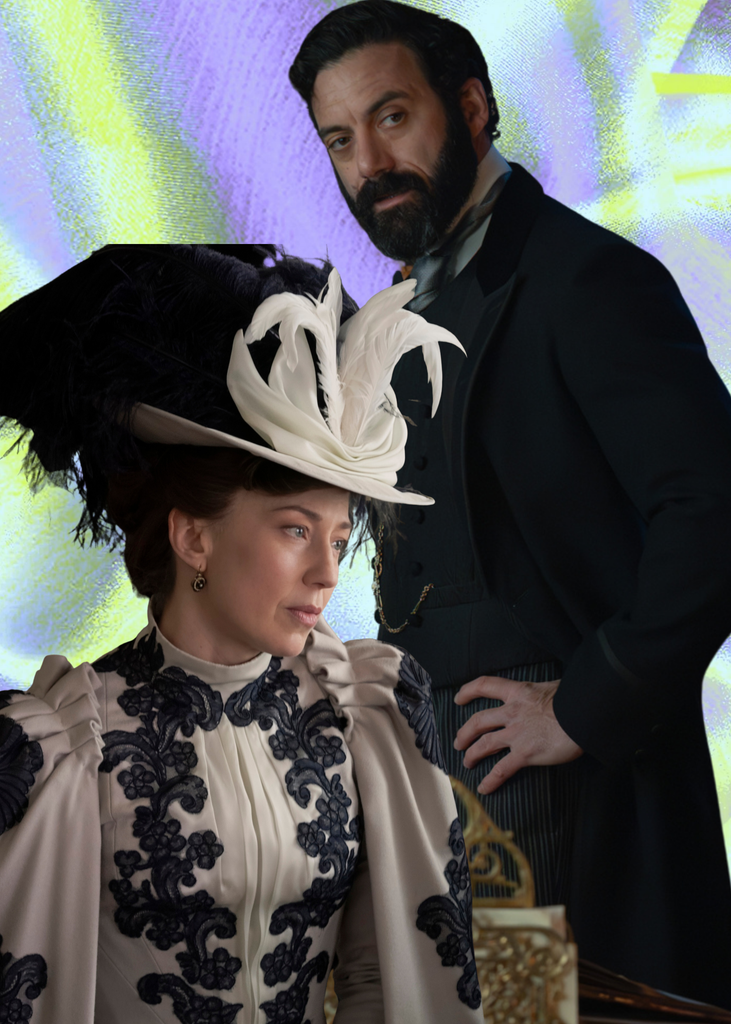
George and Bertha Russell’s marriage is in trouble. In Season 4 of The Gilded Age, the once-unbreakable power couple of New York’s elite are at odds — they’re also an ocean apart. In the season premiere, which aired last night, Bertha (Carrie Coon) is in England with the daughter she married off to a duke after much scheming and plotting as she gives birth to their grandson. While railroad tycoon George (Morgan Spector) is unraveling under the pressure of maintaining an empire and the impending doom of pesky anti-monopoly laws. Last season, he moved out of their house. This season, he’s barely tolerating his wife. It’s a far cry from the doting, sexy, us-against-the-world energy the Russells were giving in Season 1. But the chill between their characters is the exact opposite vibe Coon and Spector exude in real life.
Together, the actors are warm and playful, complimenting each other frequently and passionately defending their political outspokenness. They sit shoulder to shoulder across from me at the Plaza Hotel in New York City and slip easily from joking about Spector taking up the mantle of Sexiest Man Alive from reigning SMA title holder Noah Wyle to raging about how the arts are under attack and the ills of capitalism. It’s that duality — from silly to serious — that makes The Gilded Age so great. It’s a show about how America has systemically enfranchised its workers and how the uber rich got richer, and it’s a show about the feigned importance of the placement of a salad fork and the etiquette of party invites. It’s about race and class, and it’s about the scandal of premarital sex in the 1900s. It’s about politics and parties. It’s a calming, simple watch with low stakes about frivolous ambition and romance and it’s a commentary on America, racism, gender roles, and the complexity of marriage.
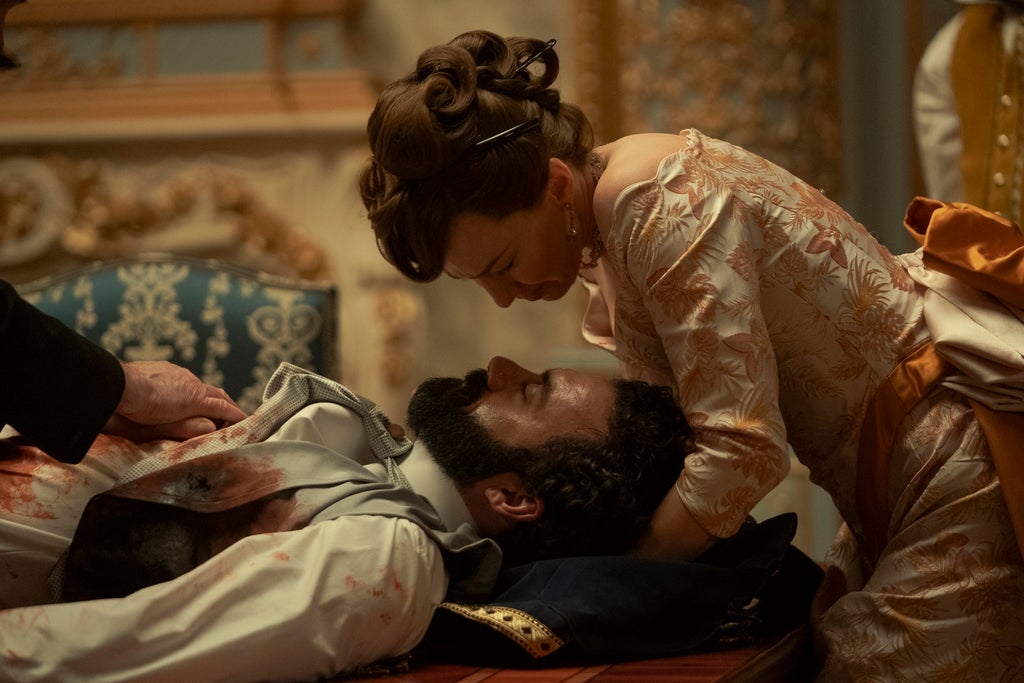
It’s the latter where Coon and Spector shine. And in our conversation, they make it clear that they are very aware of the chokehold their characters have on the internet. After a slow burn for the series (it barely survived Season 1 but HBO let it cook), the series has now reached peak interest and both actors are the subject of thirst edits and obsessive fan fixation. For those of us who have been riding for the Russells since day one, we welcome the new members to the Railroad Daddy and Opera Mommy hive. I promise those nicknames are earned. Coon and Spector aren’t just ridiculously attractive (obviously), they bring gravitas and glamor to the couple while also lacing the characters with grit, magnetism, and voracity that makes watching them addictive. Here, the pair break down why their characters have struck a chord with audiences, the authenticity of their political statements, and why Coon says Season 4 is “Morgan’s season.”
I love my parents, George and Bertha Russell! We saw these characters as such a unit for the first season, then last season they were breaking apart, and now they are still at odds. You obviously have a great rapport. Is it fun to play mad at each other or do you miss the unity?
Carrie Coon: Awww.
Morgan Spector: Both. I actually found it so refreshing to be portraying a marriage that really worked, especially in this period.
CC: We were sad in Season 3. We were fighting a lot in Season 3.
MS: Yeah, we were fighting a lot in Season 3. And this season we’re on islands. We’re alienated from each other, and we’re struggling to even communicate at all. It was delicate charting our routes back to each other this season. That was pretty collaborative so that was fun and interesting and exciting to try to figure out how do they find their way back to each other? Why do they do it and what are the moments where they really start to re-solidify as a couple?
CC: And in the midst of that, Morgan had this incredible acting challenge of having to figure out charting this addiction story as well. To me, it’s Morgan’s season in a way that I love. In a way that I’m totally behind.
MS: [whispers] You haven’t seen it though.
CC: I haven’t seen it, no. But I feel like what was asked of you was the stuff actors dream of. You really rose to the occasion. There was a lot of delight in watching you take that on in a way that we didn’t have in Season 3 of just being in the outs. But this was being able to sit back and admire how you were charting it [and] being proud of you.
I love this relationship between the two of you and how much admiration there is.
CC: It’s real.
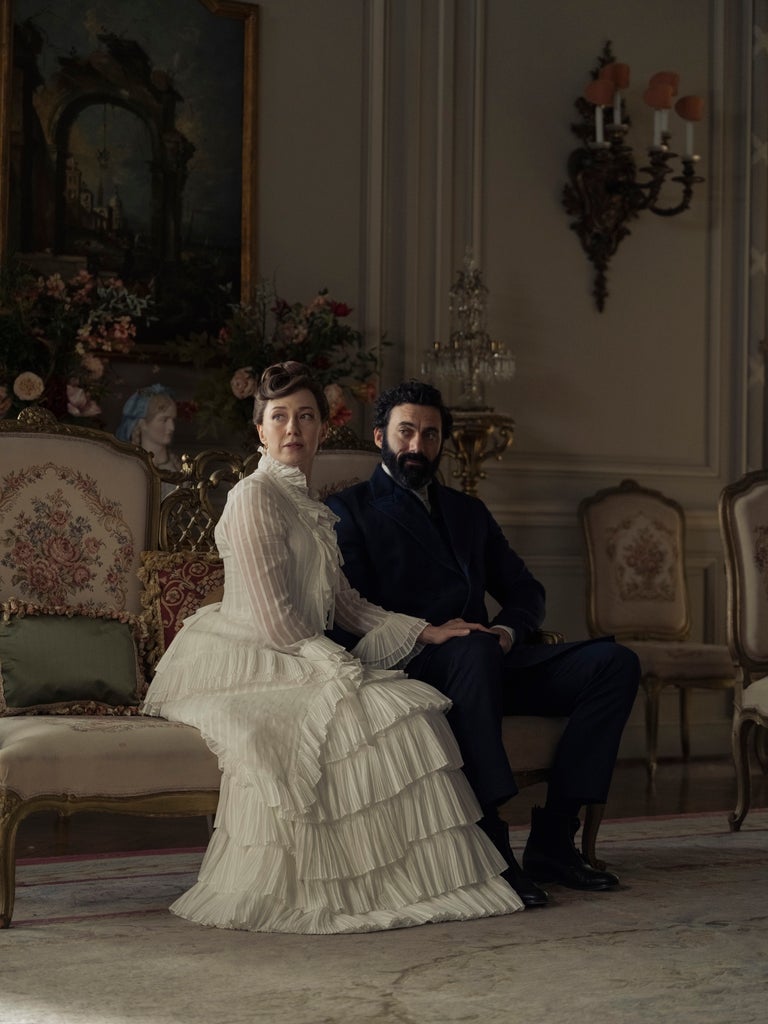
It is really beautiful as a fan to see. Last time we talked, you went a little viral for your thoughts on billionaires.
MS: Oh, yeah.
CC: Oopsies!
Why has it been important for both of you to speak out about class and be critical of capitalism even though or because you’re playing these characters?
CC: I don’t know that it’s confined to our publicity for this show. I think Morgan and I have always been politically engaged. A lot of the actors on this show are. It’s something we respect about each other. We’re theater people. There’s been a war on the arts forever. We are fundamentally hoping for more access to all of the arts and services. Our people are very vulnerable people in the world right now. And so I find that what actually indemnifies you against criticism in some ways is authenticity. The people on this show have kind of always been engaged in that conversation. They’re not suddenly getting involved in it. And I feel like that protects us sometimes from some of the blowback people get when they jump into politics because they have a show that’s suddenly speaking to a moment.
MS: Right.
CC: And I just feel like we haven’t necessarily been moving through the world that way. Is that true?
MS: I think that’s true. A lot of people on our show are politically aware and politically active, outspoken people prior to this show and they will be after the show., I think it is definitely true that for this show, we end up talking about politics during press for this show because the parallels between then and now are so direct and stark. So it’s impossible not to. Having a group of very politically conscious people who are having to talk about this subject matter, you’re inevitably gonna get commentary on the present day because it’s just there.
CC: It’s just the truth.
George and Bertha are fundamentally outsiders and disruptors, we have wealth and power, but we are actually trying to get in, and that is about belonging. Bertha’s fighting to belong, and that’s such an American thing.
carrie coon
When you are watching the show, there are these stark parallels to the present day. George is fighting against monopoly laws this season, which of course has real-word parallels. Is it frustrating or is it hopeful to know these issues have been going on for so long?
MS: I think it’s really interesting because the rapid urbanization, rapid industrialization, the hyper-concentration of wealth in a small minority. The monopoly capitalism, et cetera, all of that led to massive reforms, right? It led to trust busting. It led to the New Deal in some ways. And it led to huge reorganizations of American society in really fundamental ways. And then we basically forgot all of the lessons of this era. And I think that was basically, you know, there were many factors: globalization, like the sort of offshoring of labor. I mean, we’ve really separated the factory floor and capital, and even the American consumer. Those things all used to be kind of in the same place, and now they’re far-flung all over the globe, often in many different places. And so organizing against the power of concentrated capital doesn’t work the same way it used to. It used to be, you’d have people on the factory floor of a particular factory. In Season 2 — Season Two is our union season, right?
CC: Yeah. [laughs]
MS: It was — yeah. So, you know, when those guys wanted to shut down your factory, they actually had a tremendous amount of leverage over you. Now, if somebody wants to change, let’s say, Apple’s practices, it’s a factory in Shenzhen or something like that that’s going to have to actually exert that kind of leverage in order to affect an American company. It’s a very different world, but in a lot of ways, I think the results that we’re seeing from the same concentration of wealth, the same concentration of power, are really similar, especially in terms of democracy. Because you cannot have so much power and so much wealth concentrated in so few hands, especially in a political system like ours that is so porous when it comes to money, when it comes to political money, without seeing real destruction of democracy, and I think that’s what we’re seeing. I think our government does not work for ordinary people.
CC: It’s not working for anybody right now.
I think our government does not work for ordinary people… We have really lost control of this apparatus. I think looking to the 19th century to what people did in order to take back some power in similar circumstances is instructive and should be for all of us.
morgan spector
MS: I think that’s just sort of objectively true, right? There’s a very famous Princeton study showing the preferences of the actual voter versus the preferences of the donors, and the donors get what they want every single time, and the voter gets what they want zero times.
They’re not beholden to us at all. We have really lost control of this apparatus. I think looking to the 19th century, looking to what people did in order to take back some power in similar circumstances is instructive and should be for all of us.
CC: As a woman, yes, it’s very frustrating.
MS: [laughs]
CS: Here, here.
This is why we love both of you. This was also the energy you brought to the billionaire conversation. Carrie, I love how straightforward you are. Let’s take a hard pivot to talk about Railroad Daddy. Now, he’s Railroad Granddaddy.
MS: Hell yeah.
CC: Still sexy.
How much do you love or hate that nickname and the thirst that happens surrounding the character?
MS: What’s to hate? Look, to be sexually objectified as a straight man – a straight white man — is honestly a gift. It’s rare.
CC: Move over, [Sexiest Man Alive] Noah Wyle. Next year, Morgan Spector’s coming for you.
MS: It’s nice. Train Daddy is another [nickname] and this year, I’m trying to get Trainspotting Daddy started. You know what I mean? Because of the drug addiction going on. Trying to get that started.
CC: Yeah, we gotta get that out there.
MS: it’s funny. It’s lovely, and I do think it’s the character more than it is me. But it’s nice. What, what can I say?
Carrie and I are both like, “no, it’s not.”
CC: We’re like, “No.” No, no. But keep telling yourself. That’s part of your charm.
Bertha’s also got stans too! What is it about her that people love so much?
CC: She’s a gay icon!
MS: [laughs] She’s a gay icon!
CC: What’s not to love? Fabulous dresses. So much swagger. It’s the walk. She’s the ultimate diva. She gets what she wants. She fights for what she wants. She cuts through the BS. She’ll play by the rules until the rules are not serving her, and then she’ll be like, “I see that rule, and I think it’s BS.” And I love that about her. But she also fights really hard for the people she loves, so she has integrity, too. You may not always agree with the way she gets somewhere, but she really is ruthless for her people, and I think that’s a really important quality. And because George and Bertha are fundamentally outsiders and disruptors, we have wealth and power, but we are actually trying to get in, and that is about belonging. Bertha’s fighting to belong, and that’s such an American thing. That’s the spirit of what it meant to come here. We were escaping one sort of tyrannical regime to kind of build a new world, and everyone’s kind of fighting their way in to have influence and power, and Bertha and George are doing that. And also, her amazing dresses.
MS: She’s fabulous.
CC: I mean, she just looks fly. Does anybody say that anymore? I feel like that was a ’90s holdover and I was like in In Living Color all of a sudden.
MS: We’re children of the ’90s so we’re allowed. We can keep saying it.
This interview has been edited and condensed for clarity.
New episodes of The Gilded Age Season 4 drop on HBO every Sunday.
Like what you see? How about some more R29 goodness, right here?
I Love Boosters: A Fun Anti-Capitalist Fever Dream
Carrie Coon Is A Mommy Scammer
Severance Expertly Explores Race In The Workplace