One referral that pays once is a transaction. A referral that pays every month is an asset. That contrast explains the appeal of recurring commission affiliate programs. Many affiliates earn $5,000 to $20,000 per month mostly from recurring SaaS commissions, and the usual route to that range involves 100 to 300 active referred customers across several programs over 12 to 18 months. The early work leads to income that arrives later and keeps coming.
At $25 per month per referral, 200 active referrals produce $5,000 in monthly recurring income. That figure holds month after month without a single new sale, and this is what separates recurring from one-time payouts. A one-time commission pays for the month it was earned and then stops. A recurring one keeps paying as long as the customer stays subscribed.
Compounding makes the model more interesting. Take 10 new customers a month at an average of $30 per referral per month, with 5% monthly churn. By month 12, roughly 91 active referrals and $2,730 in recurring income remain. The number of new signups never changed. Only the existing referral base grew, and the payout grew with it.
Churn is the counterweight, and it deserves attention. Average SaaS churn runs 3% to 8% monthly for small business products. At 100 active referrals and 5% churn, about 5 referrals drop off each month. That does not mean recurring programs should be avoided. It means the base needs to grow faster than it erodes, which is what the compound example above shows.
For bloggers who publish WordPress content, our first recommendation is the SuperbThemes affiliate program. We cover its terms first, then explain how to compare recurring-commission programs. Framer, Webflow, and Hostinger appear as secondary options for spreading referrals across more than one platform. The specific rates, cookie windows, and payout terms are covered below.
SuperbThemes Affiliate Program: A Deep Dive
A blogger who already writes about WordPress has a natural advantage. The audience arrives looking for themes, plugins, and fixes, and the products recommended along the way are the same tools that audience pays for again every year. That renewal cycle makes a WordPress theme program a natural fit for a blog rather than a bolt-on to it, and it is the focus of our SuperbThemes affiliate program.
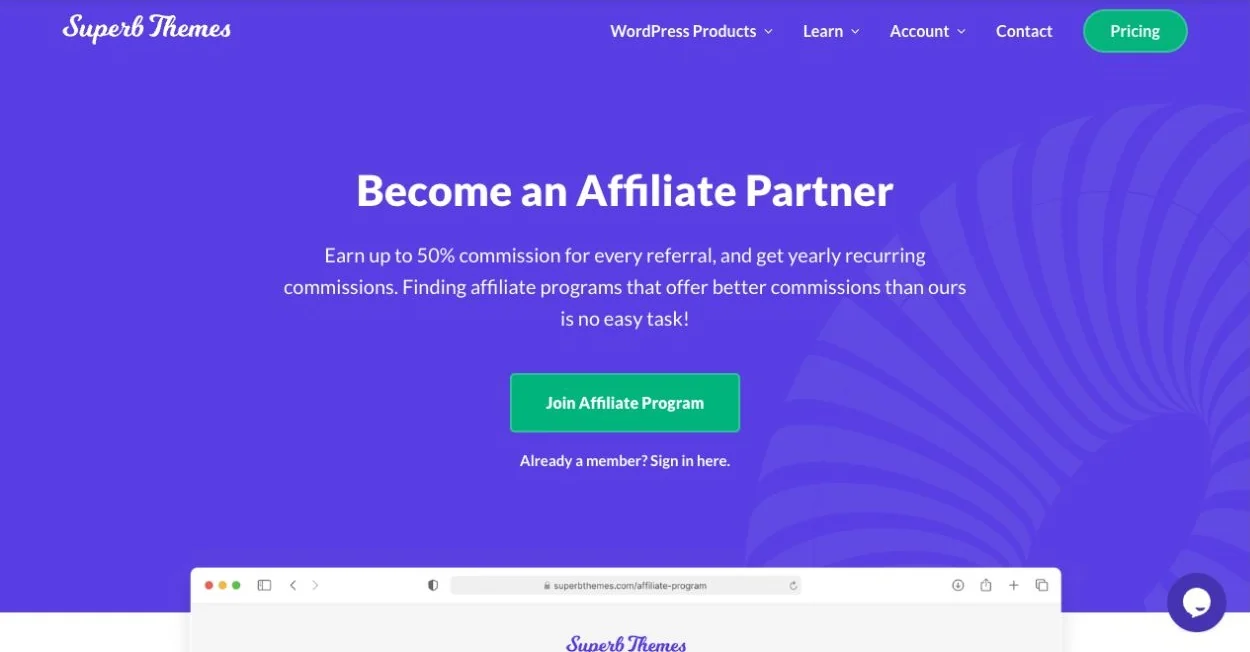
Affiliates earn up to 50% commission per referral, and those yearly recurring commissions are paid on yearly renewals, so income continues each year as customers pay their renewal fees. A single well-placed theme review can keep producing revenue long after the post was published because the customer’s renewal triggers the next payout. That is the compounding mechanic from earlier in this article, applied to a product a blogging audience already buys.
The supporting terms matter as much as the rate. Cookie duration starts at 30 days, which covers the window in which most readers move from reading a review to buying a theme. The minimum payout threshold is $200, and payouts are monthly, so an affiliate with a steady flow of referrals does not wait long to see money. A dedicated affiliate manager is available Monday through Friday for anyone who needs help with links, creatives, or a question about a specific referral.
What an affiliate is allowed to do with those links is unusually broad, and it maps almost directly onto how blogs and newsletters actually operate.
- Blog posts that mention or recommend SuperbThemes products in context
- Educational and tutorial articles that walk through a setup or a fix
- Reviews and list articles, including roundups of WordPress themes
- Social media posts sharing affiliate links
- Demo videos showing a theme or plugin in action
- Product comparisons, white papers, infographics, and case studies
- Emailing affiliate links to subscribers
- Logos and banners placed on a site
The restrictions are narrower and worth reading before signing up, because a few of them rule out common blogger tactics.
- Coupon codes used as advertisements
- Affiliate links placed on coupon, promo, or deal sites
- Using “SuperbThemes” in a domain or personal branding
- Altering logos or creatives without consent
- Misrepresenting SuperbThemes
The rules around coupon and deal sites are the ones most likely to catch a blogger off guard. A site built around discount codes is off the table, but a review post, a tutorial, or a newsletter mention is squarely within bounds. For a blog that already publishes WordPress content, the program fits naturally. The same posts that serve readers can carry the links that earn.
What to Look For in a Recurring Affiliate Program
The commission rate gets the attention, but two quieter terms decide whether that rate ever becomes money in hand. Not every recurring affiliate program is worth a blogger’s time.
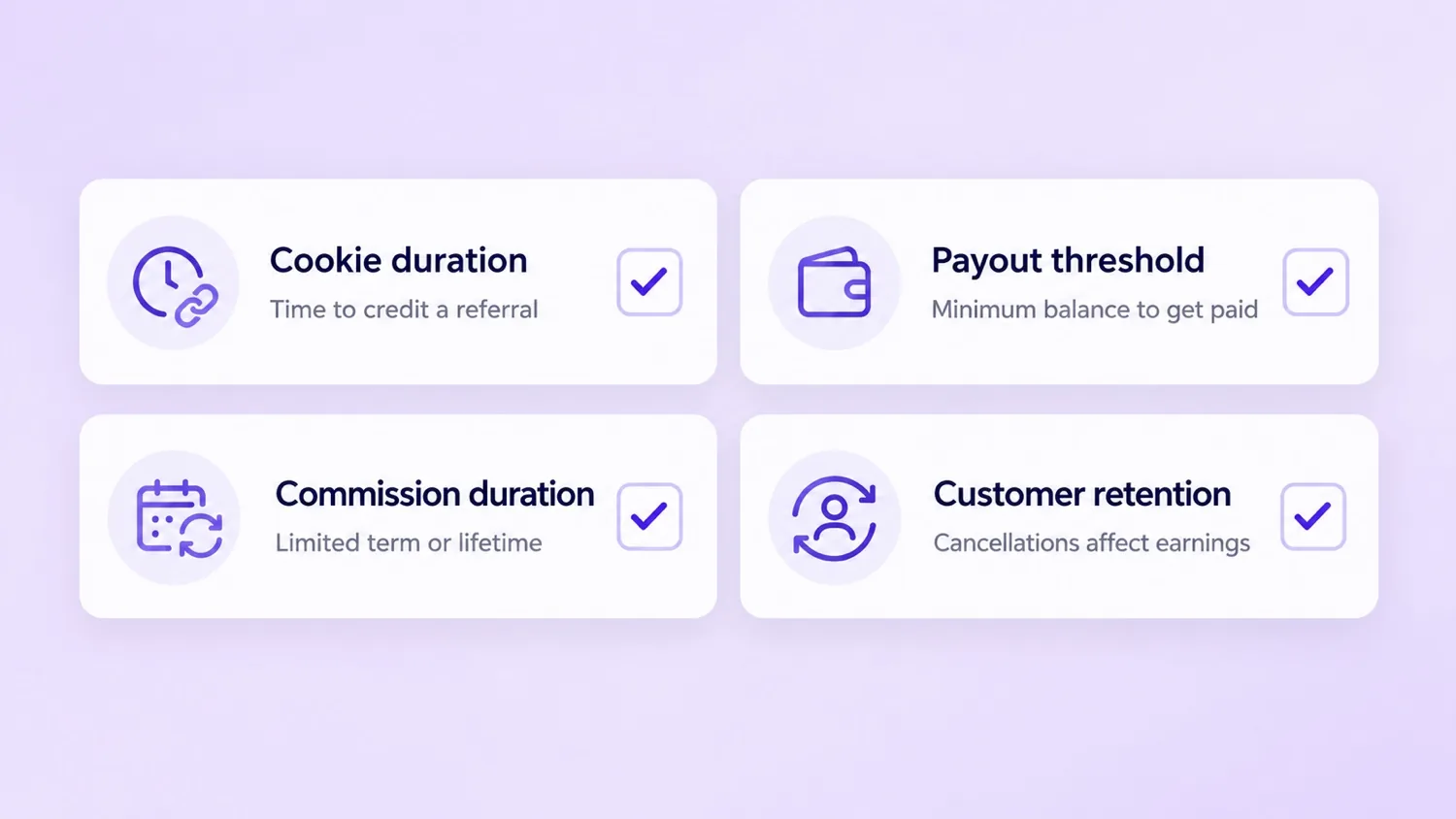
Cookie duration comes first. It needs to match how long the product’s sales cycle actually runs. A tool people research for weeks before buying needs a cookie window that survives that research period. A short window on a long sales cycle means referrals get lost before a purchase happens, and the affiliate never sees a cent.
Minimum payout threshold matters next. A reasonable threshold is one an affiliate can clear in a sensible stretch of time. A $500 minimum on a $10/month commission is a problem because reaching payout takes years of accumulated referrals rather than months.
The duration of the commission itself splits programs into two camps. A 2026 roundup identifies these as true lifetime programs, paying for as long as the referred customer stays subscribed:
Others cap the payout at 12 months per referral, after which the customer keeps paying but the affiliate no longer earns:
The mechanics after a sale are where expectations often go wrong. If a referred customer downgrades to a cheaper plan, the commission percentage stays the same but the dollar amount adjusts to the new, lower payment. If that customer cancels entirely, the recurring payments stop. Neither outcome is a program failure, but both shape how much a referral is really worth over its lifetime.
Framer Affiliate Program: Recurring Commissions on Paid Subscriptions
Blogs that cover WordPress and web design already point readers toward tools for building and hosting websites, and a site-builder program fits into that existing content without much change. The Framer affiliate program is one such option, though the published terms depend heavily on which listing a blogger reads.
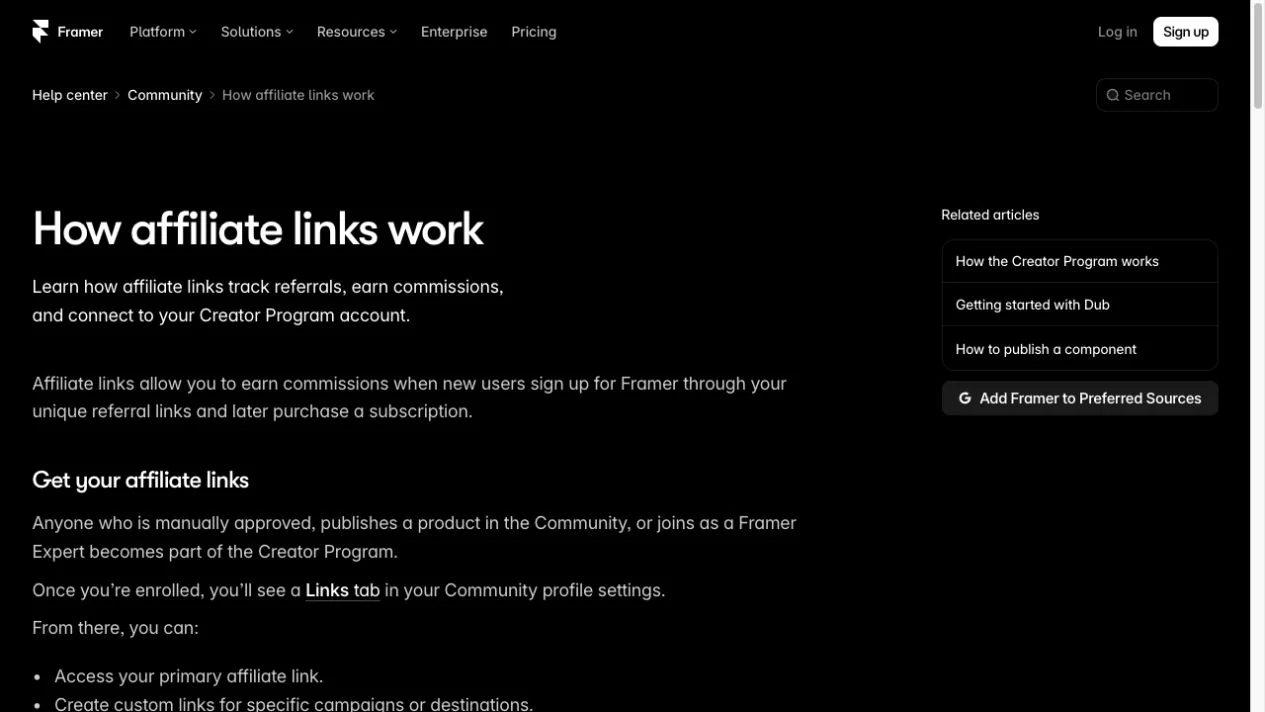
One 2026 listing reports Framer pays 50% recurring commission for 12 months on every referred paid subscription, with a 90-day cookie and an in-house program. A separate listing, one where the program is managed via Dub, reports a different structure entirely: 50% of referred subscription revenue, recurring for the lifetime of the customer. That second listing also describes payouts monthly covering commissions earned two months prior, a minimum payout balance of $200, and payment via Stripe, PayPal, or stablecoin.
The two sets of figures do not match. One caps the commission at a year and runs its own tracking. The other pays for as long as the customer stays subscribed and routes everything through Dub. A blogger weighing Framer against other programs should confirm which terms apply to a new signup before building content around it, because a 12-month cap and a lifetime payout are very different long-term propositions.
Joining runs through the Creator Program, and there is more than one way in.
- Publishing a Marketplace product
- Becoming a verified Framer Expert
- Applying with a review of the applicant’s work, audience, and promotion plans
One referred Pro plan at $30/month equals $15/month to the affiliate. Sign-up links can point to any framer.com page, whether that is pricing, templates, the blog, or the Help Center, and template remix links earn the same referral commissions. Enterprise subscriptions sit outside the program and generate nothing.
Webflow Affiliate Program: Revenue Share Tiers
Webflow’s affiliate program pays in tiers, and those tiers build on each other instead of replacing the base rate. Everyone starts at the same 50% share, and the higher levels add an extra slice of revenue share for a second stretch of time once a referred customer renews.
| Tier | Base revenue share | Additional uplift and duration |
|---|---|---|
| Base | 50% revenue share for up to 12 months for a brand-new qualifying customer who makes an eligible subscription purchase within the 90-day cookie window | None |
| Pro Affiliate | Same 50% base | Adds 10% revenue share for up to 12 additional months if a customer renews after their first 12 months |
| Premium Affiliate | Same 50% base | Adds 15% revenue share for up to 12 additional months if a customer renews after their first 12 months |
The jump from Base to Pro is the one most affiliates will hit first. Pro status requires 25 new customers per calendar year who purchase an eligible subscription, along with completed onboarding, verified ownership of the affiliate’s website and digital accounts, and no program-term violations. That is a real volume bar, and it resets each year, so Pro is a level an affiliate has to keep earning rather than a one-time promotion.
A few rules shape what actually gets paid. No payouts are made on one-to-one referrals, which rules out the kind of hand-delivered introduction some affiliates rely on. Signing up is free, and the application review response arrives within 1 to 2 weeks via email or PartnerStack. Once accepted, an affiliate must complete onboarding and publish a piece of content within 30 days to stay in the program.
Hostinger Affiliate Program: Volume-Based Commissions
Scale is what Hostinger’s affiliate program rewards. The more eligible sales an affiliate brings in, the higher the commission climbs. Commission starts at 40% and grows depending on sales volume, and every eligible sale earns a commission rather than only the first one from a given customer. Joining is free, and sign-up is instant, taking under a minute, followed by verification and dashboard access.
The process Hostinger lays out runs in four steps.
- Sign up
- Track performance
- Use affiliate banners
- Get payout
The gap that matters most sits in what Hostinger does not publish. Hostinger’s own page states no cookie duration, no recurring or renewal terms, and no payout minimum. For a blogger comparing programs on the strength of published terms, that silence is a real problem, because cookie duration and renewal structure are exactly the details that determine whether a referral keeps paying.
A third-party listing fills in some of those blanks with figures that differ from what Hostinger advertises. It reports that Hostinger pays 60% of the first payment, that most affiliates earn $60 to $150 per referral on annual plans, that the cookie runs 30 days, that management is self-serve via Impact, and that the minimum payout is $100. The 60% figure also sits above the 40% starting rate on Hostinger’s own page, so a blogger weighing this program should treat the two sets of numbers as separate claims rather than one consistent picture.
The renewal question is the one to settle first. A third-party listing describing a cut of the first payment points to a one-time payout structure rather than a recurring one, which puts Hostinger in a different category from the programs covered earlier in this article. Bloggers who want income that continues as customers renew should confirm the renewal terms directly before building content around the program.
Lifetime Recurring Programs Beyond Site Builders
Site builders and hosting get most of the attention, but some of the steadiest income for a blogger comes from tools the audience already uses every day. Those tools include email marketing, funnels, and content generation. These are the affiliate programs with lifetime recurring commissions, meaning the payout continues as long as the referred customer keeps paying, not only for a fixed first year.
| Program | Commission | Cookie | Payout mechanics | Earnings example |
|---|---|---|---|---|
| Systeme.io | 60% lifetime recurring | “Lifetime (on signup)” | PayPal or wire, paid on the 10th of each month, $30 minimum threshold | $97/month Unlimited plan = $58.20/month per referral |
| AWeber | 30% base, scaling to 40% at 10+ referrals/year and 50% at 50+ referrals/year, recurring for the lifetime of the subscription | 365 days | Monthly PayPal payments | – |
| Moosend | Five tiers from Bronze (0 to 5 accounts) at 30% to Diamond (36+) at 40% | 90 days | PayPal or Stripe, $5 minimum payout | – |
| Writesonic | 30% lifetime recurring, no time limit, no tier requirements, instant approval | 30 days | No minimum payout | $99/month Business plan = $29.70/month per referral |
These programs treat affiliates quite differently. Systeme.io offers the highest lifetime rate on this list at 60%, and its $30 minimum threshold and fixed monthly payout date make the cash flow predictable for someone tracking income month to month. AWeber rewards volume instead, with a base rate that climbs as referrals accumulate, and a 365-day cookie that is the longest window in this group. Moosend’s five-tier structure and $5 minimum payout suit affiliates who would rather not wait to clear a threshold. Writesonic keeps things simple with instant approval, no tiers, and no minimum, which lowers the barrier for a blogger testing a program before committing content to it.
What ties them together is the renewal mechanic. Because each pays for the life of the subscription, a referral made in year one keeps generating income in year three, five, or ten, provided the customer stays subscribed. That is the difference between a one-time payout and an asset that grows as the referral base grows, and it is the reason lifetime terms are worth confirming before a blogger builds a content plan around any program.
Compare SuperbThemes With Other WordPress Affiliate Programs
Start with our SuperbThemes affiliate program, then consider other WordPress theme affiliate programs when diversifying your referrals. The terms below differ most in cookie length, payout schedule, and whether the commission continues on renewals.
| Program | Commission | Cookie | Payout terms | Product price range |
|---|---|---|---|---|
| SuperbThemes | Up to 50% commission, with yearly renewal commissions | Starts at 30 days | Monthly payouts; $200 minimum | – |
| Divi (Elegant Themes) | 50% commissions on new purchases and renewals | 30 days | Payout the first week of every month | $89/yr to $277/yr |
| Astra | 30% commission on all sales and renewals | 60 days | Minimum payout of $210 and 2 referrals. Payout the third week of every month | $49 to $149/year |
| GeneratePress | Up to 30% commission on every sale | 30 days | $75 minimum payout. Payout within 30 days | $59/year to $249/lifetime |
| Thrive Themes | 35% per sale and 25% recurring on yearly renewals | 2 years | $50 payout threshold. PayPal payout at $20 | – |
Our SuperbThemes program offers up to 50% with yearly renewal commissions and a cookie window starting at 30 days. Divi offers 50% commissions on new purchases and renewals, with a 30-day cookie. Astra pays a lower 30% but extends the cookie to 60 days, and its $210 minimum paired with a 2-referral requirement sets a higher bar before the first payout lands. GeneratePress keeps the threshold low at $75 and pays within 30 days, which suits a blogger who would rather see money sooner than chase a bigger rate. Thrive Themes splits its structure, paying 35% up front and 25% on yearly renewals, and its 2-year cookie is the longest in this group by a wide margin.
These comparisons show how commission rates, cookie windows, and payout thresholds vary. Our program offers up to 50% commission, yearly renewal commissions, a cookie window starting at 30 days, and a $200 payout threshold.
How to Build a Recurring Affiliate Portfolio
The programs in this article are not meant to be used one at a time and then dropped. Bloggers who treat recurring commissions as an income stream tend to stack several programs within the same niche, then write comparison articles that meet readers wherever they are in the buying process.
An AWeber vs ConvertKit vs GetResponse vs Moosend piece is the clearest example. One article serves someone just starting to compare email tools, someone ready to switch, and someone hunting for a cheaper alternative. Each of those readers can convert through a different affiliate link in the same post.
Switching keywords are where that strategy pays off most. Searches like “How to switch from Mailchimp to ConvertKit” or “ActiveCampaign alternatives” come from readers who have already decided their current tool is not working and are looking for the exit. That intent converts at 3 to 5 times the rate of general “best email marketing tools” searches, which pull in a much broader crowd of people still browsing. A blogger who writes for the switcher captures a reader with a decision already half made.
The best affiliate programs for bloggers rarely sit in a single category, which is why a portfolio spreads across the tools a blogging audience already pays for. A 2026 shortlist pairs them by niche:
- SuperbThemes for WordPress themes and plugins
- Kinsta and Cloudways for hosting
- ConvertKit and Beehiiv for email
- HubSpot and Pipedrive for CRM
- Canva and Figma for design
- ClickUp and Notion for project management
- Webflow and Framer for site builders
Each of those pays at least $50 per first sale or 20% recurring, with a cookie window of at least 30 days. Stacking two programs per niche means a single comparison post can carry links to both, and a reader who rejects one option still has a second path to convert.
Retention is the caveat that matters most. Passive income affiliate programs for bloggers only keep paying while the referred customer keeps paying, so customer retention and renewal terms deserve the same scrutiny as the headline commission rate. A program with a generous rate but heavy churn can end up worth less than a modest one that holds its customers for years.
The practical move is to pair a high-rate program with a long-cookie, low-minimum one. The high rate builds the ceiling, while the long cookie window and low payout threshold bring money in sooner, which keeps a portfolio funded while the slower, bigger payouts accumulate. Assembled that way, a set of recurring programs stops being a list of links and starts behaving like the asset described at the top of this article.