Matching software referrals to an established audience and a suitable payment model is the starting point for choosing an affiliate program. This comparison covers five selected options: SuperbThemes, Peec AI, Shopify, HubSpot, and Astra. It draws on the supplied official pages, agreements, and verified research, with dated governing terms taking priority over conflicting promotional claims. It is not an exhaustive market ranking.
Commissions on qualifying license purchases, fixed merchant-referral bounties, and time-limited shares of subscription revenue reward different customer actions. Their payouts cannot be compared as equivalent percentages.
Software affiliate program commission rates matter alongside audience fit, application eligibility, qualifying customer actions, attribution, commission duration, payout requirements, and promotion restrictions. Cash referral programs also differ from agency, creator, or media partnerships that offer platform access, directory exposure, or editorial collaboration. Those benefits alone do not establish that a partnership, including Peec AI’s partnerships, pays referral commissions.
Each recommendation depends on the publisher’s audience and content. The individual sections examine program availability and applicable terms. Refunds, disqualified referrals, attribution rules, and payment thresholds can affect actual payments, and neither availability nor an advertised rate guarantees earnings.
SuperbThemes commissions for organic WordPress referrals
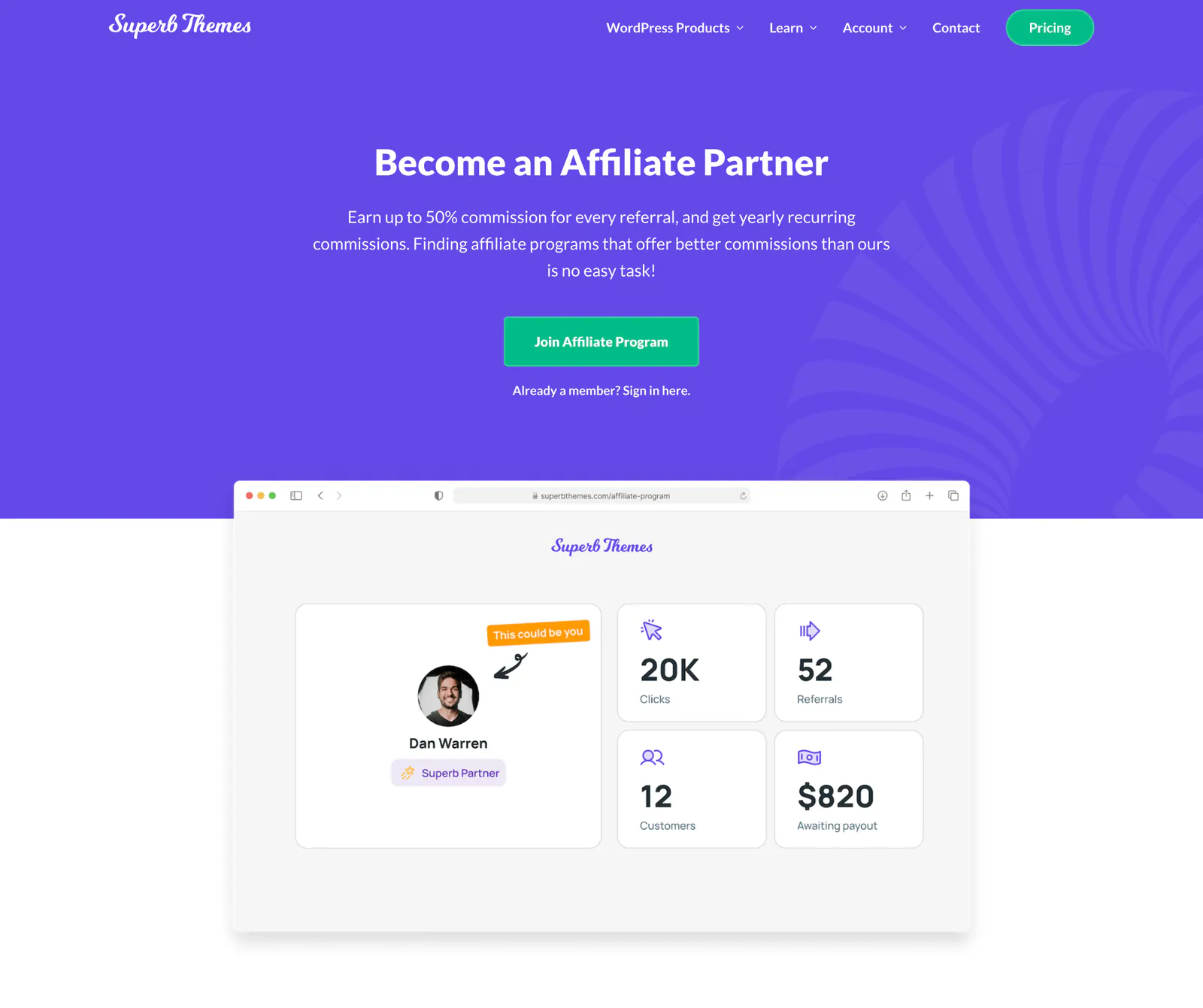
For publishers creating organic WordPress theme and plugin education, the SuperbThemes affiliate program is a suitable option. Its program page supports educational articles, reviews, comparisons, videos, social media, and subscriber emails. Agreement version 2.0, effective September 26, 2026, requires applicants to be 18+, control their declared website or social profile, and receive manual approval.
Commissions cover eligible purchases, renewals, upgrades, and add-ons for ten months after a referred customer’s first payment. For a software affiliate program with recurring commissions, that window sets a meaningful limit. A renewal earns commission only if it falls within the eligible period.
| Commission term | Standard | Above $2,000 monthly referred net revenue | Above $4,000 monthly referred net revenue |
|---|---|---|---|
| Qualifying threshold | Standard rate | Monthly referred net revenue above $2,000 | Monthly referred net revenue above $4,000 |
| Rate | 30% | 40% | 50% |
| Application timing | Standard eligible commissions within the ten-month period | Prospectively after the threshold is exceeded | Prospectively after the threshold is exceeded |
Individually agreed rates may replace these tiers. Net revenue deducts fees, currency costs, taxes, discounts, and refunds, so the commission percentage doesn’t apply to the full listed purchase price. The landing page advertises up to 50% and annual renewal commissions. The dated agreement specifies a standard 30% rate, performance tiers up to 50%, and a ten-month commission period, so annual renewals outside that period do not qualify.
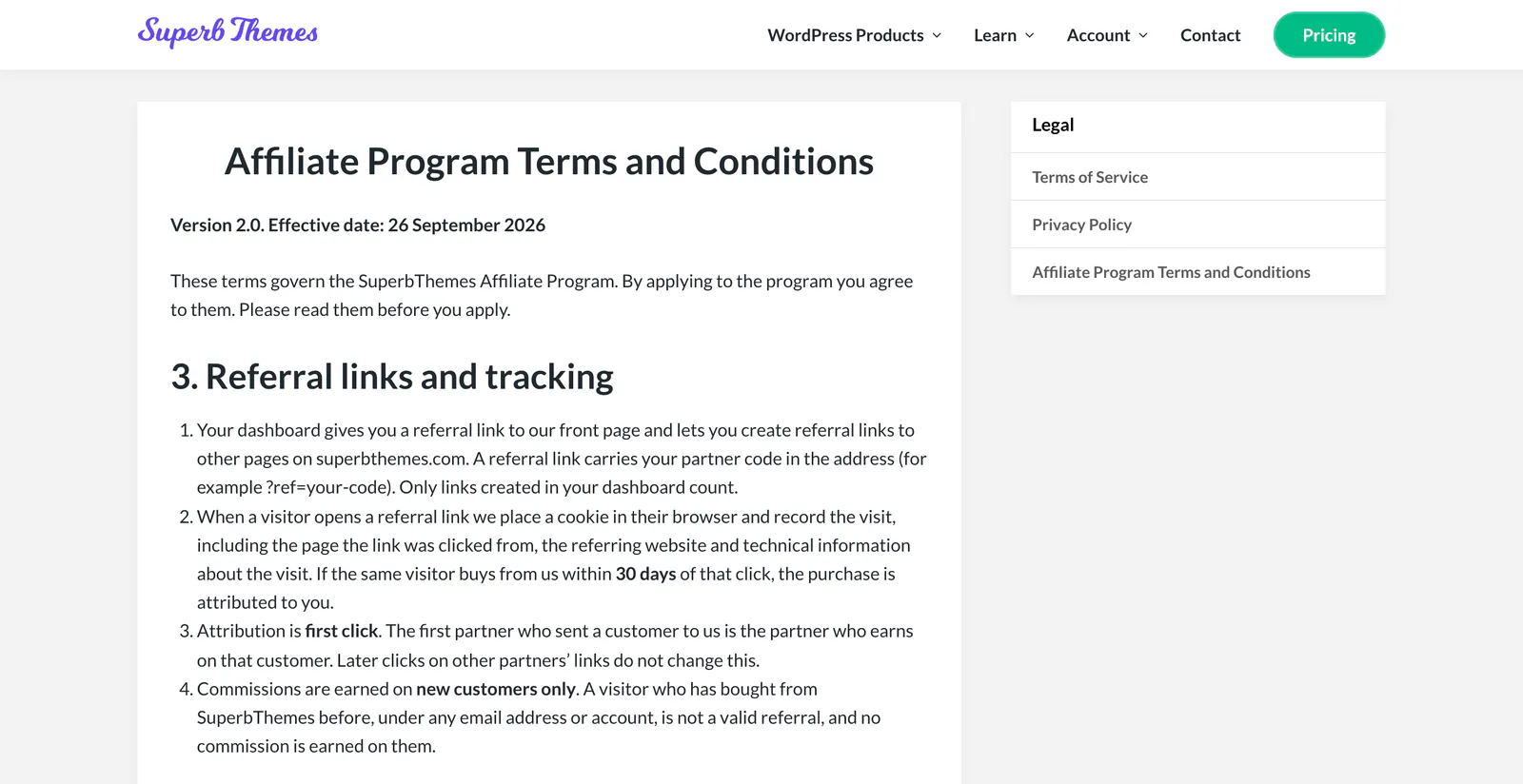
The dated agreement specifies first-click attribution, a 30-day tracking window, and new customers only. Dashboard-generated links and same-browser cookies are required. Payouts require three-month commission maturation, a $200 eligible balance, and Stripe onboarding in a supported country. Smaller balances carry forward without expiry.
All paid advertising is prohibited, including paid traffic sent to an affiliate’s own pages that lead to SuperbThemes. That makes organic WordPress education a better fit than paid acquisition. Coupon advertising and coupon/deal-site links are also prohibited, ruling out coupon content as a suitable promotional approach.
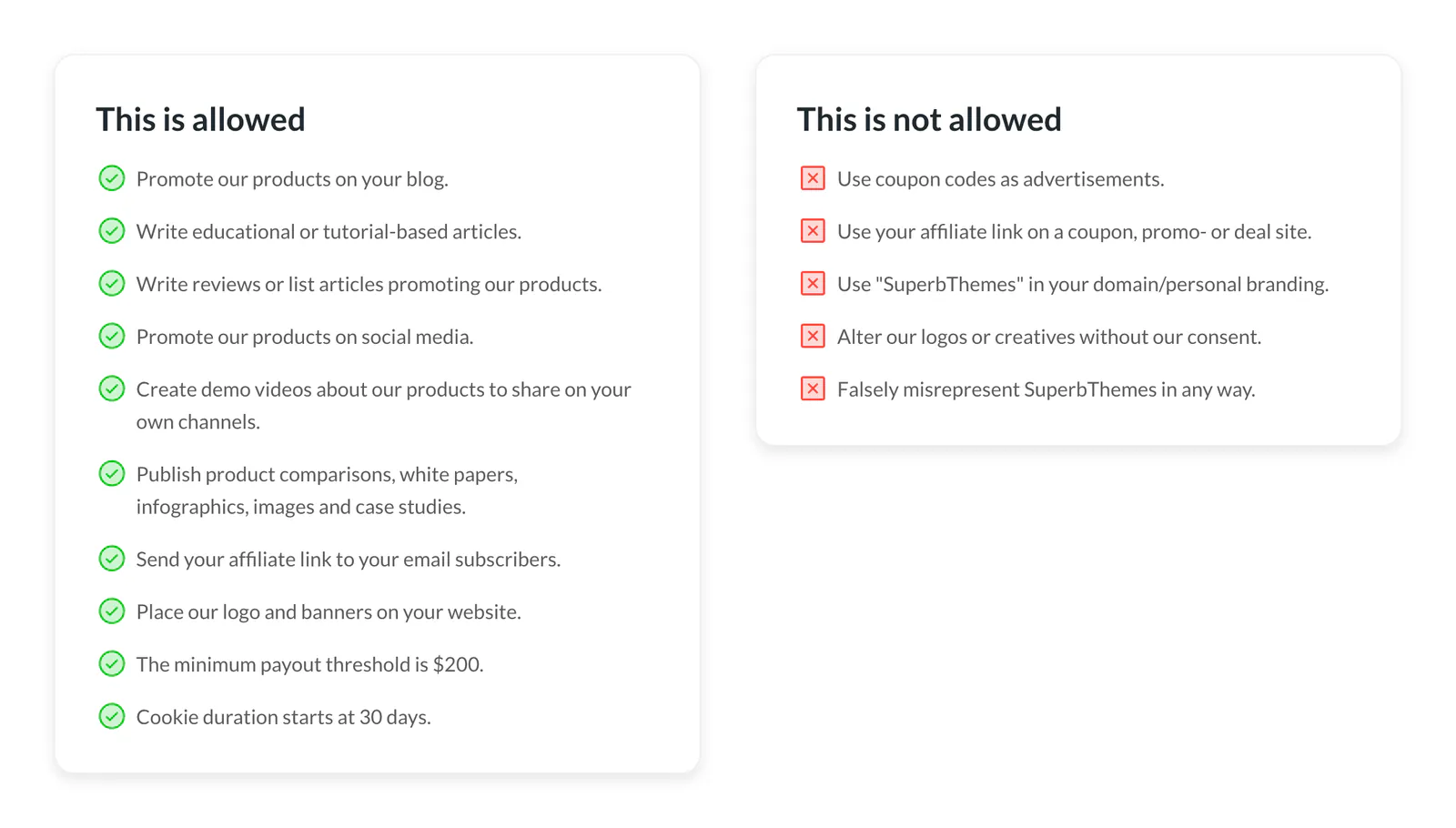
Other prohibitions cover self, household, and company referrals, incentives, spam, artificial clicks, impersonation, misleading claims, and unauthorized branding changes. Fraudulent or forced tracking can lead to termination and forfeited commissions.
Honest reviews must concern products actually used and include clear disclosures. Refunds, disputes, and cancellations reverse commissions.
How Peec AI referrals differ from its partnerships
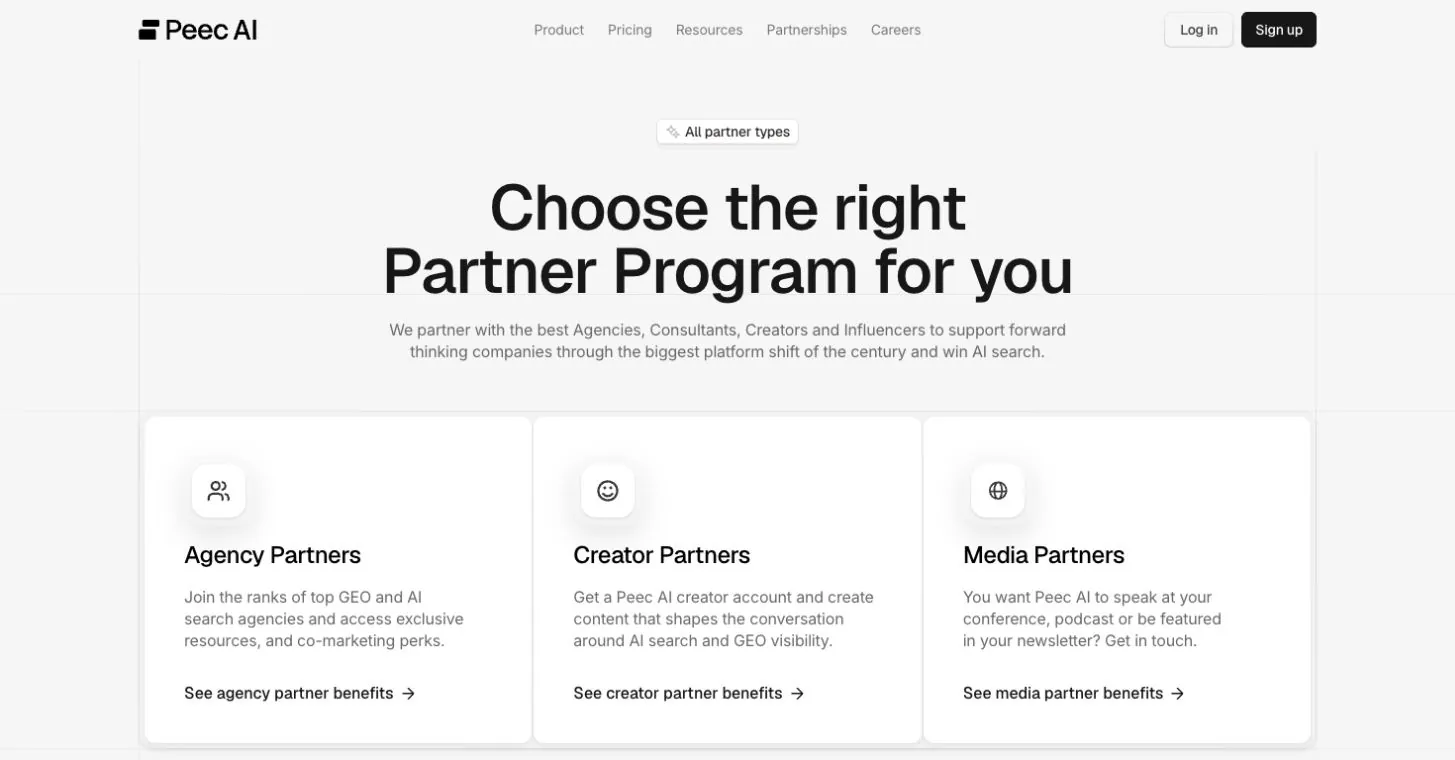
Peec AI offers paid referrals separately from its broader partnerships. The Peec AI partnerships page describes Agency, Creator, and Media tracks. Its referral terms updated March 24, 2026 and April 1, 2026 announcement establish the revenue-sharing referral program covered in this comparison. The absence of that program from the partnership overview doesn’t mean paid referrals are unavailable.
The Peec AI referral program pays 20% revenue share for six months. New referred customers receive 30% off their first six months, and referral count is unlimited.
Referrers need an active Peec AI account, must be 18+, and must have a supported Dub payout method. A qualifying referral must be a new eligible customer who signs up through tracking within 90 days, purchases a subscription, and remains in good standing for 30 days. Attribution uses last click.
Monthly payouts run through Dub, with a 30-day holding period and a $20 automatic payout threshold. That holding period is separate from the customer’s 30-day good-standing requirement. Refunds and violations can reverse rewards.
Paid advertising, self-referrals, coupon sites, and unsolicited bulk messaging are prohibited. The offer therefore suits publishers whose organic AI-search and marketing content reaches a relevant audience, provided they meet the account and payout requirements.
Broader partnership applications receive rolling review based on relevant expertise, content quality, audience fit, and GEO/AI-search alignment. Acceptance into a partnership track doesn’t itself establish eligibility for referral commissions.
- Agency partnerships are currently invite-only while approximately 20 initial partners are onboarded. Others may join a waiting list. Benefits include directory exposure, co-marketing, and sales materials. Peec AI’s statement that it takes no commissions or revenue share from the initial cohort doesn’t promise payments to agencies.
- Creator partnerships offer complimentary platform access for content production and promotional exposure to creators, consultants, and thought leaders covering marketing, AI search, and visibility. Routine content is currently unpaid, though individual campaigns may be sponsored or co-produced.
- Media partnerships serve conference organizers, podcast hosts, journalists, and editors through expert speakers, research collaboration, and editorial data. They don’t advertise a standard referral commission. Sponsorships depend on strategic fit, audience relevance, and impact.
Shopify referral bounties for commerce publishers
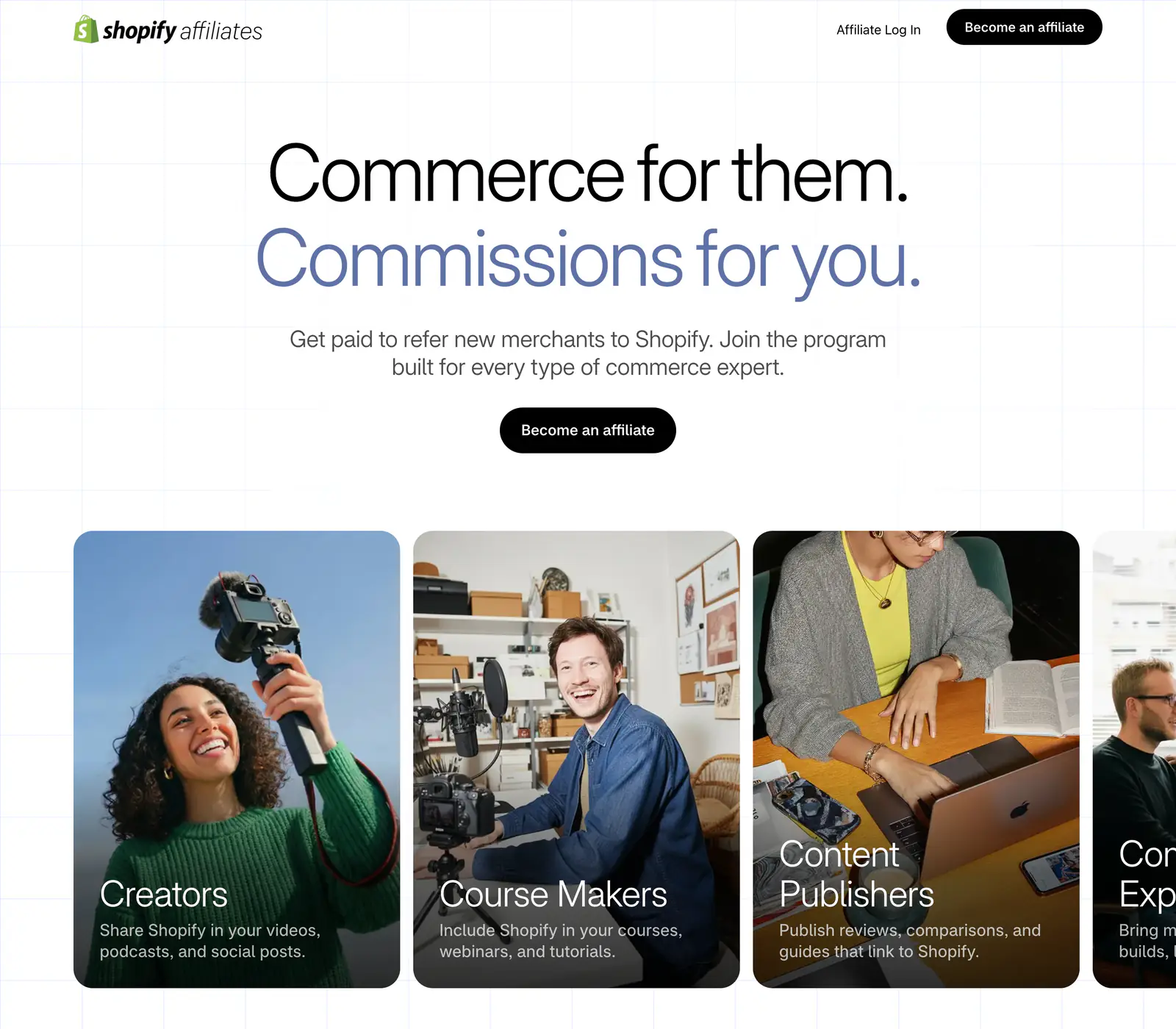
A fixed merchant-referral bounty is the basis of the Shopify affiliate program, which advertises up to $150 USD per qualified referral with no earnings cap. For commerce publishers, its appeal depends on content that leads to qualifying store launches. The payment is a referral bounty rather than recurring revenue share.
The active, free program operates through Impact and targets creators, educators, entrepreneurs, influencers, and commerce publishers. Approval prioritizes audience relevance. Preferred applicants have an active website, an established audience, original commerce or entrepreneurship content, and platform experience. Existing Shopify merchants may apply.
Applicants must read Shopify’s Affiliate Marketing Program Terms, which govern affiliate activities separately from the broader Partner Program.
Payout amounts depend on the referred merchant’s market.
- Listed US/PR, Canadian, Australian, New Zealand, Chinese, Hong Kong, Japanese, European, and Middle Eastern markets pay $150 per qualified referral.
- India, Africa, Latin America, remaining Asian markets, and other countries pay $25 per qualified referral.
Exact country-code lists and agreed terms in Impact determine the applicable amount. Those lists matter when assessing an international audience because broad regional descriptions alone don’t establish every country’s classification.
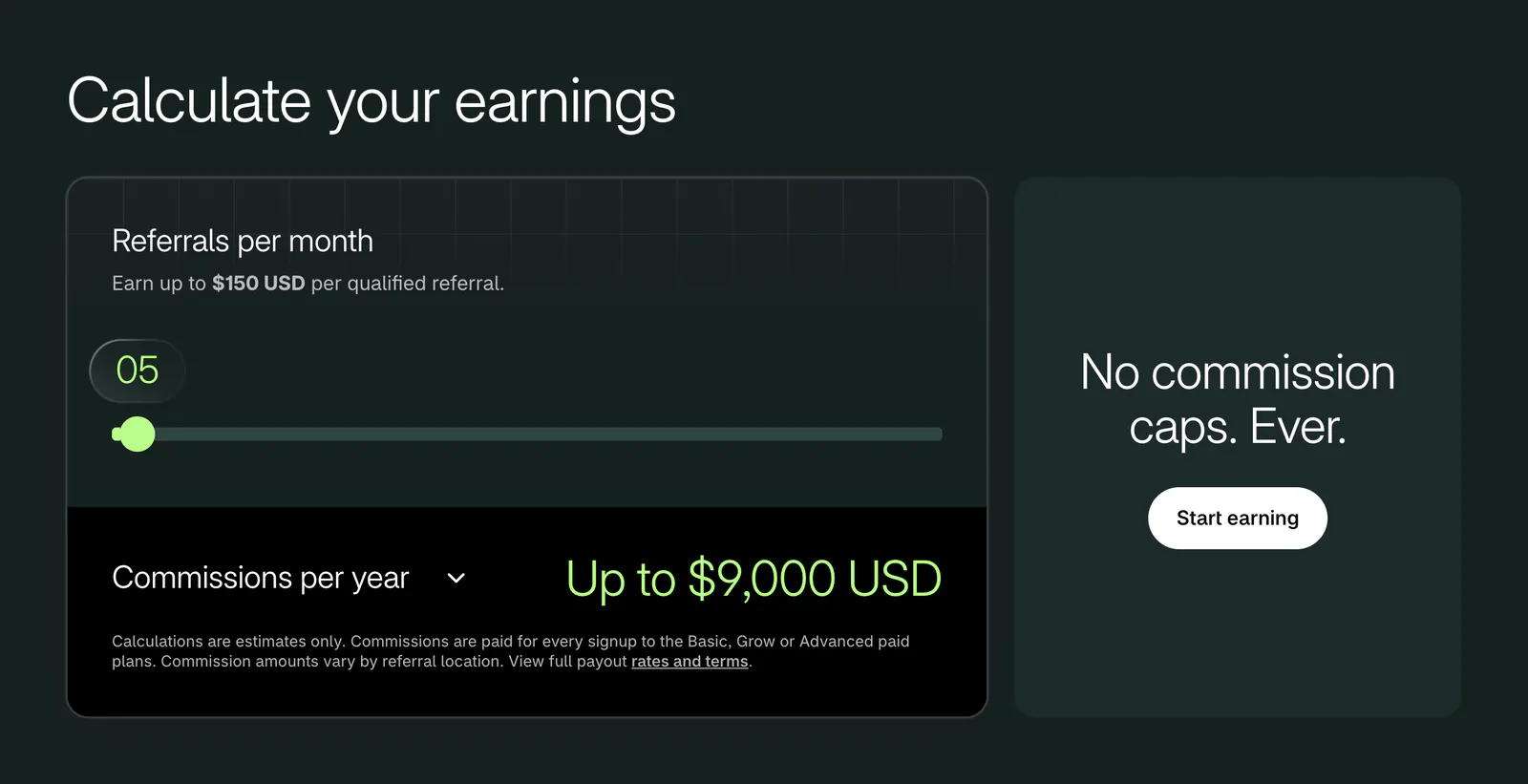
Under Shopify’s earnings rules, Basic, Grow, and Advanced qualify. Plus, Enterprise, and Retail are excluded. A referred merchant must pay full price for at least one month after trial. Fraudulent or refunded stores can trigger commission reversals.
Click tracking lasts 30 days. When a referral starts a free trial, a subsequent paid-trial or full-price conversion can be tracked for up to 400 days. That extended conversion period applies after a free-trial start and is separate from the ordinary click-tracking window.
Actions lock on the following month’s 21st, and Shopify credits qualifying commissions to Impact on the 22nd. Withdrawals require a $10 USD minimum, with bank deposit or PayPal available in most countries. Payment settings can be threshold-based or biweekly, so a commission credit and a withdrawal are separate events.
Shopify suits publishers with relevant store-launch content and an audience likely to become qualifying merchants. An interest in commerce alone doesn’t establish that referrals will meet the payment requirements.
Shopify’s compliance guidance prohibits trademark bidding, including misspellings, ad impersonation, cookie stuffing, misleading redirects, and Shopify-branded promotional domains. Shopify must be added as a negative keyword. Sub-affiliate networks have been prohibited since February 2026.
Affiliates must disclose their status and possible commission wherever affiliate links appear, avoid implying employment, and remain accountable for traffic sources. Breaches can cause forfeiture or termination.
HubSpot recurring commissions for B2B content
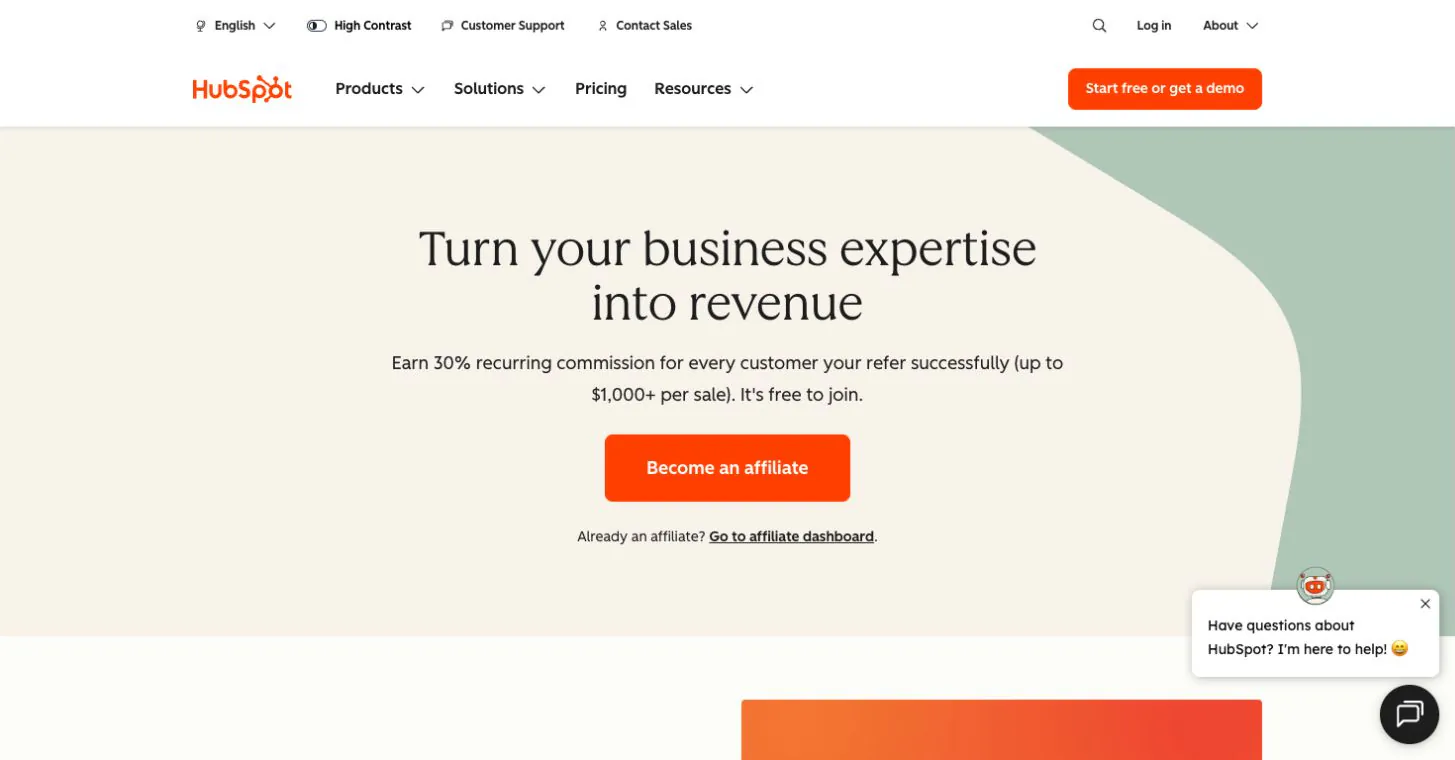
Independent B2B software publishers are the audience for the HubSpot affiliate program, which targets SaaS reviewers, business-content publishers, course creators, B2B marketplaces, and app builders. The active program is free to join, doesn’t require customer status, and has no minimum sales requirement. Applications normally receive review within 2 – 3 business days.
Consultants and agencies serving clients are directed to the separate Solutions Partner Program. Publishers that also provide client services need to account for this distinction, because affiliate eligibility doesn’t extend to referrals of clients they serve.
HubSpot advertises 30% monthly recurring commission for up to one year and a 180-day cookie window. Its tiers distinguish signup volume and available commission arrangements.
| Term | Starter | Sprocket | Elite |
|---|---|---|---|
| Monthly signup volume | 0 – 29 | 30 – 99 | 100+ |
| Commission arrangement | 30% recurring for up to one year | 30% recurring and/or restricted cost-per-signup arrangements | Approved custom commissions |
Advancement requires consistent signup volume for three months. Higher tiers don’t automatically increase earnings, and Sprocket’s restricted arrangements don’t establish a payment for every signup.
The agreement updated February 23, 2026 requires referred leads to be new prospects who are neither existing customers nor active sales prospects at submission or during the preceding 60 days. Attribution normally follows the last affiliate click, subject to exceptions and HubSpot’s discretion under the agreement and program policies.
Commission applies to the initial qualifying purchase. Additional purchases and upgrades add no commission, while downgrades reduce it. Customers must remain active through the locking period specified in Impact. The affiliate tool and policies govern applicable rates and eligibility.
Impact handles tracking and payments, with withdrawals requiring $10 USD and supporting EFT or PayPal. The reviewed public terms don’t establish a universal numerical locking period or fixed payout date. The applicable Impact terms determine the locking period.
Payment requires an accepted agreement, a configured account, a current payment method, and tax documentation. If payment requirements remain incomplete six months after transaction close, the associated commissions are forfeited.
Affiliates cannot self-purchase or be users or billing contacts on referred accounts. Fraudulent attribution and duplicate commissions across programs are prohibited. Paid ads must avoid competing with HubSpot advertising or branded keywords and must lead to the affiliate’s own website.
Clear commission disclosure must precede the affiliate link. Branding rules also apply, and affiliates cannot describe themselves as HubSpot Partners. These conditions make the program a closer fit for independent B2B publishing that attracts new prospects than for referrals from managed client accounts.
Astra license commissions and choosing an audience fit
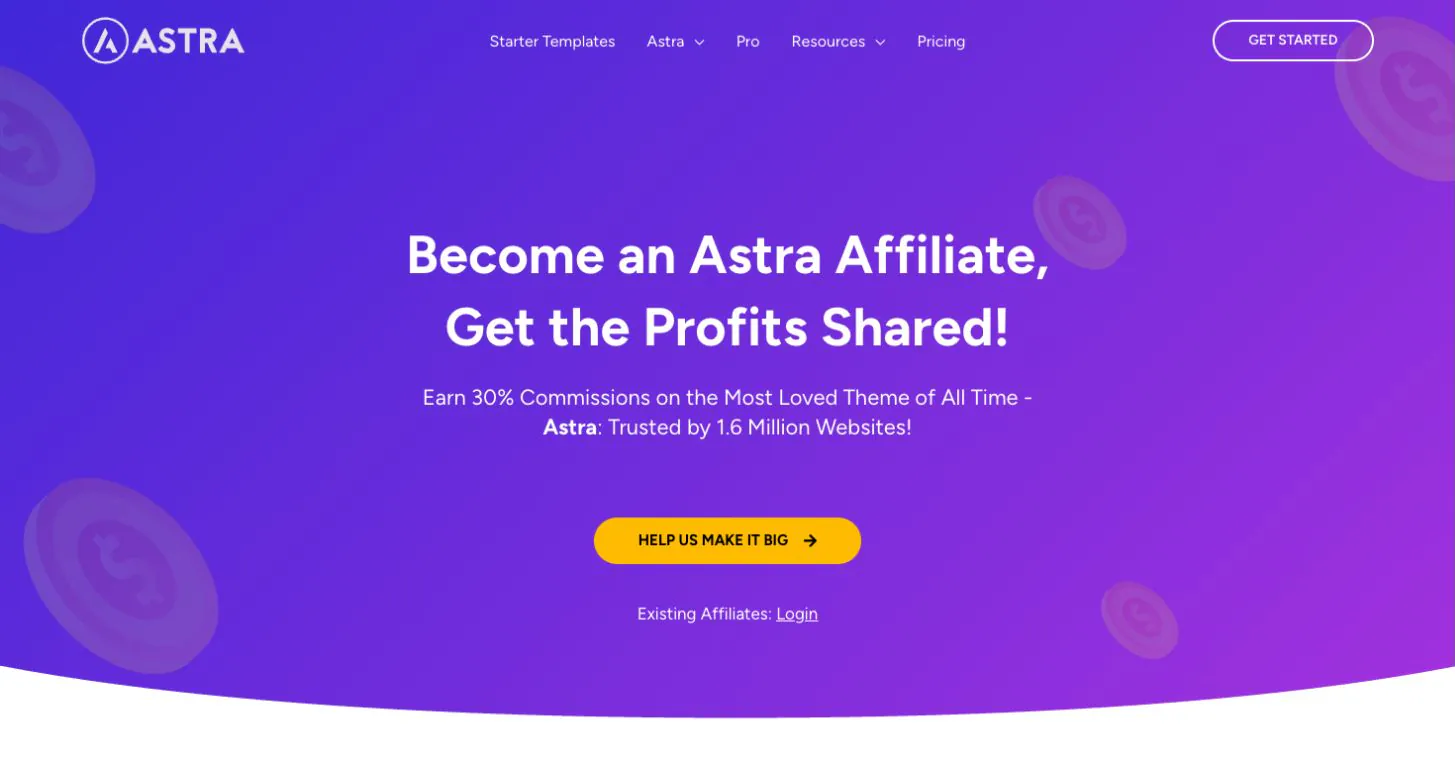
WordPress and web-design publishers have another option in the active Astra affiliate program, which advertises 30% commission with a 60-day cookie. It serves bloggers, YouTubers, reviewers, educators, marketers, and agency owners. Tracking tools, promotional materials, and support are available.
Brainstorm Force’s linked agreement expressly takes precedence over other terms. It requires application approval, one account, and age 18+ for individual affiliates.
Commissions cover new license purchases. Renewal commissions aren’t promised, and refunded or charged-back transactions are unpaid. Tracking requires a purchase within 60 days using the same browser. The reviewed sections don’t specify first-click versus last-click priority.
The earnings illustrations conflict. One page section mentions $270 per sale, while another shows up to $240 on a $799 lifetime sale. Those examples don’t establish a uniform guaranteed maximum.
Monthly PayPal payments occur during the third week for referral sales at least 45 days old. Payment requires both $210 USD in commissions and two referrals, so reaching the monetary threshold alone isn’t enough.
Self-purchases are prohibited. Customers are encouraged to complete purchases themselves through referral links. Spam and promotion that violates FTC requirements are also disallowed. The restrictions extend to cashback, bonuses, coupon discounts, claims that affiliate links provide discounts, sub-affiliates, and fee sharing.
Promotional materials require approval, modifications need written consent, and current prices must be represented accurately. Termination for material breach or inactivity can result in forfeiture of accrued commissions. Astra therefore suits purchase-focused WordPress publishing whose promotional approach meets these conditions.
The table compares the five programs. Their percentages apply to different purchases and earning periods, so they aren’t equivalent measures of potential earnings.
| Comparison point | SuperbThemes | Peec AI | Shopify | HubSpot | Astra |
|---|---|---|---|---|---|
| Audience fit | Organic WordPress education | Organic AI-search and marketing content | Store-launch content | Independent B2B software publishing | Purchase-focused WordPress tutorials and reviews |
| Commission model and duration | 30% of net revenue for ten months; prospectively 40% above $2,000 and 50% above $4,000 monthly referred net revenue; individually agreed exceptions | Separate referral program paying 20% revenue share for six months | $150 or $25 qualifying merchant bounty by market | Advertised 30% monthly recurring for up to one year, subject to tier arrangements | 30% on new license purchases; no promised renewal commissions |
| Attribution window and priority | 30-day first click; same-browser tracking | 90-day last click | 30-day click window; up to 400 days for subsequent conversion after a tracked trial starts; click priority unspecified here | 180-day cookie; normally last affiliate click | 60-day same-browser tracking; click priority unspecified |
| Payout requirements | Three-month maturation, $200 threshold, and Stripe onboarding in a supported country | Monthly Dub payouts, 30-day hold, and $20 automatic threshold | $10 Impact withdrawals; actions lock on the following month’s 21st and commissions are credited on the 22nd | $10 Impact withdrawals; locking period set in Impact; no universal public payout date | Third-week monthly PayPal payments; sales at least 45 days old; both $210 USD and two referrals required |
This comparison uses the dated SuperbThemes agreement where the landing page differs. Peec AI’s row covers paid referrals separately from its partnership tracks. Customer eligibility and qualifying-purchase rules still govern each offer. Tracking a referral alone doesn’t establish an earned commission.
Shopify’s market lists and applicable Impact terms determine the bounty, while HubSpot’s tier arrangements and attribution exceptions limit how broadly its advertised terms apply.
The choice depends on the publisher’s actual referral opportunity. New-license commissions suit purchase-focused tutorials and reviews, merchant bounties suit store-launch content, and time-limited subscription shares suit ongoing software evaluation.
A recommendation also depends on whether permitted promotion can produce enough qualifying referrals to meet payout requirements. The largest advertised percentage alone doesn’t settle the choice. Current governing terms and unresolved discrepancies warrant checking before enrollment.