AI can translate website text in seconds. The only problem is, building a multilingual website takes a little more than translating words from one language to another.
Businesses need to maintain brand consistency, review translations, manage publishing, localize images, and ensure translated pages can be discovered through search. As websites evolve, keeping translations up to date adds another layer of work.
Weglot 2.0 aims to bring these tasks together in one place.
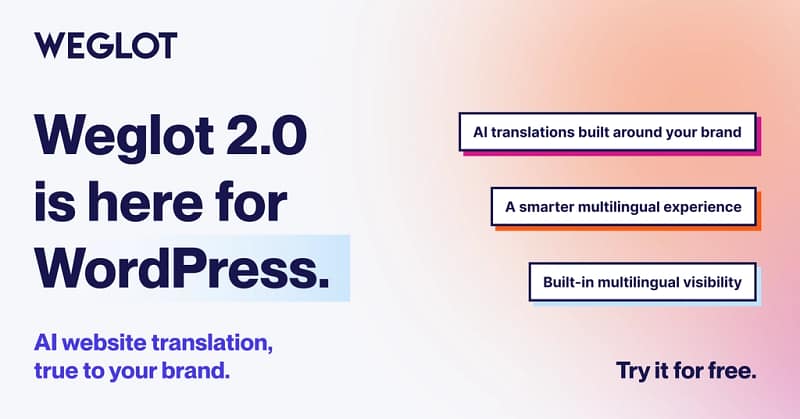
The new version of Weglot’s translation plugin for WordPress combines a brand-focused AI Translation Model with a redesigned translation workflow, image translation, AI-assisted management, and built-in multilingual SEO and GEO foundations.
Weglot 2.0, which launched at the end of September (initially) for new WordPress users, builds around a clear promise: AI website translation, true to your brand.
Why AI Translation Alone Isn’t Enough
Generic AI tools can translate website copy, but turning those translations into a functioning multilingual website requires more work to remain on-brand. Teams need to provide enough context for accurate results, maintain consistent terminology and tone, and check that translations reflect the brand across every page.
Translated content needs to be integrated into the website, reviewed before publication, and updated as the original content changes. Text embedded in images may need localization, too. For businesses managing multiple websites, keeping everything consistent across projects adds another layer of complexity.
Search visibility is also important. Translated pages need the right technical foundations to help search engines discover and understand them.
These tasks can quickly turn translation into a collection of disconnected processes, tools, and manual checks. The challenge is not simply translating more content faster but maintaining quality and consistency throughout the entire process.
That’s where Weglot 2.0 takes a different approach, starting with how AI generates translations.
Weglot’s New AI Translation Model Puts the Brand in Context
At the heart of Weglot 2.0 is a new AI Translation Model designed to produce translations that reflect a website’s brand, terminology, and context. This means rather than treating each piece of text in isolation, it uses three inputs: a Brand Profile, Translation Guidelines, and page context.
Why does this matter though? Well, for one, words can mean different things depending on how they’re used.
A software company might use product-specific terminology that shouldn’t be translated literally. A brand with a conversational voice needs translations that preserve that tone, while an ecommerce business may need consistent product descriptions across its catalog. Without the right context, translations can be technically correct but feel disconnected from the brand.
Weglot 2.0 uses these brand and contextual inputs to help make translations more accurate and consistent across a website. Teams also retain control over the final result, with the ability to review translations in context before publishing them.
The goal isn’t to replace human translators but to make AI-generated translations more useful from the start, giving teams a stronger foundation to review, refine, and publish content that sounds like their brand in every language.
A New Workflow for Reviewing and Publishing Translations
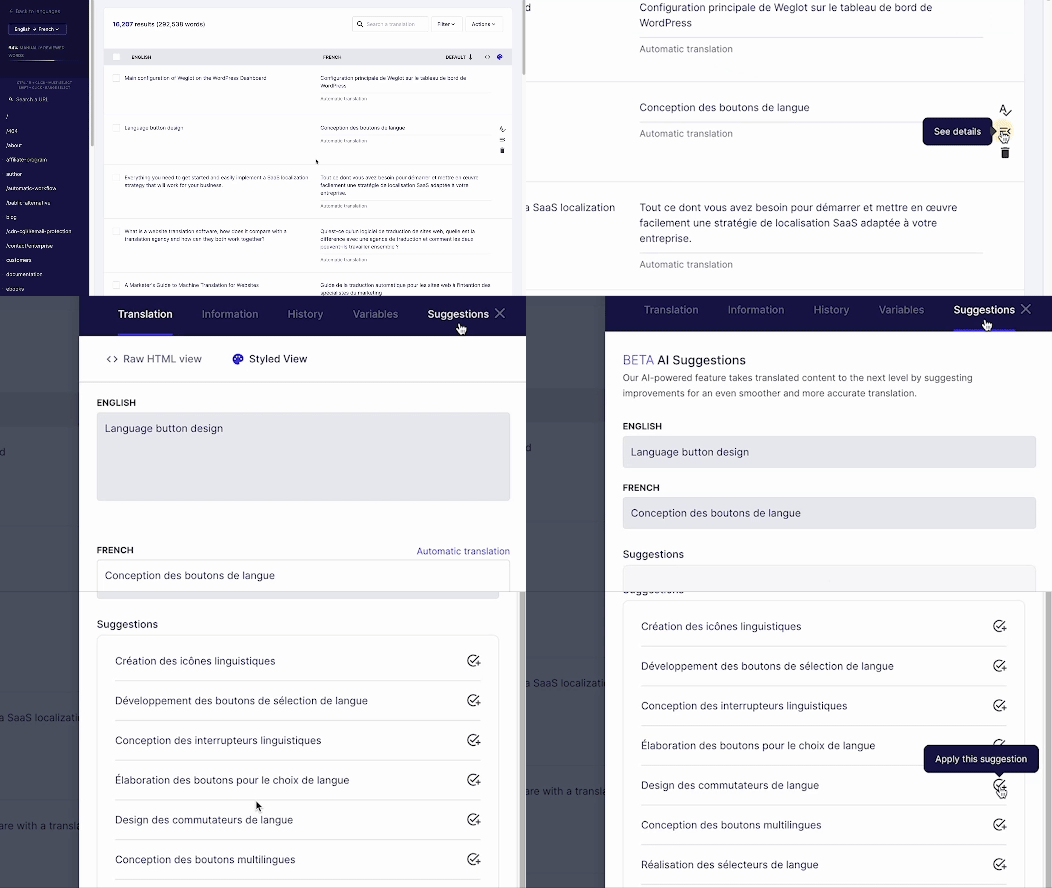
Beyond generating better translations, teams also need an efficient way to review, edit, and publish them. Weglot 2.0 introduces a redesigned dashboard, Translation List, Visual Editor, and publishing workflow to bring these tasks into a more streamlined experience.
The Visual Editor lets teams review translations in the context of the actual website, making it easier to assess how localized text fits the page before publishing. The Translation List provides another way to manage translated content, while the updated workflow helps teams move from review to publication with fewer disconnected steps.
Collaboration also gets an upgrade with Weglot 2.0. The Agency Workflow is designed for freelancers and agencies managing multilingual content across client websites, while Word Count provides visibility into translation usage.
Together, these changes address the operational side of running a multilingual website. Instead of focusing solely on generating translations, Weglot 2.0 brings more of the process (everything from reviewing individual translations to managing work across sites) into one place. This gives teams a more organized way to maintain their multilingual presence.
Translation Goes Beyond the Words on the Page
A true multilingual website translates simple text visitors read on a page as well as text contained in images (think: promotional banners, marketing graphics, and product screenshots). Leaving these assets untranslated can create an inconsistent experience for visitors browsing the localized version of a website.
Image Translation
Weglot 2.0 introduces Image Translation, which lets users translate text embedded in images directly through the Visual Editor while preserving the original design. Teams can localize visual assets without having to recreate their layouts from scratch for each language.
For businesses that rely on branded graphics, promotional campaigns, or text-heavy visuals, this extends translation beyond page copy and helps create a more cohesive multilingual experience.

Weglot MCP
Weglot MCP brings AI assistants into the translation management process. MCP, or Model Context Protocol, provides a way for AI assistants to interact with connected tools and services. With Weglot MCP, users can review translations, update content, and manage multilingual projects through their preferred AI assistant without navigating the Weglot dashboard for every task.
This gives teams another way to work with translated content, bringing certain management tasks into the AI environment they already use.
Together, these features expand what teams can do beyond translating text. Image Translation helps localize visual content, while Weglot MCP makes translation management accessible through AI assistants.
Both reflect a broader shift in website translation: AI is becoming part of the wider workflow for localizing, reviewing, and maintaining a multilingual website.
Built-In Foundations for Multilingual SEO and GEO
Translating a website is only useful if visitors can find its localized pages. A multilingual SEO setup helps search engines understand which language a page targets and how different language versions relate to one another.
Weglot 2.0 includes several foundations to support this process: automatic hreflang tags, translated metadata, language-specific URLs, and translated pages ready for indexing. These elements help search engines identify and process localized content, giving businesses a technical starting point for reaching audiences in different markets.
The launch also highlights GEO (generative engine optimization), reflecting the growing interest in how content appears in AI-powered search and discovery experiences. While no technical setup can guarantee visibility in search results or AI-generated answers, making multilingual content accessible and understandable is an important part of building that visibility.
By including these foundations in the translation workflow, Weglot 2.0 helps teams address discoverability alongside translation and publishing, rather than treating multilingual SEO as an entirely separate task.
Why Weglot 2.0 Is Launching on WordPress First
Weglot’s decision to launch version 2.0 on WordPress first comes down to where the company began. Nearly ten years ago, WordPress was the first platform Weglot supported, making it a natural starting point for this next chapter in the product’s development.
WordPress has since grown into one of the largest web ecosystems, powering websites for businesses, publishers, agencies, and independent creators worldwide. For many of these site owners, reaching international audiences means making their websites accessible in multiple languages without adding unnecessary complexity to their workflows.
Weglot 2.0 aims to address that need by bringing brand-aligned AI translation, translation management, image localization, and multilingual SEO foundations into one WordPress plugin.
The rollout began on September 29, 2026, with availability limited to new WordPress users at launch. Existing Weglot users will gain access progressively as the company expands availability.
The WordPress launch is also the beginning of a broader evolution for Weglot, with more capabilities planned for the future.
What Weglot 2.0 Means for WordPress Site Owners
Weglot 2.0 brings several parts of multilingual website management into one WordPress plugin, making it relevant to different teams and businesses looking to reach international audiences.
For WordPress site owners expanding into new markets, the AI Translation Model helps maintain brand consistency across languages. Marketing teams can manage translations, review localized pages, and access multilingual SEO foundations within the same workflow.
Agencies and freelancers managing multiple client websites can also benefit from Agency Workflow, while businesses focused on organic discovery get technical foundations designed to help search engines understand their translated pages.
The launch brings these capabilities together around three priorities: quality, coverage, and impact.

- Quality means generating translations informed by a brand’s profile, guidelines, and page context.
- Coverage extends beyond website copy to include text embedded in images and translation management through AI assistants.
- Impact focuses on making translated pages accessible to search engines through multilingual SEO foundations.
For teams that would otherwise need to coordinate separate tools for translation, review, image localization, and search optimization, Weglot 2.0 offers a more integrated approach. It doesn’t eliminate the need for human oversight, but it aims to make managing a multilingual WordPress website more consistent and less fragmented.
Conclusion
Weglot 2.0 reflects a broader shift in website translation: AI can do more of the work, but the tools and workflows surrounding it remain essential.
By bringing brand-aligned translation, review, publishing, image localization, AI-assisted management, and multilingual SEO and GEO foundations into one WordPress plugin, Weglot aims to simplify how businesses build and maintain multilingual websites.
Weglot 2.0 launched on September 29, 2026, initially for new WordPress users. If you’re planning to expand your website into new markets, it’s worth exploring what the updated plugin offers.
And if you’re ready to try Weglot 2.0, use the code WPMINUTEXWEGLOT2 to get three months off any plan as a new user. Sign up for Weglot to get started. The offer is available until February 28, 2027.
Join The Newsletter
Get your favorite 5 minutes of WordPress news for busy professionals every week — 100% Free! Join the WP Minute Newsletter below 👇