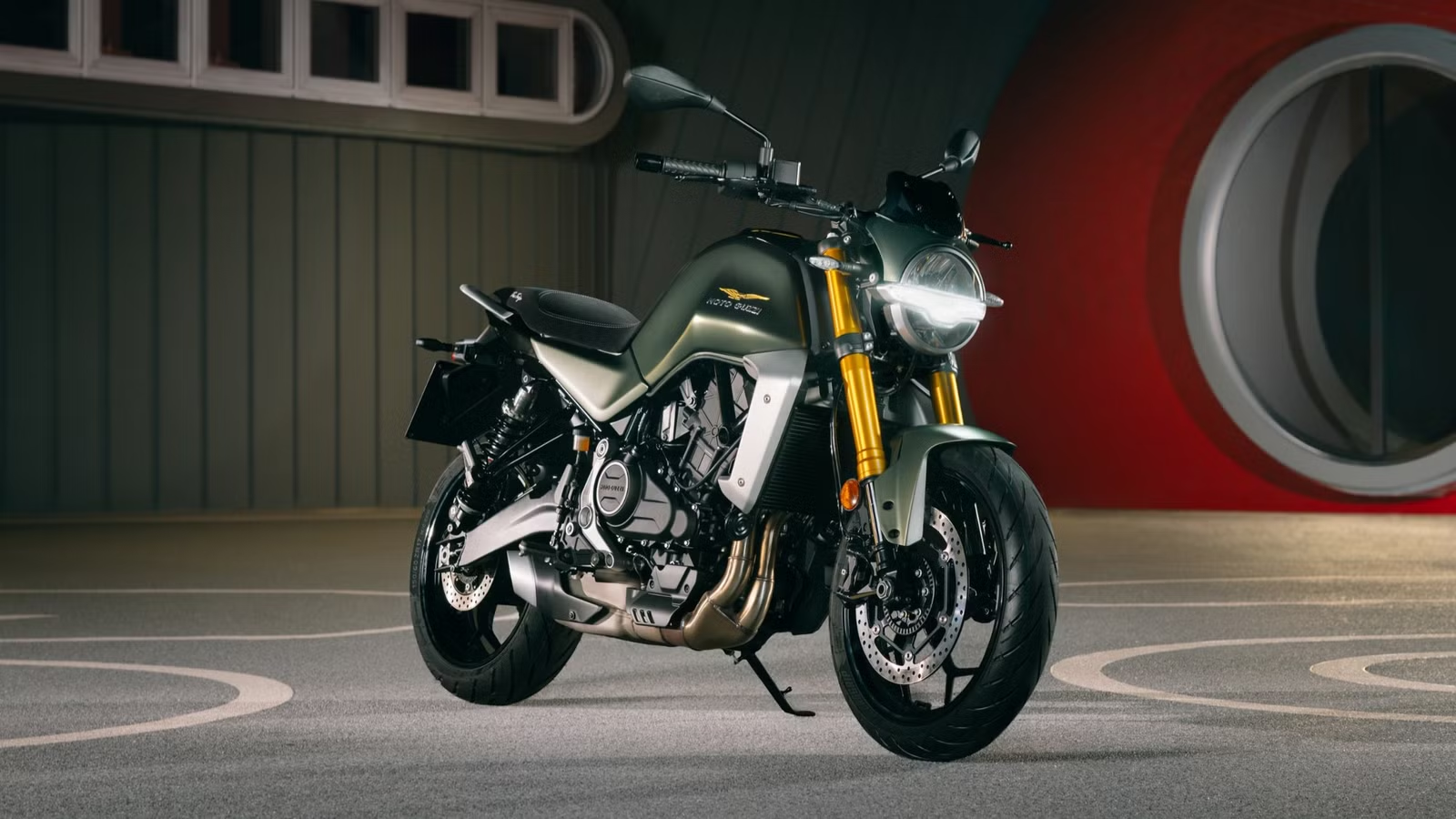
Moto Guzzi has spent nearly 60 years building motorcycles, almost without exception, around one idea: a 90-degree V-twin turned sideways in the frame and paired with shaft final drive. The Trip, as it’s been dubbed by Moto Guzzi, is a new 500-class roadster serving the all-important role of bringing new riders to the fold. For Moto Guzzi, this could represent a critical step in growth for the brand as a whole. Yet, like all ambitious young upstarts, The Trip does break tradition in a few ways, not least of which is that this is the first parallel-twin-powered motorcycle we’ve seen from Guzzi in decades.
Today, the fine folks in Mandello del Lario announced a few details about their new model while keeping pricing and the bike’s full spec sheet close to their collective vest for a proper reveal at EICMA 2026, which kicks off November 3 for the press. Moto Guzzi has only shared two photos of The Trip so far, so we’ll keep this short (heh).
The Engine: What We Know From (Two) Photos
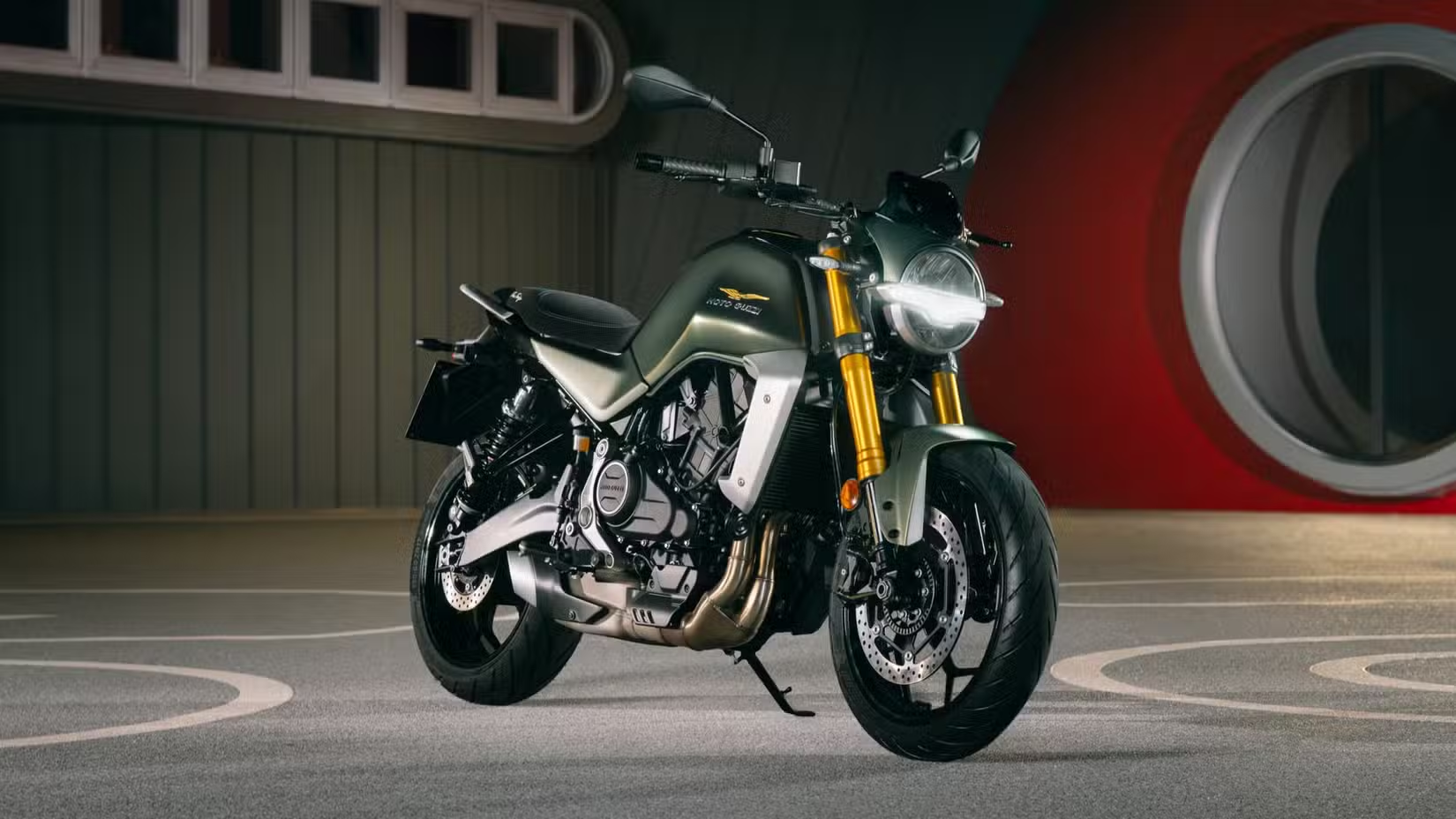
Piaggio Group owns both Aprilia and Moto Guzzi, so sharing an engine between the two Italian brands makes perfect financial sense, particularly in the entry-level segment, where profit margins are slim and competition is fierce. Guzzi provided precious little information in its announcement, stating only that The Trip’s parallel-twin makes almost 48 horsepower, with most of its torque arriving low in the rev range. It has not published a peak horsepower, torque, or any other technical detail.
While Moto Guzzi hasn’t confirmed it yet (they’ll reveal all at EICMA next week), we can take a confident guess that it’s a derivative of the 457cc parallel-twin powering the Aprilia RS 457 and Tuono 457, complete with its V-twin-like 270-degree crank. Aprilia rates that engine at 47.6 hp at 9,400 rpm and 32.1 lb-ft of torque at 6,700 rpm, which makes it A2 compliant under Europe’s tiered licensing program. Whether Guzzi has reworked cam timing or fuel mapping to strengthen the low end, as its torque description implies, is something we expect to learn at EICMA. What we can say based on the two provided images is that it wears brand-specific engine covers in line with Guzzi’s styling ethos.
The Trip is not the first parallel twin to wear the eagle, though you have to dig to find the last one. In the 1970s, Alejandro De Tomaso owned both Benelli and Moto Guzzi and shared designs between the two. That arrangement produced the Moto Guzzi 250 TS, a two-stroke parallel twin built from 1974 to 1982, and the 125 2C 4T, a four-stroke parallel twin built from 1979 to 1981. Both used chain final drive. The 350 and 400 GTS from the same period sometimes get lumped in with them, but those were inline fours.
Since the 250 TS left production, Guzzi’s road bikes have been defined by the transverse V-twin and shaft final drive. The Trip returns to a chain, the logical call for a bike of this size, since a shaft adds cost, mass, and complexity. The trade-off is upkeep: riders coming from a shaft-drive Guzzi will need to add chain lube and periodic adjustments to their routine.
Guzzi says The Trip uses a ride-by-wire throttle with three ride modes: Road, Sport, and Rain. Information comes through a circular 3.6-inch TFT display with smartphone connectivity, the switchgear is backlit, and the full LED headlight incorporates Guzzi’s iconic eagle. Turn-by-turn navigation and a quickshifter are optional accessories. As for the rest, we’ll have to wait and see, though we can safely assume it will have ABS, which Europe requires on bikes of this size, and likely traction control if its Aprilia RS/Tuono 457 link is accurate.
Weight, Ergonomics, and Capacity
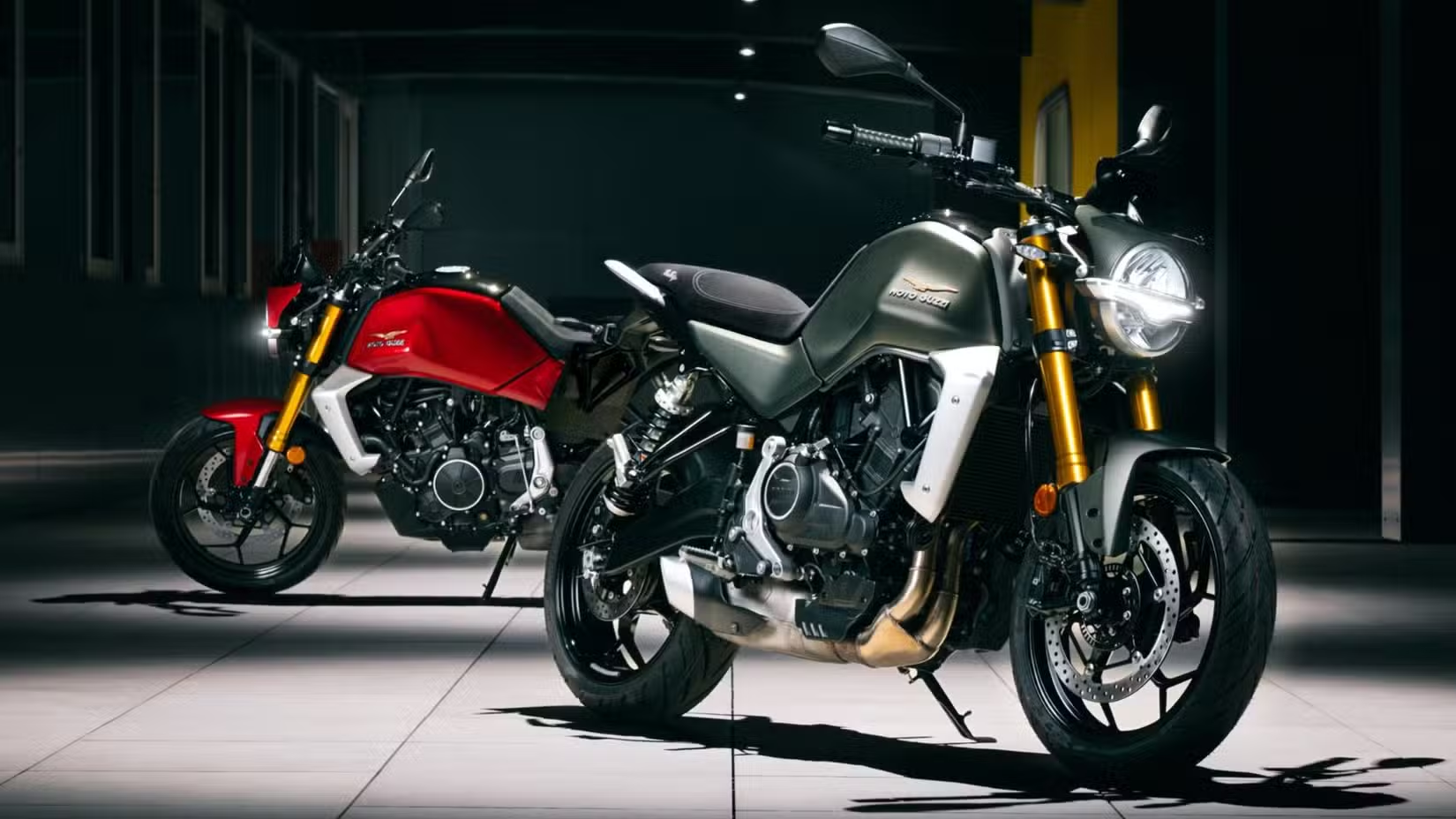
Guzzi lists The Trip at 396.8 pounds in running order, with an approachable seat height starting at 31.1 inches and a 3.96-gallon (15-liter) metal fuel tank.
Those figures put The Trip squarely in the middle of the entry-level standard class. Its closest rival is likely Triumph’s Bonneville T40, which weighs 421 pounds wet, shares the same 31.1-inch seat height, and carries 3.8 gallons of fuel. However, Italians do love their sportiness, and the baby Bonnie’s 30 hp from its 398cc single doesn’t quite meet the same performance bar. On paper, The Trip is lighter and considerably stronger than the Triumph, with a slightly larger tank.
The photos do reveal one chassis detail worth noting: The Trip’s rear shock mounts to the right side of the swingarm, unlike the monoshock on Aprilia’s 457 platform. So while the engine may be shared, the chassis clearly isn’t a straight carryover. What the two images don’t settle is whether a matching shock sits on the left. Guzzi has a precedent either way, since the V7 and V9 use twin shocks while the V85 TT and V100 Mandello ranges run a single shock offset to the right side of its swingarm.
Styling
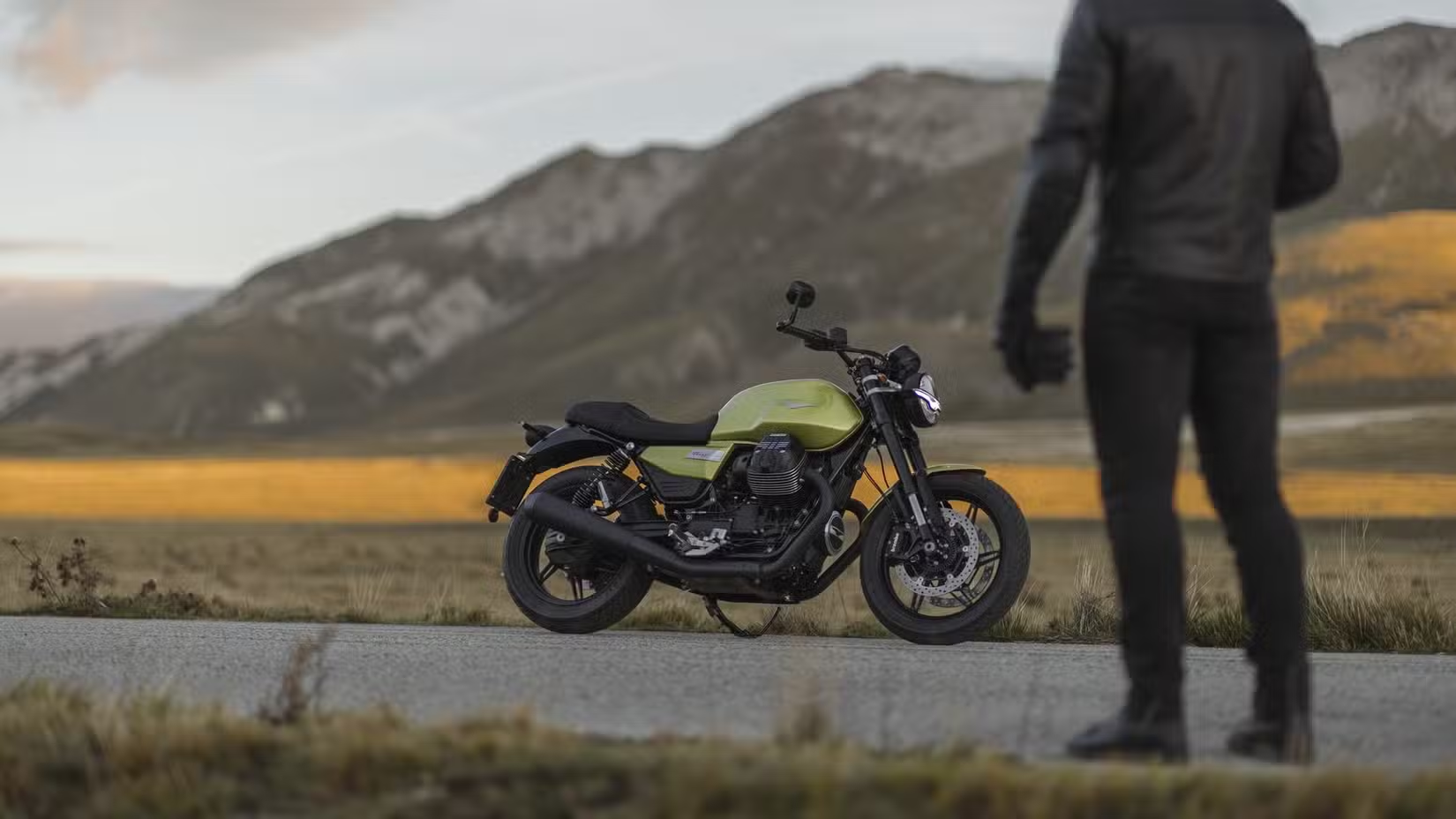
Guzzi says The Trip introduces a new, less-is-more design language: clean surfaces, simple proportions, and an engine black finished engine. Still, it appears quite Guzzi and reminiscent of the retro-modern V100 Mandello range. The bike’s name is embroidered onto the seat. Three liveries are planned, Black Metropolis, Green Grove, and Red Beat, plus a launch edition called The Opening, though Guzzi hasn’t said what sets it apart.
Pricing and Availability
Again, we’ll have to wait and see. No pricing or exact delivery dates were announced today, though the brand says The Trip will reach dealers in early 2027. It will be displayed on the Moto Guzzi stand at EICMA, held at Rho Fiera Milano from November 5 to 8, 2026.
Source: Moto Guzzi