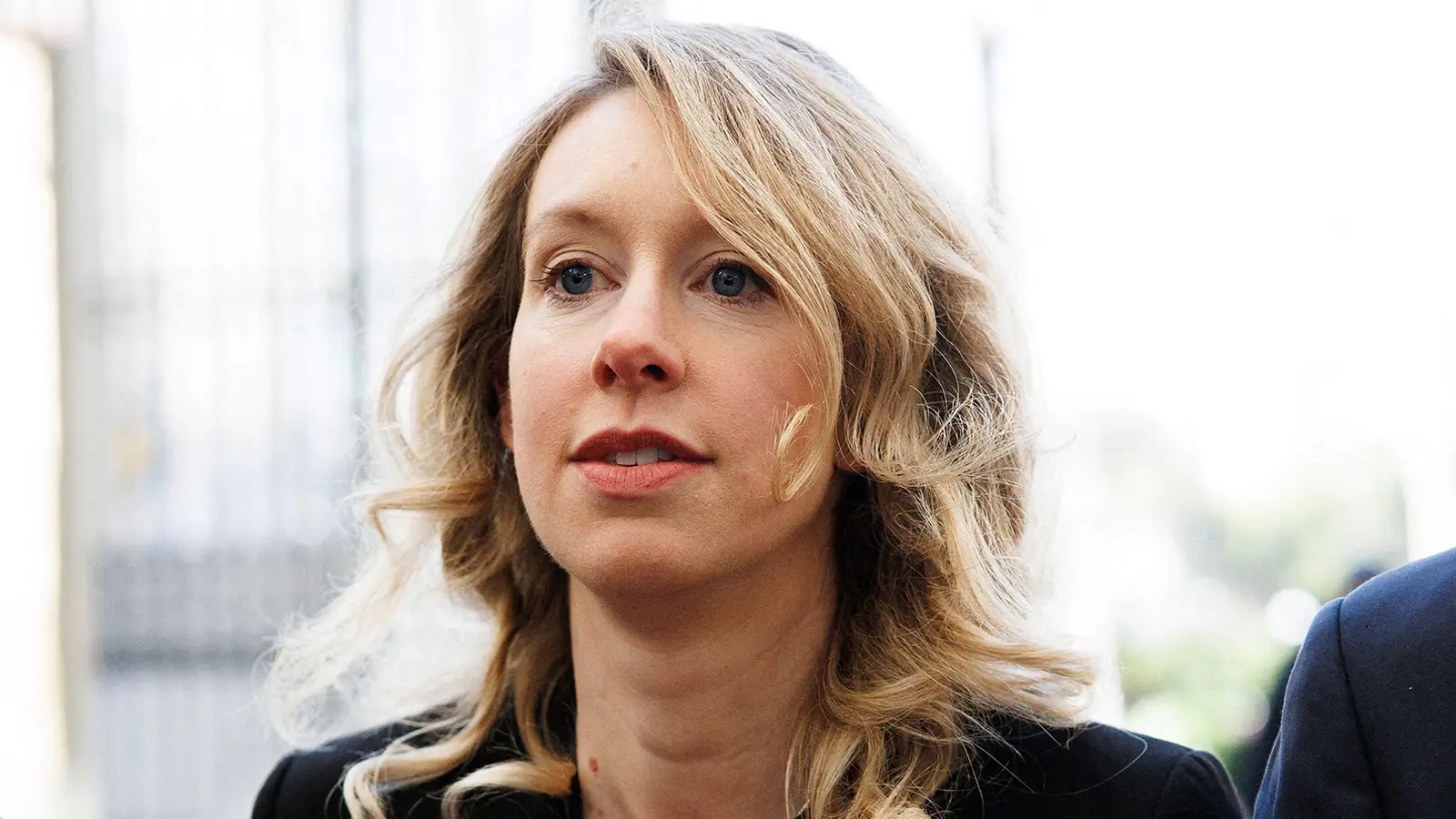
Nathan Fielder and Lance Oppenheim’s new documentary, “You Can See Everything,” tells a story of Elizabeth — now Liz — Holmes in the month leading up to her incarceration at a federal prison camp. Holmes, the disgraced former billionaire CEO of blood-testing company Theranos, was found guilty of defrauding investors.
While Fielder is best known as a comedic TV show creator, his pursuit of the truth behind Holmes makes a ton of sense. Fielder is an entertainer known for blurring the boundaries of reality and fiction, and for investigating business scams. In the film, Holmes repeatedly asserts that she is innocent and did not commit any crime. Keeping in mind that we are all unreliable narrators, Holmes presumably had a story she wanted to project, and so would Fielder as a storyteller.
Here I share my clinical forensic background working with women convicted of fraud, and anticipate the reader may note parallels to what was portrayed in “You Can See Everything.” To be clear, I am not attempting to diagnose any film participant with a mental health disorder, but rather, I am using the film to discuss broader patterns.
Clinical Insights Into Female Fraudsters
In my work with women in the correctional system, I have seen female fraudsters benefitting from society’s gendered misconceptions about personality and crime. Fraud itself requires being adept at deception. Offenders can provide socially constructed narratives based on what they perceive will be believable, which varies by gendered expectations — similar to how psychopaths tell their story to the specific target audience.
Psychopathy is not uncommon in fraudsters. Psychopaths have superficial charm — superficial being an important adjective. They are manipulative and glib. Female psychopaths often present differently than their male counterparts, with emotional instability and exploiting their presumed gender role as the “damsel in distress.” The narcissist or psychopath is used to wearing a “mask of sanity,” watching how others respond in similar situations and emulating that humanity. Those other people are only there to be exploited, anyway.
When female fraudsters are caught, we often see something of a playbook in their narrative. They benefit from not fitting society’s perception of criminals — they are often employed, white, and importantly, women. Fraud is not considered feminine, so they can use self-serving explanations with gendered narratives in attempts to neutralize their offenses.
We often see female fraudsters: deny responsibility (“Oh silly me, it was a mistake, despite how smart I needed to be to perpetrate the offense”); deny injury of the victims (“It was rich investors who got harmed, not humans”); deny victims (“No one really got hurt”); blame the system (“The prosecutors had it out for me”); and then appeal to higher loyalties (“I am a woman, a mother”). Society feels bad punishing mothers or considering that they could engage in untoward behavior, particularly conventionally attractive white wealthy mothers. This relates to the cultural narratives of perfect motherhood.
When evaluating individuals who appear to provide distorted or evasive narratives, there are various considerations, such as whether they may have processing difficulties related to autistic spectrum disorders, or personality disorders. Rather than guessing at the drivers, forensic psychiatrists must separate theater from careful evaluation.
From “Elizabeth” to “Liz” Holmes
From the start of the documentary, a wide-eyed Holmes endearingly asks Fielder (and viewers), “Why would I deceive you?” It is easy to forget the answer is because she has been accused of being a charming manipulator and con-woman at the scale of billions of dollars. (Not to mention the countless people who shared their experience of misdiagnosis after entrusting their health and lives to the Theranos blood-test machine.) Her reported guilelessness reaches another level when she says that she has never lied in her life, leading Fielder to question the very definition of “lying.” Later, when Holmes explains how the non-working Theranos machine was meant to work, Fielder calls out semantic issues in her explanation.
In the documentary, viewers see “Liz” Holmes, now a mother of two with her hair down. This is a far cry from the Steve Jobs-emulating Elizabeth Holmes who lowered her voice pitch and wore black turtlenecks as the CEO of Theranos. Liz Holmes appears to have some confusion about how things work and about how to beat eggs, despite having been a student at Stanford. In a role as mother of two who is about to go to prison, a confused-girl persona could be as valuable to public perception as Steve Jobs impersonations could be at a tech company.
Collateral Evidence
As viewers experience the film, it’s important to keep in mind what we already know. First, that Holmes was convicted of defrauding investors based on proof beyond a reasonable doubt. And second, that she attended Stanford (a top 10 university both nationally and globally), despite dropping out.
In forensic psychiatry, I must hold what the defendant or inmate or acquittee in front of me is telling me, and compare that to collateral evidence. This is different than most medical fields where what the patient says is taken at face value. In forensics, collateral psychological testing searches for “fake good” — the idea that when someone is feigning virtue, they may overshoot. In my field, there are reasons why someone might shade the truth or outright lie. They want the right story that will tug at our heartstrings. But there’s background we know to be true.
Early in my training, I learned that lies are easiest to spot when you read them followed by when you hear them followed by when stories are told in person. This is because we want to believe the voice, the smiling nodding face in front of us. And it’s why forensic psychiatrists testifying in court need to compare what the defendant tells us with the actual data.
Holmes tells viewers that she was never in it for the money, despite viewers knowing that she became a billionaire via the fraudulent machine. Viewers also hear repeatedly how she has no money — despite staying at an idyllic seaside rental home. Meanwhile, Holmes has partnered and subsequently reproduced with Billy Evans, the son of a very wealthy family. Fielder even asks Evans if he ever worried he might be getting manipulated himself. When Holmes eventually has to leave for prison, Evans has the financial security to move right near the prison camp, to bring the children to visit, and to be the primary caregiver. The sad reality is that most mothers entering prison do not have these luxuries.
While “You Can See Everything” cannot answer what is performance versus what is reality, this masterpiece allows for the viewer to explore at least some of the character of a woman convicted of fraud. It will leave you questioning everything you just watched. And it will leave you wondering: Who is Elizabeth Holmes, really?