We find every cat, or almost, to be beautiful. But when it comes to other human beings, beauty is more the exception than the rule. We might walk past hundreds of faces without seeing one that makes us look again.
Yet people try a lot harder than cats, expending considerable time, money, and ingenuity on beautifying themselves. We exercise, diet, dress, moisturize, dye, paint, inject, and sometimes even submit to the surgeon’s scalpel. Cats, meanwhile, do little more than lick themselves.
Are we just an uglier species, like bats or warthogs, or might there be more to it than that?
Of Mice and Men
It may be that our aesthetics are a product of our mind. Bats may not be ugly to other bats, and cats probably don’t think of us as ugly—but do seem to think of us as smelly.
Indeed, bats and cats may be entirely without aesthetic judgment and respond merely to mating signals.
But even if we are the only truly aesthetic animal—as argued by the philosopher Immanuel Kant—that does not explain why we find the average cat to be a lot more beautiful than the average member of our own species.
One possibility is that we are more sensitized to human faces. To the untrained eye, all sheep look alike, whereas their shepherd may be able to recognize each one. A large area of our cerebral cortex is devoted to visual processing, with specialized mechanisms for recognizing and reading other human faces.
But should that not mean that we find human faces more, rather than less, beautiful?
Beauty and the Beast
Perhaps the more important difference lies not in what we see, but in what we look for. When we admire a cat, we admire its proportions, coloring, movements, and general appearance. But when we look at another human being, our judgment is complicated by sexual desire, or the absence of it. We are asking not merely whether a face or body is beautiful on its own terms, but whether we find it sexually attractive.
Of course, we can sometimes find a middle-aged body or wizened face beautiful, but this often requires the kind of perceptual shift that we undergo in a museum, when contemplating a work of art.
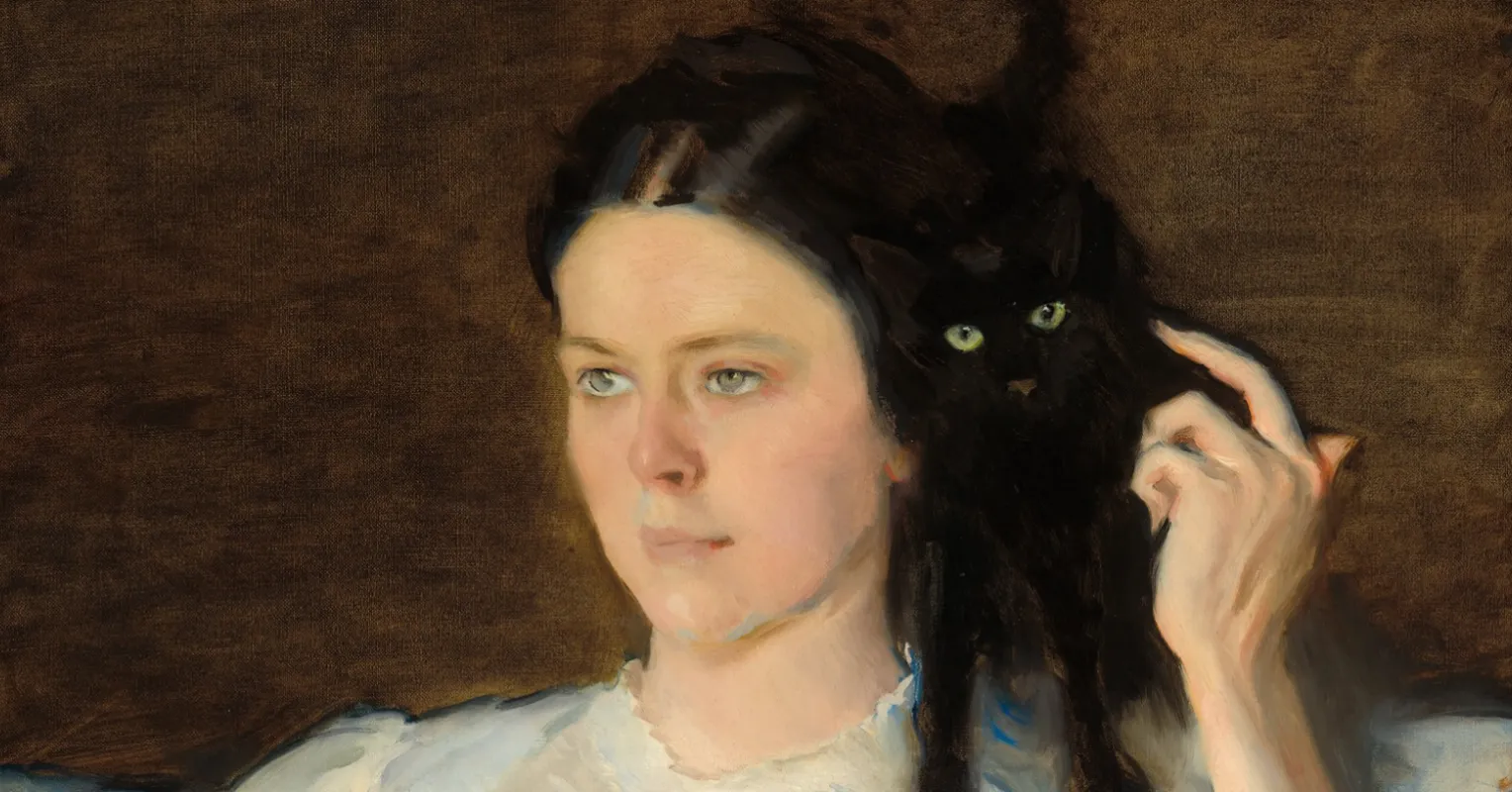
In a museum, as Kant would tell us, we suspend our ordinary practical judgments and attend to an object for its own sake. We can admire the appearance of Socrates in a David painting, without asking whether his snub nose and pot belly would feed our appetites. Yet we seldom extend the same generosity to people we encounter in everyday life. In a sense, the museum turns us back from animal to human.
Beauty and sexiness are not the same thing. We can find someone beautiful without being attracted to them, and vice versa—which is fortunate for ugly people.
On Youth and Old Age
And young people too. Smooth skin, lustrous hair, and a certain fullness of the face and body are among the qualities we associate with sexual attractiveness. Not every young person is attractive, of course, but youth confers advantages that are difficult to appreciate until they have disappeared.
Indeed, one of the ironies of aging is that we look back at photographs of our younger selves and wonder how we could ever have been dissatisfied—or have made so little of our looks for the few summers that they lasted.
Yet beauty, as opposed to buxomness, need not diminish with age. It is possible to become even more beautiful. An older face may acquire a beauty that depends less on its proportions than on its character and expression. To be beautiful, an older face may also need to be interesting.
Human beauty is not so rare as we suppose. We are simply too distracted by desire, comparison, and convention to appreciate it.
Perhaps we should learn to look at people as we do at paintings, or cats.
Cats are not just beautiful, but irresistibly cute. Part of why we find them so beautiful is simply that we love them.
Cats have no conception of beauty, and certainly no ambition to be beautiful—though they purr when we call them so. They neither admire their reflection nor regret their younger selves. They, like us, simply go on being beautiful, whether we notice or not.
You may also enjoy my companion piece, Why Computers Could Never Experience Beauty.