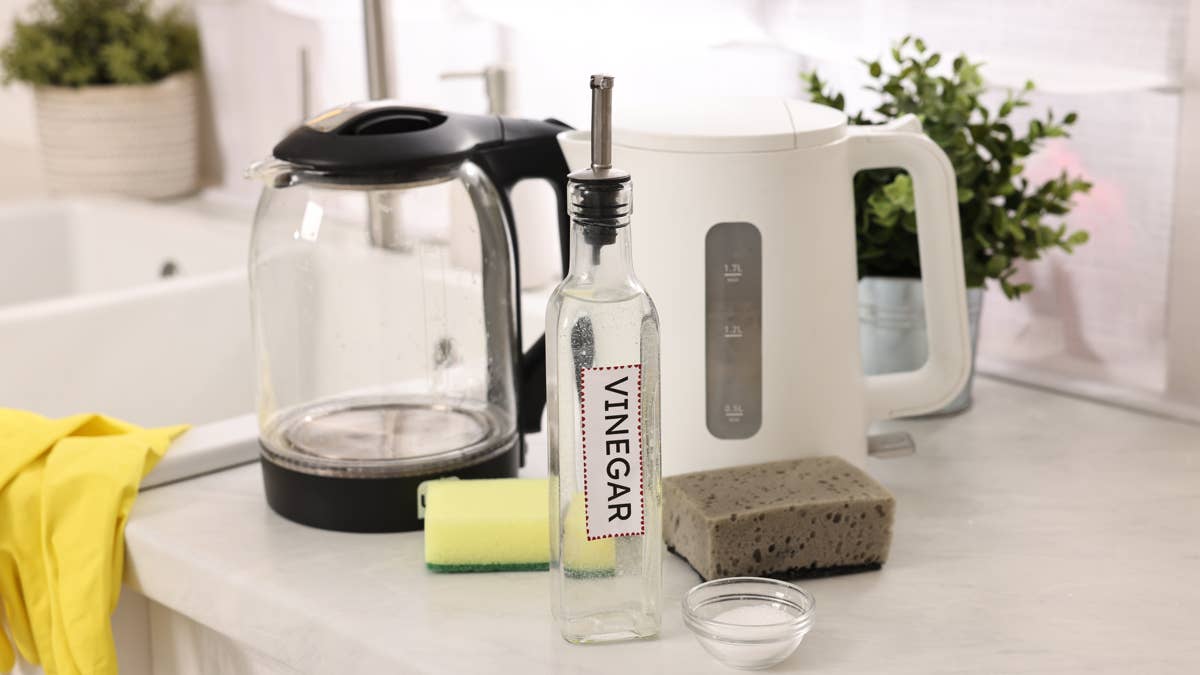
With holiday guests arriving in the coming weeks, cleaning your coffee maker is one kitchen task worth tackling early. But before reaching for white vinegar, check the manufacturer’s instructions. The popular household cleaner works in some coffee makers but could damage others.
The distinction matters: Certain Mr. Coffee and Hamilton Beach drip machines allow vinegar, while Nespresso advises against it. The safest approach depends on your machine, not a universal cleaning hack.
Next: Skip the Sugar? Your Non-Dairy Coffee Creamer May Be Worse for Your Diet
Why Vinegar Isn’t Always the Answer
White vinegar helps dissolve mineral deposits left behind by water. Over time, that buildup can interfere with a coffee maker’s performance.
But different machines require different cleaning solutions. Nespresso recommends its approved descaling product, while some Breville maintenance instructions explicitly state, “Do not use vinegar.”
Cleaning and descaling also serve different purposes. As Breville explains, “A cleaning tablet or cleaning cycle removes coffee oils and residue.”
That process “does not replace the descaling process used to remove mineral buildup.”
Next: Coffee May Be Healthier Than You Think, but One Brewing Method Comes With a Catch
How to Clean Your Coffee Maker With White Vinegar
For automatic drip coffee makers that permit vinegar, here’s a straightforward method. Always follow your model’s specified vinegar concentration and cleaning procedure.
- Empty the machine. Discard old grounds and remove the used filter.
- Add vinegar and water. If your manual permits a 1:2 ratio, combine 1 cup of plain white vinegar with 2 cups of water.
- Run one vinegar cycle. Brew the mixture without coffee grounds, following any required pauses.
- Empty the carafe. Let the machine cool before pouring out the solution.
- Run the first water cycle. Fill the reservoir with fresh water, brew, and discard.
- Run the second water cycle. Repeat with another full reservoir of fresh water.
- Check for vinegar odor. Run additional fresh-water cycles if needed.
- Wash removable parts. Clean the cooled carafe and filter basket with warm, soapy water.
The memorable rule for compatible drip machines: One vinegar cycle, followed by two fresh-water cycles, unless your manual specifies otherwise.
Next: The Way You Brew Your Morning Coffee Could Be Raising Your LDL Cholesterol
The Holiday Coffee Mistake Worth Avoiding
Don’t assume a vinegar method approved for one coffee maker is safe for another. Even within the same brand, cleaning instructions can differ.
Check your model’s manual, complete the recommended rinses, and brew a test cup before guests arrive.
A few minutes of maintenance now can help prevent an unpleasant surprise when everyone wants their morning coffee.
Next: Heart Experts Say Five Cups of Coffee a Day May Be Safe, but There’s a Catch
Related: Popular Morning Drink Linked to More Muscle and Less Body Fat in New Study