This story appears in our Fall 2026 issue featuring cover star Charli XCX, on newsstands September 28th. Want us to come to your place? Subscribe here to get it delivered to your door.
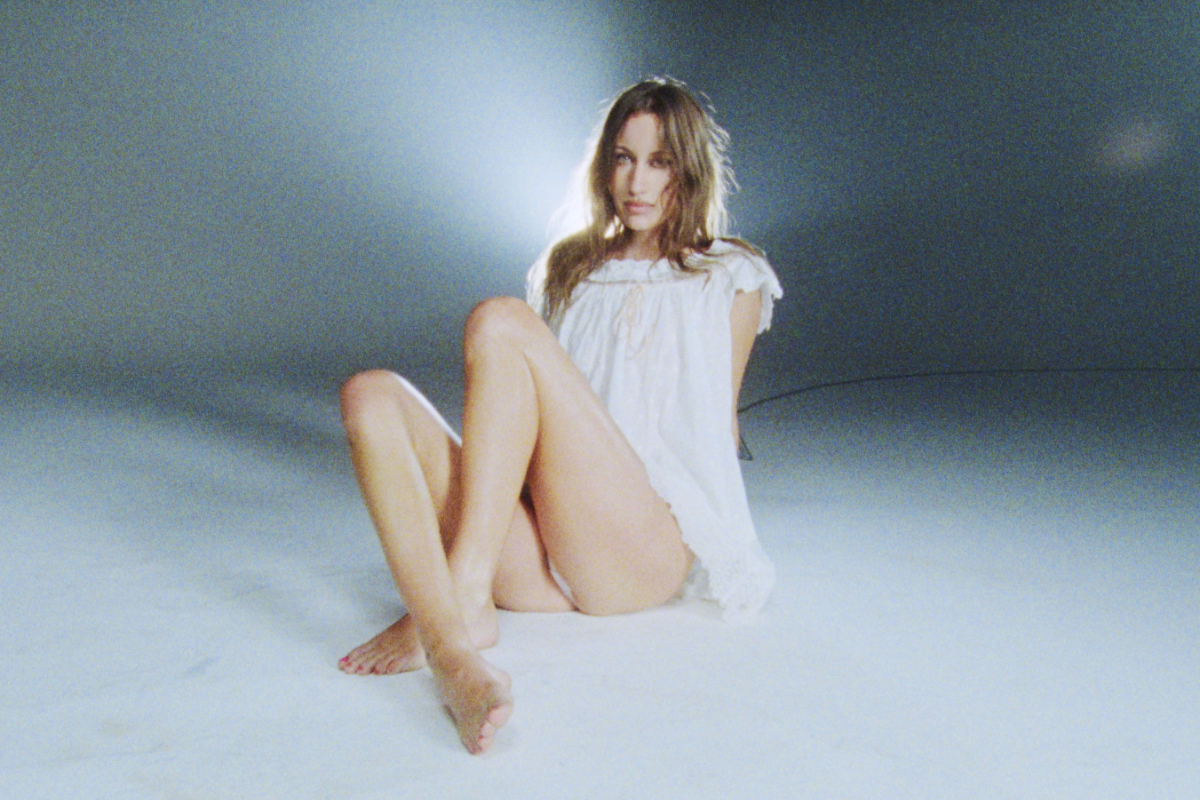
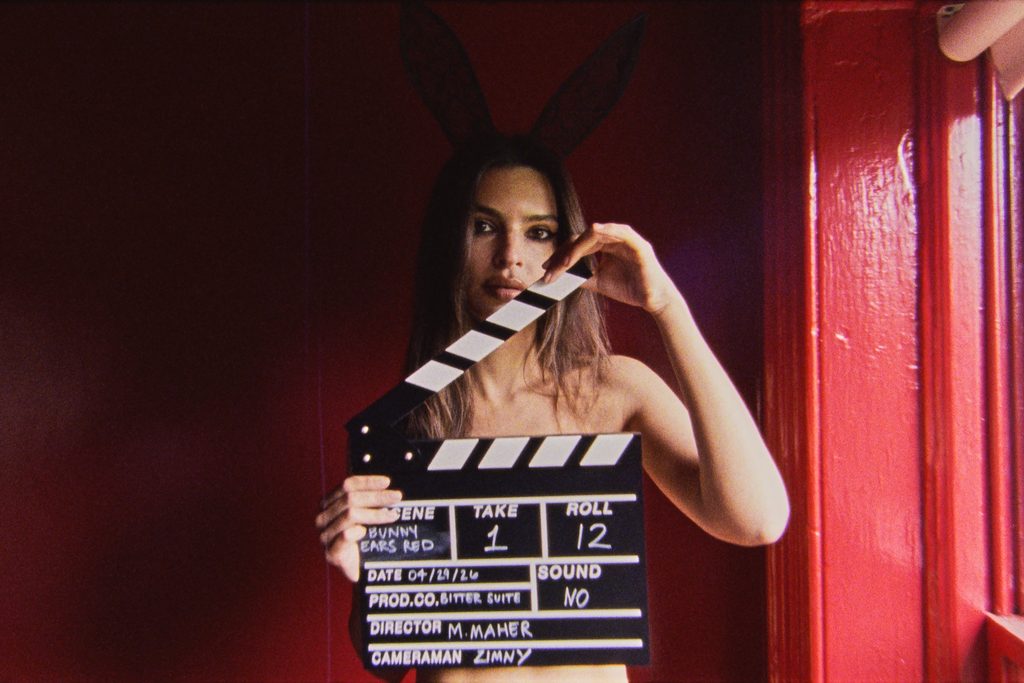
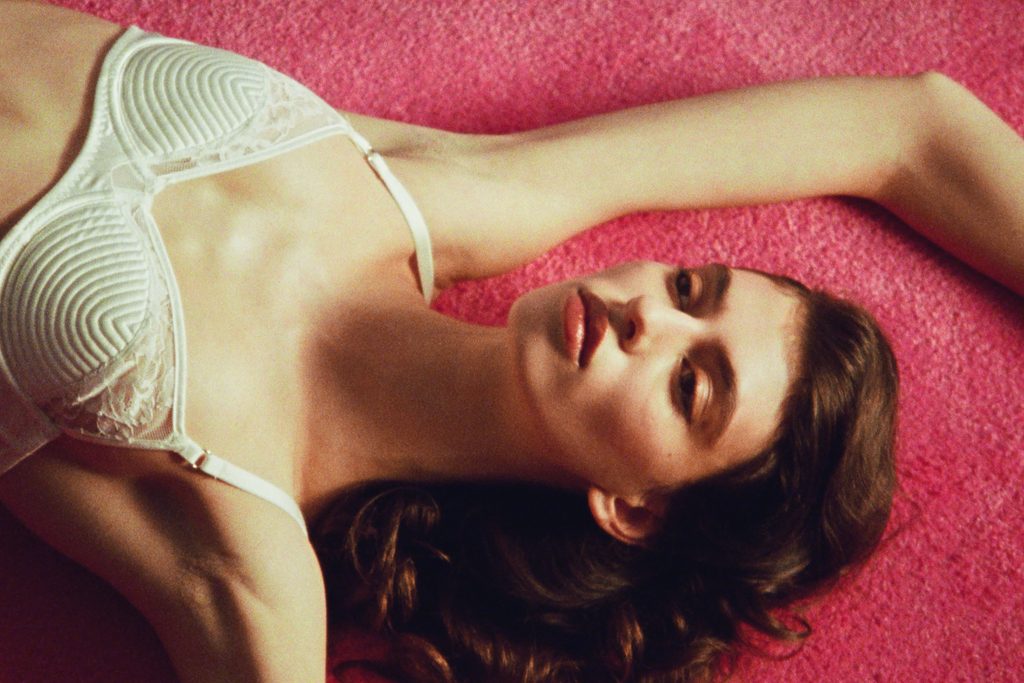
Morgan maher is not a one-and-done type of photographer. Her 2023 photo book debut, “Girls in Bed,” featured about a hundred young women photographed on Maher’s own bedsheets, for the most part, without a crew or a set. Just Maher and whomever she’d fallen in love with that week. Her oeuvre (and that book) made Maher the house photographer for a generation of girls about to get famous. She returns to many of those faces over and over: Emily Ratajkowski, Rachel Sennott, and Lexee Smith (shot as our April 2026 Playmate). Maher’s new photo book, “Everybody Loved Her, Everybody Wanted Her” (Friend Editions), maintains the intimacy but expands the production with real sets, a full crew, and—for the first time—motion, captured by cinematographer Hunter Zimny. Maher is the director here. The idea came out of old screen tests and old footage captured when an actor was just existing between takes. “What if I made screen tests, but made them sexy?” Maher says. She shot 38 women on 16 mm, a short film apiece, to be cut together and screened in galleries and released in a limited run of DVDs. The images on these pages are frames pulled from the film. Singer and actor Sky Ferreira appears in the book and is no stranger to Maher’s lenswork—she’s been Maher’s subject repeatedly over the years, and the two developed a close friendship from the back-and-forth. Here, she talks to Maher about the project.
MAHER: I’d been listening to your music since I was in high school. My sister actually sent me a video recently of my old iPod, and your album was on it. So when someone asked if I wanted to photograph you, I said yes immediately.
FERREIRA: You were the only person I agreed to shoot with.
MAHER: That’s still one of my favorite things anyone’s ever told me. But I remember meeting you and it immediately felt easy. You’ve always been honest with me—not just about work, but about life. That’s a rare thing.
FERREIRA: I remember the first thing we bonded over. We immediately started talking about ex-boyfriends.
MAHER: Horror stories.
FERREIRA: Horror stories.
MAHER: I remember you were wearing that yellow raincoat.
FERREIRA: It wasn’t a raincoat—it was a firefighter jacket.
MAHER: That’s right. Then the first time we photographed together, we ended up drinking White Claws in the bathroom.
FERREIRA: You asked if I’d show my boobs.
MAHER: And you said yes.
FERREIRA: I was like, “Sure.” At that point, I’d already crossed that bridge.
MAHER: I remember sending you all these Sharon Tate references beforehand.
FERREIRA: I’ve been obsessed with Sharon Tate since I was a kid. I found a copy of “Valley of the Dolls” at a garage sale and completely fell in love with her. There’s one photograph of her sitting in a bathroom that’s always stayed with me.
MAHER: I’m always thinking about women like Sharon Tate, Jane Birkin, Brigitte Bardot—women who feel like movie stars but also completely human. Even when we shot in San Diego, I was exhausted and you were like, “We have to get in the pool.”
FERREIRA: It was freezing. It was like five in the morning.
MAHER: But it was worth it.
FERREIRA: It was worth it. I feel like every time we work together, I end up in a bathtub, a shower, or a pool… I’m wet.
MAHER: During this interview, Morgan Maher gets wet with Sky Ferreira.
FERREIRA: That’s the headline.
MAHER: Honestly… I’d read it.
FERREIRA: I’ve been photographed since I was 14, so I’ve spent most of my life learning when to trust people and when not to. Sometimes I’ll see photographs afterward and think, “That’s a beautiful picture,” but also “Why did I agree to that?” With you, it never feels like anyone walks away wondering if they made the wrong decision.
MAHER: That means a lot. Most of the women in the book are people I’ve known for years. I don’t usually make one-off pictures. They’re muses, but they’re also my friends.
I also wanted everyone to feel like they had agency. Every shoot was a conversation. Do you like this? Does this feel right? Is there anything you want to change?
FERREIRA: You don’t build your photographs around forcing someone into an idea you already have. You build them around the person who’s standing in front of you. I’ve also noticed that you’ve photographed a lot of the same women throughout completely different stages of their lives. Some you’ve known since they were really young, and you’ve documented those changes over years.
So who is the Morgan girl? Not literally who, but what is she?
MAHER: Oh my God. I think a Morgan girl is someone I can look in the eyes and immediately feel their heart. She takes up space. She’s confident in her body, in her presence, and in what she brings to the world.
FERREIRA: I’ve met so many women through you that I never would’ve met otherwise.
MAHER: I love bringing people together. I fall in love with new people all the time.
FERREIRA: I know. I love that about you. I wish I were like that. You’ll call me and be like, “I think I’m in love with this person.” Then the next week, it’s someone else.
MAHER: It’s true. But I really do. I’ll meet someone and think, “This person is incredible.”
FERREIRA: So how did you first get involved with Playboy?
MAHER: I photographed my first story for them last year. We photographed Lexee Smith for an issue, and it was so fun and sexy while still feeling incredibly intimate. [Editor-in-chief] Phillip Picardi and the creative team really let us explore what we wanted to make.
FERREIRA: Your work already exists in that world—not in an obvious way, but in the imagery. It has that feeling of classic Playboy: iconic, beautiful women.
What made you want to make this book?
MAHER: The idea really came together after I started watching all these old screen tests. I was watching the “Phantom Thread” camera tests, and I became fascinated by them. The sets were unfinished. The actors weren’t fully performing yet—they were just existing. I kept thinking, “What if I made screen tests but made them sexy?”
To me, sexy isn’t always about showing skin. I’m much more interested in restraint. I like wondering what a woman is thinking, where the light is coming from, or what the silence between moments is communicating.
FERREIRA: There’s a film element to it now.
MAHER: There is. My dream has always been to make a movie. Around that time I met Hunter Zimny, who’s an incredible cinematographer, and we started talking through ideas together.
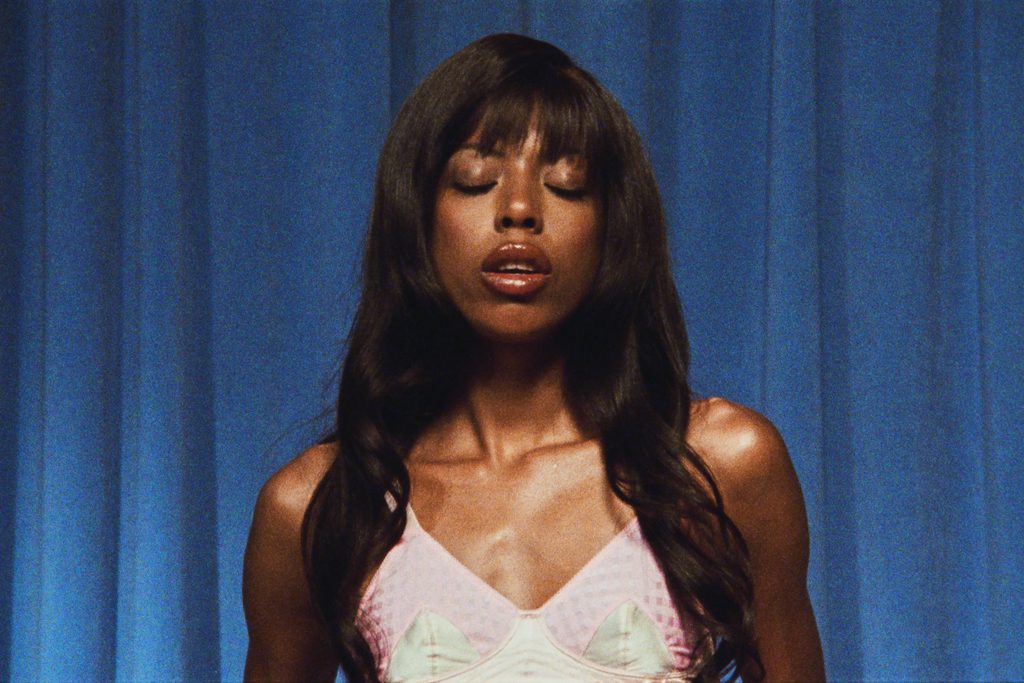
I kept coming back to this idea of a young woman who’s aware she’s being perceived as beautiful and desirable—and then I’d ask who she is when she’s completely alone with her own thoughts. Shooting everything on 16 mm film allowed us to capture those in-between moments. Every woman will have her own short film, and then all of those will come together as one larger film.
You shoot. You send the film away. You wait. Then suddenly you’re reliving every single day again in the edit, figuring out what belongs in the final book and what belongs in the films.
FERREIRA: It’s funny because we’ve shot together so many times before this project, but we had never actually worked together in a studio. Once we finally did, everything became bigger—more cinematic, more glamorous—but somehow it still felt just as intimate.
MAHER: For years, I’d worked on such a small scale. Usually it was just me and the woman I’m photographing. Maybe we’re driving somewhere in California or pulled over on the side of the road. I wanted to see what would happen if I surrounded myself with collaborators who each brought something completely different. They’d reference obscure films, use different lighting techniques, bring production design ideas—and suddenly we were building something together that still felt incredibly personal.
One thing I loved was that I never had a camera physically separating me from the person I was filming. I could be inches away from them, and that closeness completely changes the dynamic. It was exciting and honestly terrifying.
FERREIRA: It is different, but it also isn’t. Even when we’ve shot behind a dumpster somewhere, it still feels like your work. The scale has changed, but the feeling hasn’t.
The best performances happen when someone forgets they’re being watched. Your crew happened to be mostly men, but it never felt intimidating.
MAHER: I’ve had difficult experiences with men in my life, so I was nervous about bringing a crew of mostly men into a project that was centered around all of these incredible women. But it ended up being one of the most healing experiences I’ve ever had. They were patient. They listened.
FERREIRA: It feels like the women see themselves in the photographs too.
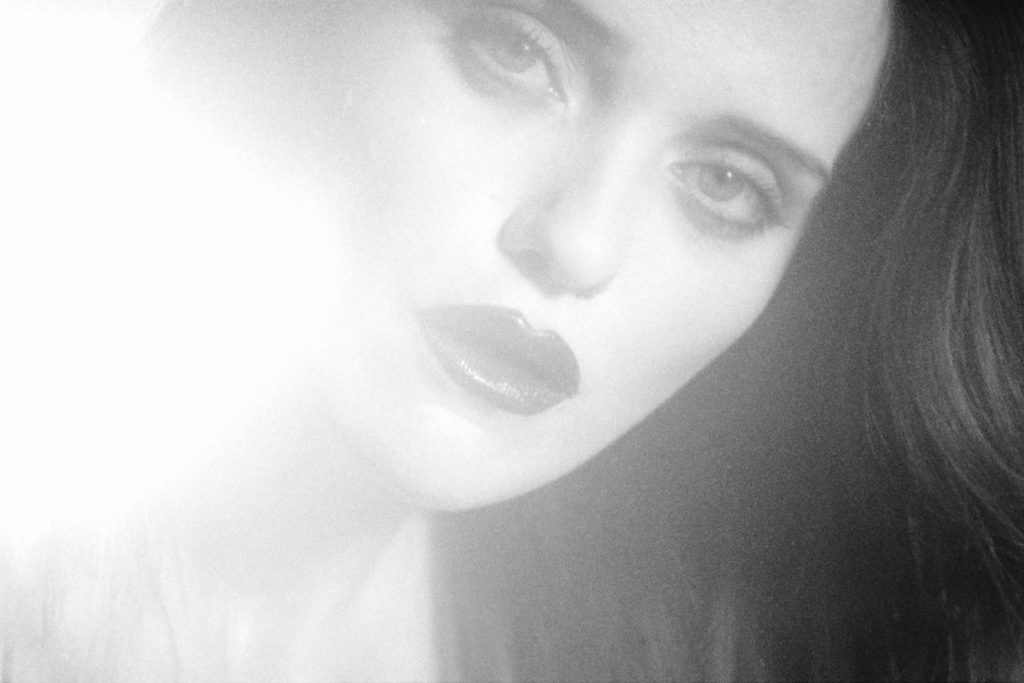
MAHER: My favorite pictures are usually the ones where it’s about someone’s face, their eyes, whatever’s happening in their mind at that moment. Some of my favorite photographs we’ve ever made together are just tight on your face. They’re not traditionally sexy. They’re emotionally sexy.
I’m willing to be just as vulnerable as the person standing in front of my camera.
FERREIRA: The edit must be the hardest part. You have to kill your darlings. It’s a horrible expression—but it’s true.
MAHER: Completely. The first time I showed everything to my publisher and designer, I had something like 2,000 images in the layout. He looked at me and said, “Morgan… There are 2,000 pictures in here.” I said, “I know. There are a lot of good ones.”
FERREIRA: Volume One.
MAHER: Exactly. Honestly, every girl could have her own book.
Even on the last day of shooting in New York, I kept calling everyone asking, “How many more girls do you think we could fit into one day?” I was always trying to squeeze one more person in because I never wanted it to end.
FERREIRA: It’s euphoric.
MAHER: It really is. And then afterward I need to disappear for a little while. I need time to process everything that just happened.
FERREIRA: That’s why your work doesn’t feel nostalgic. It feels like you’re building your own version of that world instead of re-creating someone else’s. Who are some of your biggest references now? Have they changed over the years?
MAHER: Honestly, not that much. If you know my work, you probably know what I love. Sofia Coppola has always been a huge influence. Juergen Teller. Lauren Greenfield’s “Girl Culture” was one of the earliest books that completely changed the way I thought about photography. It felt like fantasy rooted in reality, even though it was purely documentary. I’ve always loved Corinne Day’s photographs too. I think I’ve just gotten closer to understanding why I loved them in the first place.
FERREIRA: You have an eye for casting too. I could imagine you discovering the next Kate Moss, not because she’d necessarily look like Kate Moss but because you’d recognize something before anyone else did.
Is there someone you’ve always wanted to photograph? Or maybe someone who’s still on the dream list?
MAHER: Taylor Swift has always been at the top of that list.
FERREIRA: Taylor, if you’re reading this…
MAHER: Taylor, call me. Besides that, I really want to make a film. I want to do a gallery exhibition around the book, screen all of the films together, and hopefully take the project to Japan. I think Japan is somewhere we have to go together.
FERREIRA: Absolutely. We’ll make another book there. OK, one last question: What do you listen to when you’re shooting?
MAHER: There were a few artists I kept coming back to while making this book. A lot of Future, Bruce Springsteen’s Nebraska, Buck Owens, Elvis, Robin Gibb’s song “Kathy’s Gone.” There’s a lyric about wanting to leave a suburban town and become a movie star that I haven’t been able to stop thinking about. It feels strangely connected to the whole project.
FERREIRA: Music does that. Even if it isn’t a direct reference, it puts you into a certain emotional place before you start making something.
MAHER: Exactly. I don’t think inspiration is ever about re-creating something. It’s about finding the feeling. 
