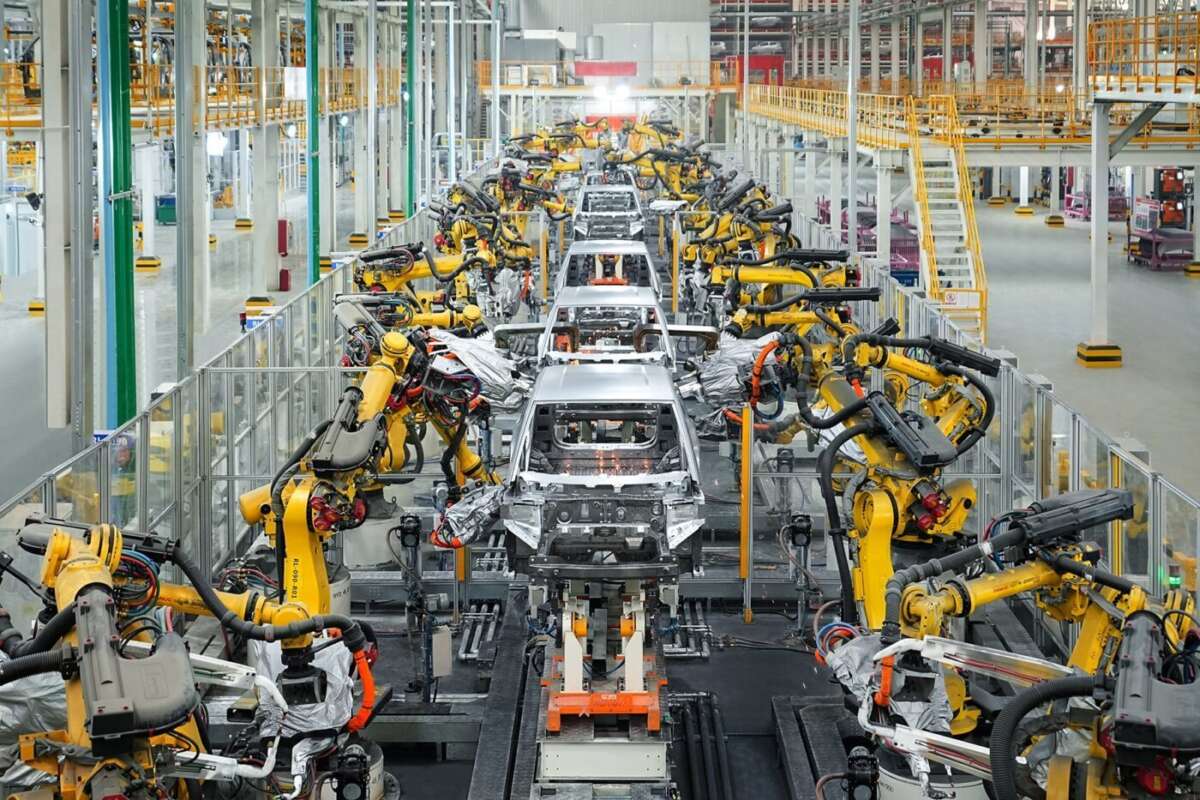
BYD Malaysia recently announced that the company will be partnering Sime Motors’ Inokom Corporation to produce vehicles in Kulim, Kedah. This is the latest development in Malaysia’s push for local assembly (CKD), but what does CKD actually mean for car buyers and the wider automotive industry?
Much ado has been made of late regarding CKD in Malaysia, as well as the government’s – particularly the investment, trade and industry ministry’s (MITI) – new regulations and policies pertaining to it.
Here’s what’s interesting – although you’d be hard pressed to find any one party that thinks CKD does more harm than good, the reasons and justifications differ based on each party’s interests. For the average buyer, it’s simple – he or she supports CKD because it leads to cheaper cars. Or does it?
The answer to that question isn’t straightforward. Those who have closely followed Malaysia’s nearly 60-year-long automotive manufacturing history will tell you that ‘CKD = cheaper’ isn’t a hard and fast rule. Even today, there are cars whose prices have not changed with CKD, and there have even been price hikes in the past.
iCaur and Leapmotor are among those whose prices did not change post-CKD; just without the RM200 inspection fee as that’s not needed for CKD cars. Then there’s Proton eMas – upon CKD, the base prices were adjusted to make up the difference. Technically, that’s a price increase.
To understand this more deeply, let’s first establish the terms CKD and CBU. CKD stands for Completely Knocked Down, referring to a product (in this case a car) being shipped as a kit of many parts before being assembled in the destination market. Meanwhile, CBU is short for Completely Built Up, where the car is imported as a whole.
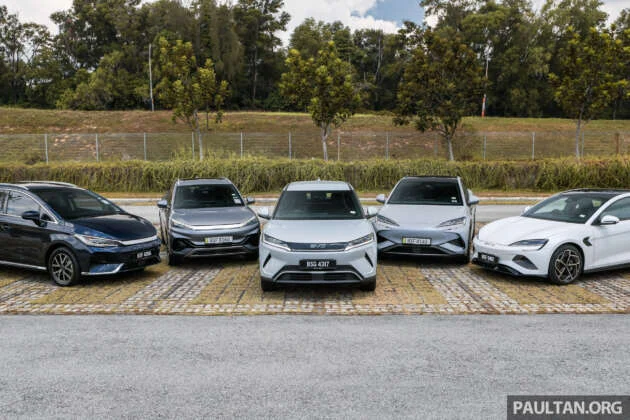
Which is the cheaper route depends on many factors including government policies, exchange rates, local sourcing costs and even labour costs. CKD changes how a car is produced but not, by default, how much it costs.
You will correctly say government policy is a big factor, and as a government, it’s very much its job to think far. Forgoing tax collection at the start works well to spur democratisation and acceptance of new technologies (which are often expensive) in the short term, but soon enough, the wider interests and long-term sustenance of the industry have to be considered.
Where EVs are concerned, here’s why their prices don’t always drop with CKD. Their baseline, existing prices, are from the tax-free CBU era. This is in stark contrast to ICE vehicles that are subjected to high duties as CBU imports, and taxed far less once CKD, resulting in significant price reductions.
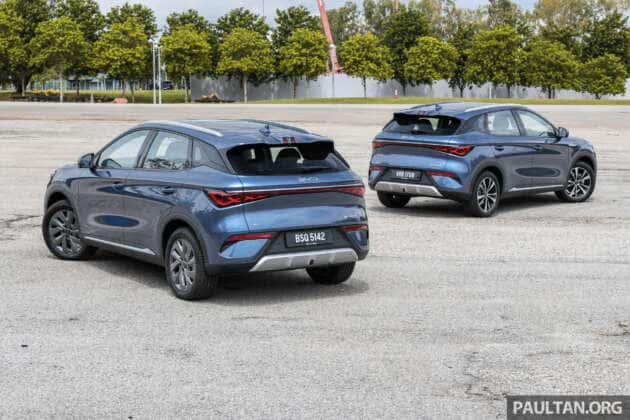
This is what most Malaysians are used to, and are expecting with EVs too. But EVs are going from tax-free CBU to still-tax-free CKD, bringing little to no tax benefits.
It’s easy for us to focus solely on the purchase price, but that doesn’t take away from the fact that significant investment is required to establish local assembly operations, and such investments can create broader economic value over the longer term.
This is where the bigger picture comes in.

What the carmaker is investing in when it establishes CKD operations is not Malaysia’s today, but Malaysia’s tomorrow. Via skill and technology transfer, and the creation of new jobs, the company is effectively helping to grow Malaysia’s automotive ecosystem, safeguard its future and keep food on the table for over 700,000 people nationwide.
That broader industrial value is particularly relevant as BYD moves towards local assembly through its partnership with Sime Motors’ Inokom Corporation in Kulim. Rather than viewing CKD solely through the lens of vehicle pricing, the project can also be viewed in the context of Malaysia’s longer-term automotive manufacturing ambitions and the development of the local ecosystem.
Revealed in March this year, MITI’s new CKD EV policy mandates a RM100k floor price, 80% of production to be exported and in-country body shop, paint and trim operations for new entrants, although if the new entrant works with an existing local CKD partner, the 80% rule (which is the hardest to satisfy) is waived.

The policy direction also underlines MITI’s role in encouraging localisation and greater participation in Malaysia’s existing automotive ecosystem.
Through this assimilation into the local ecosystem, Malaysia will be the main beneficiary, in terms of volume, jobs as well as knowledge transfer. We’re not just talking about manufacturing; there are also parts and component suppliers, sales, logistics, financial institutions, insurance, service centres and workshops, and even the aftermarket – the list goes on.
Remember, we have one of the world’s highest car ownership rates per capita, and the automotive sector currently contributes 4-5% of the country’s gross domestic product (GDP). The industry, and the ecosystem that supports it, is an extremely crucial one for Malaysia.
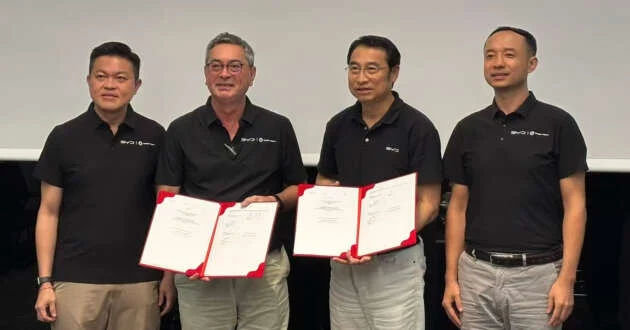
Sime Motors’ Inokom Corporation itself brings an established local manufacturing base to the partnership. Besides being majority-owned by BYD’s Malaysian distributor, Inokom has assembled a multitude of models from various renowned brands over three decades, with a 100% Malaysian workforce and RM3 billion contributed to local vendors through components, logistics and associated supporting services.
Leveraging an established local assembly partner also means building on existing Malaysian manufacturing capabilities, workforce experience and supplier networks, rather than looking at CKD purely as a mechanism to influence vehicle prices.
Evidently, there are bigger-picture benefits to be had from CKD rather than mere price reductions, and it would help to think of it as a long-term investment rather than a short-term game – we know which is the wiser choice for Malaysia’s future.